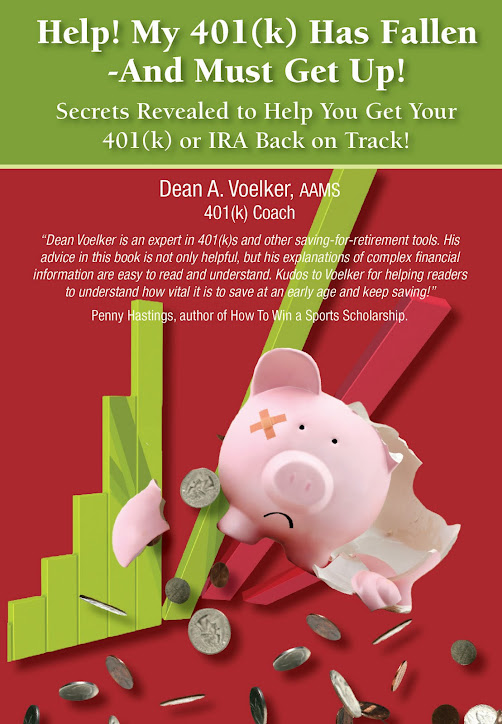
New Book - Coming November 2010

New Book - Coming November 2010
Help! My 401(k) Has Fallen - And Must Get Up!
Showing posts with label muni bonds. Show all posts

Friday, February 5, 2010

Tax Free Interest In Indiana - Shhh, Your Bank Doesn't Want You To Know

Do you live in "The Middle"? Besides unpredictable weather and being referred to as "Hoosiers", there are actually a few perks to living in Indiana.

Indiana offers some tax benefits to investors that are unique to our state. Municipal Bonds are very popular here. These bonds are a great (and Safe) way to earn more interest on your savings. The interest you earn on a bond from ANY STATE is FREE from Federal Tax, State Tax, and Local Taxes!

Municipal Bonds, or Munis have been used for over 200 years as a way to raise money to build or improve schools, hospitals, libraries, and roads. These days, stadiums have also been funded by having bonds issued. Once the bond is issued, you can loan money to the project and be repaid with interest which is free from Federal taxes. When the bond matures, you get the amount back which you loaned to the project.

If the bond is issued by your home state, your interest may also be free from State and Local taxes.

Again, the benefit for us "Hoosiers" living in Indiana is this. It doesn't matter which state the bond came from. We enjoy interest income on any muni bond which is free from Federal, State, and Local Taxes!  
That may be worth an additional 1.5% - 2% or more on your savings, depending on your tax bracket. 
(Check with your advisor when buying bonds to see if you may be subject to Alternative Minimum Tax, depending on your total income.)

Currently, http://www.bankrate.com/ (as of Feb. 4, 2010), shows us what the highest rates are for a 1 Year CD
(1.7%) and a 5 Year CD (3.55%).  Dave Ramsey refers to these as "Certificates of Depression". You can see why!

Did you also know that CDs are RISKY? Why is that, you ask?
Easy - You LOSE Future Buying Power!

Let's do the math, and see which option may be better for long term savings.

5 Year Municipal (Investment Quality) Bond at 5%

$10,000 x .05 = $500/year. 
$500 x 5 years = $2500 (TAX FREE) 
Most Bonds pay interest twice per year, directly to you the investor, so you will get 2 checks each year for
$250 for 5 years. When the bond is due, you get the $10,000 back. That may also happen if the bond is called early, but that's another lesson.

5 Year CD at 3.55%
Remember that was the BEST rate in the US today on http://www.bankrate.com/.

$10,000 x .0355 = $355/year.
$355 x 5 years = $1775, and you WILL PAY TAXES on this.

Hmmmm......let's see.....I can get $2500 in interest that is tax free OR $1775 in interest that is taxable. I wonder which one I should pick......

Did you ever wonder how banks make money? They use your money and either loan it or invest it.
Now you can see why your bank may not share the muni bond idea with you.

If you would like to learn more about Municipal Bonds, please contact me
You may also contact me for more information on 401(k) plans or IRAs at http://www.helpmy401k.us/.
You may also contact me on Linked In at http://www.linkedin.com/in/dvoelker or Twitter at http://www.twitter.com/deanvoelker. I also host a weekly financial advice program, Improving Your Financial Health at http://www.blogtalkradio.com/401kcoach.

Wednesday, April 15, 2009

What Else Do You Know About Munis?

Over the past few days, I have been promoting the value of municipal bonds. Right now, they offer a better bargain for your long term savings than CDs.

One of the things I dislike about CDs is that they are really just a holding place for your money.
Money falls into 2 main categories -
*Liquid Money - Money that can be used now or held in an emergency fund (about $10,000
or 3 -6 months of expenses).
*Invested Money - Money that is invested that you don't have an immediate need for.

Looking at those two groups, CDs are kind of a "tweener" - your money seems tied up, so you
can't get to it. Also, the rates are so low currently that it really isn't invested either. Talk about being caught between a "rock" and a "hard place"!

CD yields are so poor, that you may even consider the idea of early withdrawal to take advantage of better (and tax FREE) yields with munis. The penalty usually is forfeiting some interest (WHAT interest??), as much as 6 months.

If you had $10000 in a CD, paying 2% ($200/year, taxable), you would lose $100 to the bank. If you re-invested it in a 5% muni bond, you would earn $500 on the same amount, and not pay federal taxes (perhaps even no state or local taxes) on the interest.

You do the math.

Here are a couple of other articles which support the idea of using muni bonds.

MARKET WATCH - "Muni Yields Aren't Puny"
http://www.marketwatch.com/news/story/bargains-abound-tax-free-muni-bonds/story.aspx?guid=%7B2A55A5F2-2F94-4181-A51A-7FFA12E1A9D2%7D

KIPLINGERS - "Steals In Tax-Free Bonds"
http://www.kiplinger.com/magazine/archives/2008/05/kinnel.html

Warren Buffett likes munis too, and you could do a lot worse than listening to Mr. Buffett!

For more information on municipal bonds, or any other savings ideas, please contact me at
www.deanvoelker.com .

Tuesday, April 14, 2009

Single Bonds or Mutual Funds?

What's the best way to buy municipal bonds? Should I buy single bonds or mutual funds?

Like most decisions, there are pros & cons with both methods. You should talk with you advisor about which method is right for you - possibly a mix of both.

One of the advantages of owning a single bond is that you have a fixed rate of return - you know exactly what you are getting. For example, on a $100,000 muni bond paying a 5% coupon, you will get $5000 per year in interest income. Because you don't have to pay federal taxes and you may not need to pay state taxes, that may be similar to getting 7% or more, depending on your tax bracket.

Interest from a single bond is usually paid ever; 6 months, so you would get $2500 with each installment. You may also ask your advisor to structure your bonds in such a way that you are able to receive income every month.

Another advantage it that while your advisor does get paid, his or her commission is built into the price of the bond when you buy it. This is a common question I am asked.

Think of buying soup at your local grocery store. The grocer buys soup in large bulk quantities, with all brand names & flavors. Because they buy so much soup at once, they can buy at a wholesale price. When a customer buys soup, they pay a retail price and may only buy 1 can, or a few cans at a time.

Bonds work the same way. If you buy a bond worth $10000, you will get $10000 when it comes due. Along the way, you have gotten a great tax free rate of return every 6 months. If you are fortunate enough to be working with a great advisor, you may have even been able to buy the bond at a discount, so that when it does come due, you even had a small gain. (Woo-Hoo!)
Its great when everyone wins!

One more thing about a single bond - You know exactly which project you are supporting.
(Example - St. Joseph Regional Medical Center Bond)

A big disadvantage is that a single bond is not diversified. This is where mutual funds are better. Going back to the "soup" example, a mutual fund allows you to carry all the "flavors" in one investment, which is managed by professionals at a mutual fund family.

Most bond mutual funds also pay interest monthly, because they own hundreds of bonds. This can be helpful if you are counting on monthly income from your investments, and a huge advantage over CDs.

Also, it is much easier to invest a smaller amount. For those who don't have the 5000 or 10000 minimums required by many single bonds, you can establish a mutual fund for as little as 1000.
Once you have a fund, you can add to it or even withdraw money easily.

Sales charges on bond funds purchased through your advisor may be as high as 4.25%, although you may qualify for volume discounts, also known as "breakpoints" if you are able to invest large amounts of money.

For more information on municipal bonds or other investing, please contact me at www.deanvoelker.com

Monday, April 13, 2009

Tax-Free Bonds - - Are They Safe?

On Friday, we talked about how a municipal bond can pay higher interest then a CD, and its even better when you consider you don't pay Federal taxes on the interest you earn. You may also be free from State & Local taxes depending on where you live, and where the bond(s) was issued.

A common question which I am asked is - "How safe are they?"

Muni bonds are very safe investments. They are backed by the taxing power of the state which issued the bond. Bonds are given ratings based on the credit quality of the issuer.

AAA - Very High Credit Quality
AA - High Quality
A - Good Quality
BBB - Investment Grade (still a safe investment)

For obvious reasons, I would not advise buying bonds with less than a BBB rating. For my clients, I generally prefer at least an A rating or above.

When we say 'safe', it means that you should have a reasonable expectation of receiving your interest payments on time and also receiving your principal investment repaid on time. Think of your car. When you go to start your car, you would have a reasonable expectation that it would start when you turn the key.

On the very slim chance it didn't, of course you would take steps (i.e. jump start, battery change) if needed to get it started, and return to having a 'reasonable expectation' for it to start when you need it. Bonds work much the same way, even if you are worried about the ability of a certain state to repay its loan, the state may simply levy a tax to pay back the bond.

You can also buy muni bonds which are insured for that extra layer of safety. Common insurers are MBIA (Municipal Bond Insurance Association) www.mbia.com, AMBAC (American Municipal Bond Assurance Corporation) www.ambac.com, and FSA (Financial Security Assurance) www.fsa.com .

Tomorrow, we can talk about the 2 main ways to buy muni bonds - individual bonds or mutual funds.

For more information on muni bonds, you may contact me at www.deanvoelker.com .