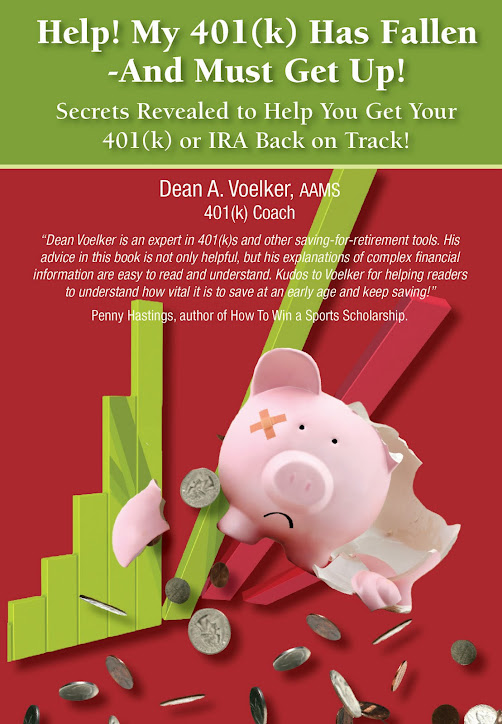
New Book - Coming November 2010

New Book - Coming November 2010
Help! My 401(k) Has Fallen - And Must Get Up!
Showing posts with label dow. Show all posts

Friday, August 14, 2009

Most Magical Place


Having 2 very young daughters, I’ve become quite familiar with the Disney Channel, but its amazing to think of how large this company is and how it affects our lives in many ways, known world wide for family friendly products.

This is NOT an opinion or endorsement of Disney Stock - simply a few interesting facts about its history. The Walt Disney Company (DIS) has been part of the Dow Jones Industrial Average since May 6, 1991.

The Walt Disney Company started in 1923 in the rear of a small office occupied by Holly-Vermont Realty in Los Angeles. It was there that Walt Disney, and his brother Roy, produced a series of short live-action/animated films collectively called the ALICE COMEDIES. http://studioservices.go.com/disneystudios/history.html

“Mickey Mouse” which still serves as the logo and mascot for Disney was originated in 1928, as one of the short animated films.

In 1937, Disney's innovative first full length animated feature, SNOW WHITE AND THE SEVEN DWARFS, was released. Walt Disney saw a need to increase the size of his studio, and moved it to Burbank, CA. He was involved with all aspects of the design, even the animators chairs. More movies such as FANTASIA, BAMBI, CINDERELLA, ALICE IN WONDERLAND, and PETER PAN were produced in the 1940’s and 1950s.

In 1954, Walt Disney had a vision of creating a Family Theme Park. Disneyland was completed in July, 1955. Disney World Magic Kingdom opened in Orlando, FL in October, 1971. To this day, Disneyland and Disney World are the standard for cleanliness, customer service, and family fun in theme parks. Sadly Walt Disney died in 1966, and did not see the opening of Disney World.

Today, the Disney entertainment empire includes Disney movies, the ABC family of networks, ESPN, the E! Entertainment Network, and of course the Disney Channel. Disney has helped launch the acting and musical careers of such recent stars as Justin Timberlake, Britney Spears, Christina Aguilera, Miley Cyrus, and the Jonas Brothers to name a few.

Disney issued its first public stock on November 12,1957. http://corporate.disney.go.com/investors/stockinfo/quote_1957.pdf The stock closed on its first day at $13.88. It has split 7 times since then, the last split happened in 1998. http://corporate.disney.go.com/investors/split_history.html. One share of DIS stock over that time due to splits & spinoffs would be worth close to $6000 today.

For more information, you can contact me directly at http://www.helpmy401k.us and you may also follow me on Twitter at www.twitter.com/deanvoelker.


Thursday, August 6, 2009

The Real Thing


Recently, I've been thinking about what else to write about. We've covered a wide range of topics - annuities, tax-free bonds, mutual funds, the importance of savings, and 401(k)s.
Although I am licensed to buy & sell individual common stock, I strongly believe that most people should own them within mutual funds. There are a number of companies that have some very interesting stories though. One of them is Coca-Cola.
This is NOT an opinion of Coca-Cola's stock, or an endorsement - merely some history, which I hope you will find as fascinating as I do.
According to Wikipedia,
http://en.wikipedia.org/wiki/Coca-Cola , the first Coca-Cola recipe was invented in a drugstore in Columbus, GA by John Pemberton in 1885. Pemberton developed it as a non-alcoholic version of French Wine Cola. The first sales were at Jacob's Pharmacy in Atlanta, GA on May 8, 1886. It was initially sold as a patent medicine for 5 cents a glass at soda fountains. Many people at that time believed that carbonated water was good for your health. Pemberton claimed Coca-Cola cured many diseases, including morphine addiction, headaches, and even impotence (the first "Viagra"?).
Asa Candler acquired a stake in Pemberton's company in 1887 and incorporated it as Coca-Cola Company in 1888. Due to some controversy in ownership, Candler incorpoarted a second time in 1892 as THE Coca-Cola Company. Coca-Cola was sold in bottles for the first time on March 12, 1894. The first outdoor wall advertisement was painted in 1894 as well in Cartersville, GA.
Although the company grew and even had a celebrity endorsement from baseball star and Georgia native, Ty Cobb http://www.tycobbfoundation.com/ common stock for Coca-Cola never went public until 1919. http://beginnersinvest.about.com/od/investmentbanking/a/aa073106a.htm
In 1919, you could buy one share of Coca-Cola (NYSE - KO) for about $40/share.
However, the price quickly fell to $19 due to a sugar shortage. http://query.nytimes.com/gst/abstract.html?res=990CEEDA1131E433A2575AC1A9619C946195D6CF Times were tough due to World War I. I'm certain many people gave up on this investment, and lost out. Had they stayed invested over the long term, that ONE SHARE of Coca-Cola stock, with splits and dividends reinvested is worth OVER $5 MILLION TODAY!!
Coca-Cola joined the Dow Jones Industrial Average on March 12, 1987.
For more information, please contact me at http://www.helpmy401k.us. You may also follow me on Twitter at http://www.twitter.com/deanvoelker.

Thursday, July 23, 2009

This Time Its Different - II

Recently I posted an article, titled “This Time It’s Different”. Most people when asked about the idea of investing in the market, have responded that “They are waiting to see what happens” and yes, “This Time It’s Different because…..”

If you read my previous article, “This Time It’s Different”, http://5reasonsyoushouldownaroth.blogspot.com/2009/07/this-time-its-different.html I referred to a study done by Hartford on the Recession of the mid 1970’s (1973 & 1974), arguably the closest parallel to our present economic situation. The low point in the market was Sept. 30, 1974. The Dow closed at 607.87 (not a misprint) This was down more than 40% from its high in 1972, when it crossed the 1000 mark for the first time. http://www.democraticunderground.com/discuss/duboard.php?az=view_all&address=389×4124348

The stock market had gone through back-to-back negative years for the first time since the Great Depression.

We should set the stage a bit at this point. In 1972, we were still heavily involved in the Vietnam War, which was highly unpopular, and dragged on for several years. Also, in 1972, the Watergate scandal began. This resulted in the indictment and conviction of several of Nixon’s closest advisors, and ultimately in the resignation of the President himself, on August 9, 1974. http://en.wikipedia.org/wiki/Watergate_scandal

To make matters worse, the Oil Embargo http://en.wikipedia.org/wiki/1973_oil_crisis was put into effect by OPEC, which refused to ship oil to the US due to their support of Israel at that time. Unemployment had reached a high of 6.7% in 1974. http://www.nytimes.com/2008/12/06/business/economy/06jobs.html

So things in 1974 looked pretty bleak. I recently read a letter written by Jim Fullerton of the Capital Group to shareholders at that time(November 1974). Here are some highlights from Mr. Fullerton’s letter.

“Each economic, market, and financial crisis is different from previous ones. But in their very difference, there is commonality….. Today there are thoughtful, experienced, respected, economists, bankers, investors, and businessmen who can (tell) you why this time the economic problems are different; why this time things are going to get even worse – and hence, why this is NOT a good time to invest in common stocks, even though they may appear low…..This time is a whole new ball game.”

“In 1942 everybody knew it was a whole new ball game…..The Germans had overrun France. The British had been thrown out of Dunkirk. The Pacific Fleet had been disastrously crippled at Pearl Harbor. We had surrendered Bataan, and the British had surrendered Singapore. The U.S. was so ill-prepared for a war that……75% of our field artillery was equipped with horse-drawn, French 75mm guns.” (Mr. Fullerton served in WWII.)

“In April 1942, inflation was rampant…..On April 8, 1942, the lead article in the (Wall Street) Journal was: ‘Home Construction, Total far behind last year’s. Private Builders hardest hit.’…..Washington D.C. also considered more drastic rationing with price fixing, or still higher taxes as a means of filling the ‘inflationary gap’ between increased public buying power and the diminishing supply of consumer goods.”

“A leading stock market commentator wrote: ‘The market remains in the dark as to just what it has to discount. And as yet, the signs are still lacking that the market has reached permanently solid ground for a sustained reversal.”

“Yet on April 28, 1942, in that gloomy environment, in the midst of a war we were losing, faced with excess-profits taxes and wage and price controls, shortages of gasoline and rubber…..and with the virtual certainty…..that once the war was over, we’d face a post-war depression, the market turned around.”

“Now I’d like to close with this: ‘Some people say they want to wait for a clearer view of the future. But when the future is again clear, the present bargains will have vanished. In fact, does anyone think that today’s prices will prevail once full confidence has been restored?’ That comment was made by Dean Witter in May of 1932 – only a few weeks before the end of the worst bear market in history.”

“Have Courage! We have been here before – and we’ve survived and prospered.”

Jim Fullerton

As of today, July 23, 2009, the Dow is up nearly 200 points, crossing the 9000 mark for the first time this year. This is a gain of over 38% from its low point of 6547 on March 9, 2009. Yes, This Time It’s Different.

For more information, you may contact me at http://www.helpmy401k.us. You may also follow me on Twitter at www.twitter.com/deanvoelker.

Thursday, July 2, 2009

This Time Its Different

Last year (2008), the Dow Jones Industrial Average fell about 34% (www.djindexes.com), then dropped ANOTHER 20% in the first 2 months of 2009.

It is estimated that investors accounts have declined in value by about $10 TRILLION DOLLARS TOTAL. http://www.businessweek.com/mediacenter/podcasts/cover_stories/covercast_03_05_09.htm

Severe recessions such as this one can test the resolve of even the most experienced investors.
It is easy to say "This time its different." Many people are still feeling that way.

However, it is important to keep in mind a few points.

* Financial decisions (any financial decisions) should not be based on emotion.
* Historically, after every past recession, the market has gone on to hit new highs.
* Declines in the market & economy, even our most severe ones, have been temporary.
* Since 1926, the Dow Jones has had TWICE AS MANY positive returns as negative ones.
Despite more than 12 recessions dating back to 1926, $1.00 invested in the Dow in 1926
would have been worth $2045.00 at the end of 2008.

The late Sir John Templeton, founder of Franklin Templeton Investments liked to say, "The Four most expensive words in the English Language are 'This time it's Different.' "

The National Bureau of Economic Research www.nber.com http://www.nber.org/cycles/
states that the United States has weathered a recession EVERY decade since the 1920's. https://financialprofessional.hartfordinvestor.com/planco/om/P7135.pdf - Page 4.

As painful as the recessions are, when we are experiencing one, they have always been short lived, about 11 months on average. It can be difficult to predict when one will end, and announcing the "end" may take a while. According to NBER, they have waited an average of 15 months before declaring an "end". This way they avoid confusion. If there is further economic turmoil, it can be linked to a new recession, rather than the old one.

While we are "waiting to see what will happen" rebounds are often quick and robust. Stocks tend to recover about 6 months before the economy does. According to Morningstar www.morningstar.com, stocks are referred to as a leading indicator. On average, stocks have returned about 25% from market lows to the "end of the recession".

Did you know that the Dow Jones has increased by nearly 30% since its low point on
March 9, 2009? Have you been "in" the whole time, or did you go to something "safe"?

3/9/2009 - 6547
7/1/2009 - 8504

"The most expensive words in the English Language are 'This time it's different'."
Sir John Templeton

If you went to cash, thinking you were being "smart", think again. Cash can actually slow your recovery, and make it much harder to get your savings back.

In a recent study, Hartford shows data from the recession of 1973-1974, which had been our most severe until the present one. The study (please contact me at www.helpmy401k.us for more information) shows 4 seperate scenarios, each starting with $100,000 invested in equities on Dec. 31, 1972.
(Equities are represented by the S & P 500 Index. Cash is represented by the 30 Day Treasury Bill Index.)

In the study, they wanted to see how long it would take to recover the original $100,000 for the Low Point in the Market (Sept. 30, 1974)

Investor A (stayed in Equities) - back to $100,000 in July 1976 (1.75 years)
Investor B (moved to cash for 6 months, starting 9/30/1974) (5.3 years, or Jan. 1980)
Investor C (moved to cash for 12 months, starting 9/30/1974) (also 5.3 years)
Investor D (moved to cash for 18 months, starting 9/30/1974) (6.2 years, or Nov. 1980)

Yogi Berra sometimes said, "Its deja vu all over again."

In a challenging economy such as this one, isn't this precisely when you need a financial professional working side by side with you?

For more information, please contact me at http://www.helpmy401k.us. You may also follow me on Twitter at www.twitter.com/deanvoelker.