New Book - Coming November 2010

New Book - Coming November 2010
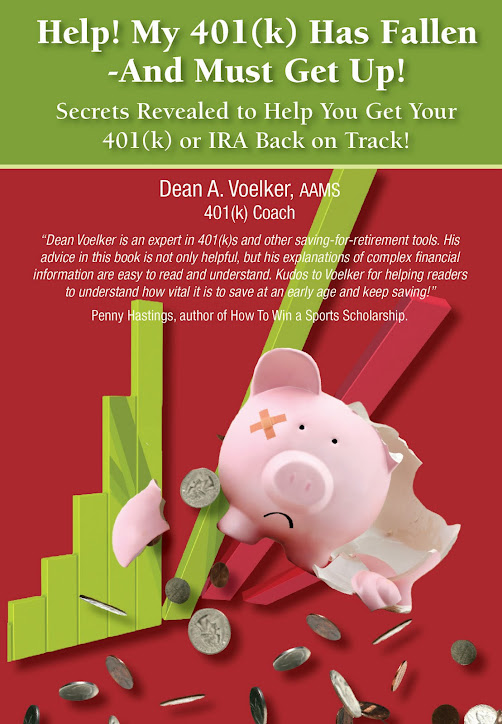
Help! My 401(k) Has Fallen - And Must Get Up!
Showing posts with label wealth. Show all posts

Wednesday, February 3, 2010

Taking Stock

I'm not a big individual stock fan. For most people, mutual funds are a much better way to invest. Its easier to be diverisfied and its also easier to add money systematically.

However, I did see something recently which I thought my readers may enjoy. If you were going to invest in stocks, which companies would be good ones to own long-term? At least one sign of a great company is one which is able to consistently increase their dividend payment.

If you aren't sure what a dividend is, think of it this way. When you own stock, you own a tiny piece of that company. Your investment rises and falls with the performance of the company. Over time, you would like to think the company will grow, and your money will grow with it. Companies which have established themselves and become profitable will share part of their profits with you as a part owner. Those profit sharing payments are known as dividends and are usually paid once every 3 months.

Again, the sign of a great company is one which has raised its dividend payment consistently, even in tough times. Raising the dividend for shareholders is like giving them a pay raise. (CDs don't do THAT!!) Those companies would be great to own long term.

What if a company were able to raise its dividend 25 years in a row or more?

Here are the ones which have:
Abbott Labs                     (ABT)
Bemis                               (BMS)
Century Tel                     (CTL)
Chubb                               (CB)
Coca-Cola                        (KO)
Exxon-Mobil                    (XOM)
Johnson & Johnson         (JNJ)
Mc Donalds                     (MCD)
3M                                   (MMM)

Pitney Bowes                  (PBI)
PPG                                 (PPG)
Proctor & Gamble          (PG)
Walmart                          (WMT)    

S&P reports that since 1926, dividends have contributed to about 1/3 of the total return on your investment.

Another thing I like about dividends is that when the stock price goes down, the dividend yield goes up. Its a great time to buy more of great companies. That is what Warren Buffett does!

For example, lets look at Proctor & Gamble. Shares of PG are currently (2/3/10) at $62.90. Dividends are paid at $1.76/share, which is divided into 4 quarterly payments. You will get a dividend return of 2.8% on any shares purchased at that price.

What if you had been fortunate enough to buy in March of 2009, when it was selling for around $44/share? Well, you still would have gotten $1.76 per share, but that works out to about a 4% dividend return. (Better than a CD, and with potential to grow!)

Warren Buffett has become extremely wealthy because he buys great companies and holds them, collecting dividends which increase year after year after year.

Again, I am not encouraging people to buy individual stocks. There are plenty of financial stocks such as Citigroup and Bank of America which also had wonderful histories of increased dividends, until 2008.
Dividends are certainly something to consider though for any investment - including mutual funds and annuities.

You can contact me through my website, http://www.helpmy401k.us/. You can also contact me on LinkedIn at http://www.linkedin.com/in/dvoelker, or Twitter at http://www.twitter.com/deanvoelker. I am currently hosting a weekly financial advice program, "Improving Your Financial Health" on Blog Talk Radio at http://www.blogtalkradio.com/401kcoach.  Let me know how I may help you!


Wednesday, August 26, 2009

Raising Arizona (and Arizona State and Others)

OK, I know - cheap marketing gimmick to get you to read it. Sorry I don't have anything Nicholas Cage here. However this may be more valuable information than the movie.

Inflation affects everything - the price of bread, milk, gasoline etc. But one thing that seems to have gone up even more drastically is the cost of college. When I graduated from the University of Illinois in 1986, I left with about $3000 in student loans, which was easily repaid in a few years.

Today, student loans can reach $19,000 or more for a graduating senior from a public college.
http://encarta.msn.com/encnet/departments/financialaid/?article=averagestudentloans For
private schools that figure may be even higher.

Want to study law or medicine? For as long as I can remember (back to my finger painting days), those were the "good money" jobs. Both professions require years of post graduate education and loans can easily climb into the $100,000 range. Recently, I saw a young female med student on the news questioning President Obama about his healthcare proposal. Her concern was that at graduation, her total student debt would exceed $300,000 - yes that was not a typo. She wasn't sure if her future income would be sufficient to pay it back.

Really?? I think some thought should have gone into this before taking the loans. Its hard to blame either the President or his healthcare bill for that. Out of curiousity, I checked to see what a monthly payment on this would be. To pay off $300,000 in 12 years at 5% interest would require a monthly payment of $2775.00. Now you could take longer or the interest rate may be different, but this gives you an idea. Certainly its out of my ballpark.

Dave Ramsey always encourages his listeners to look at the opportunity cost of buying something - whether its a car, a flat screen TV, or even college. http://www.daveramsey.com/etc/cms/go_to_college_5788.htmlc

What that means is - even if you have the money, what other opportunities might you be missing? What else could the money be used for? When it comes to college, can you really afford it if it means loading yourself down with debt? What is your re-payment plan going to be?
How likely is it to get a career in your chosen field of study that will allow you to re-pay the loan?

I'm not anti-college. I just want us to think and ask questions first before jumping in.

In the early days of the United States, colleges such as Harvard and Yale were primarily for the wealthy. As the country grew and times changed, state schools offered a wider range of programs and more people were able to attend college.

"No qualified student who wants to go to college should be barred by lack of money. That has long been a great American goal. I propose that we achieve it now." Former President Richard M. Nixon said this in a special message to Congress in 1970. A lot has happened in the past 40 years. Are we back to a point where college is only for the wealthiest among us?

As a Financial Advisor, I will say that college does require financial planning and disciplined saving. Flipping burgers for the summer will only scratch the surface.

In my next part on this, we will look at some solutions which can help with college costs.

You can contact me at www.helpmy401k.us and follow me on Twitter at www.twitter.com/deanvoelker. You can also listen to me on Blog Talk Radio at www.blogtalkradio.com/401kcoach.

Friday, August 14, 2009

Most Magical Place


Having 2 very young daughters, I’ve become quite familiar with the Disney Channel, but its amazing to think of how large this company is and how it affects our lives in many ways, known world wide for family friendly products.

This is NOT an opinion or endorsement of Disney Stock - simply a few interesting facts about its history. The Walt Disney Company (DIS) has been part of the Dow Jones Industrial Average since May 6, 1991.

The Walt Disney Company started in 1923 in the rear of a small office occupied by Holly-Vermont Realty in Los Angeles. It was there that Walt Disney, and his brother Roy, produced a series of short live-action/animated films collectively called the ALICE COMEDIES. http://studioservices.go.com/disneystudios/history.html

“Mickey Mouse” which still serves as the logo and mascot for Disney was originated in 1928, as one of the short animated films.

In 1937, Disney's innovative first full length animated feature, SNOW WHITE AND THE SEVEN DWARFS, was released. Walt Disney saw a need to increase the size of his studio, and moved it to Burbank, CA. He was involved with all aspects of the design, even the animators chairs. More movies such as FANTASIA, BAMBI, CINDERELLA, ALICE IN WONDERLAND, and PETER PAN were produced in the 1940’s and 1950s.

In 1954, Walt Disney had a vision of creating a Family Theme Park. Disneyland was completed in July, 1955. Disney World Magic Kingdom opened in Orlando, FL in October, 1971. To this day, Disneyland and Disney World are the standard for cleanliness, customer service, and family fun in theme parks. Sadly Walt Disney died in 1966, and did not see the opening of Disney World.

Today, the Disney entertainment empire includes Disney movies, the ABC family of networks, ESPN, the E! Entertainment Network, and of course the Disney Channel. Disney has helped launch the acting and musical careers of such recent stars as Justin Timberlake, Britney Spears, Christina Aguilera, Miley Cyrus, and the Jonas Brothers to name a few.

Disney issued its first public stock on November 12,1957. http://corporate.disney.go.com/investors/stockinfo/quote_1957.pdf The stock closed on its first day at $13.88. It has split 7 times since then, the last split happened in 1998. http://corporate.disney.go.com/investors/split_history.html. One share of DIS stock over that time due to splits & spinoffs would be worth close to $6000 today.

For more information, you can contact me directly at http://www.helpmy401k.us and you may also follow me on Twitter at www.twitter.com/deanvoelker.


Monday, August 3, 2009

Caught In The Web


One of the truly wonderful things about being an Independent Financial Advisor is that it has really allowed me to open myself up and explore new and different ways of connecting with prospective clients.
I'm sure you'd agree that the past couple of years have been difficult for investors, haven't they? Difficult because of disappointing returns on your savings. Even if you don't consider yourself a stock market investor, you are discouraged with interest rates on your CDs and savings accounts.
However a dangerous side effect to all of this has been that many people have scrapped solid investing principles. They have become like ships without a rudder, not knowing where to turn, and fearful of trusting anyone or anything. Times like these are when we really NEED professional advice more than ever, wouldn't you agree? So where do you find good sound professional advice? Whom do you trust?
For someone like myself, I'm learning that traditional marketing methods - cold calling, mailers, and print ads have been less effective than usual in reaching out to others and making connections. Have you noticed that over the years, TV and Radio Programs include MORE ads and LESS programs? http://www.nydailynews.com/archives/entertainment/2005/07/28/2005-07-28_kelley__too_many_ads_on_netw.html
Its like that old Wendy's ad (oops there is another one!) "Where's the Beef?"
We've become jaded and resistant to traditional marketing. Again, my belief is that people need professional advice NOW more than ever. For me, its also very important to connect with clients whom I can truly serve. A great client is one that we have established a bond of trust. They have shared their goals and dreams with me, and they are open-minded to my advice. When they hear my advice, they can easily see that I want to help them reach their goals, and my advice is truly in their best interests.
So how does one find "great clients" without traditional marketing methods that aren't effective?Using social media websites has been one solution. Writing this blog has been fun, and its allowed me to provide professional advice which anyone can use and benefit from.
Linked In (www.linkedin.com/in/dvoelker) is a great site to reinforce my professional side. It is my online resume and helps me to establish my credentials. I'm also very active in my local Chamber of Commerce (www.sjchamber.org). This provides some great networking opportunities.
Twitter (www.twitter.com/DeanVoelker) allows us to say anything to the whole world (in 140 characters or less). This is a good way to post notices for my blog or other articles of interest.
Facebook (www.facebook.com/dean.voelker) is an absolute blast, which has allowed me to show a more personal side, as well as professsional. And of course, all of these sites allow you to access my own website (www.helpmy401k.us), which serves as another excellent resource for retirement savings.
Most recently, at the suggestion of my friend, Brian, whom I've know since high school, I've also begun a weekly internet radio broadcast (www.blogtalkradio.com/401kcoach). Brian has extensive radio experience and has been very helpful in helping me get started. This show has been a lot of work, but also fun to do, and certainly helps to set me apart from other advisors.
I've always been a believer in giving. What goes around comes around. My faith in God tells me that we will get throught this challenging time, and be stronger for it. Someone recently told me that God is never in a recession. Have Faith!
Please contact me at www.helpmy401k.us if I may be of service to you in any way.

Thursday, July 9, 2009

How Do I Keep My IRA From Being Eroded By Taxes When I Die?

Recently, I have been reading “The Retirement Savings Time Bomb…and How To Diffuse It” by Ed Slott. Ed is a highly renowned CPA and tax advisor. He has written for the Wall Street Journal, the New York Times, and USA Today. His book focuses on strategies to keep money in your savings, and away from the IRS.

One strategy of his, which I also recommend to my high net worth clients is the use of Life Insurance for estate planning. Because Life Insurance proceeds are not taxable, it’s a great way to pass money to your beneficiaries without creating a tax burden for them.

Ed uses a great story to make his point on why insurance is important. With his permission, I have included an excerpt from his book. Ed Slott’s website is www.irahelp.com.
******************************************************************************
If you’re not a baseball fan, then the name Bill Buckner probably doesn’t ring a bell. But if you follow the game, you’ll recognize it as one of the most ignominious names in the history of baseball.

Bill Buckner was the first baseman for the Boston Red Sox in the 1986 World Series when the Sox were matched against the New York Mets. It was Game 6. The Red Sox were an out away from winning a World Series for the first time in 68 years. The ball was pitched, the Mets batter swung and connected with a thunderous c-r-a-c-c-k-k, sending the ball straight to first base and the outstretched arms of Bill Buckner, who flubbed the catch before the stunned but elated crowd in New York’s Shea Stadium, letting the ball roll between his legs!

Thanks to this colossal error, the Mets were able to pull their fanny from the fire, win the game that night, and go on to win Game 7 and the World Series title. The city of Boston has never forgiven Bill Buckner. Last I heard, he’d moved to Idaho, which apparently still wasn’t far enough for Boston fans. To Boston Red Sox fans in particular, and to baseball fans in general, Bill Buckner remains but one thing: The Man Who Dropped the Ball.

Now, what if I told you the Bill Buckner was also one of the best players ever to play the game of baseball? Would you be shocked? Disbelieving? I know I was when I heard that exact statement mad in a recent show about Buckner called “Beyond the Glory” on the Fox Sports Network. Being an accountant by trade, I decided to do my own audit of Buckner’s statistics to see if the show was right.

But how would I find those statistics? Easy. I went to a local baseball card store and asked the owner if he had any Bill Buckner cards for sale. He looked at me like I’d sprouted two heads.
“Why would you want a Bill Buckner card?” he asked. “Nobody wants them. That’s why I don’t carry any. We’d never sell them.” But I persisted, and he said he’d check around the baseball card grapevine to see if he could come up with one.

I went back in a few weeks and, lo and behold, he’d managed to dig up a few old Bill Buckner cards for me. “How much?” I asked.

He said, “They’re worthless. You can have ’em for free.”

I thanked him, took the cards home, and quickly checked Bill Buckner’s statistics. Fox was right. The numbers were astounding!

Bill Buckner played 22 seasons. Only 25 players in the history of baseball have pleyed more games then he did. He’d gotten more hits than 70% of the players currently in the Baseball Hall of Fame, including such superstar names as Mickey Mantle, Ernie Banks, Reggie Jackson, Johnny Bench, and even Ted Williams. He had 500 more hit’s the Joe Di Maggio!

When Buckner played for the Chicago Cubs, he won a National League batting title. He was also an exceptional fielder. He genuinely was one of the greatest players the game of baseball has ever had. And yet he will be forever locked in the Baseball Hall of Shame for that one slip-up at the end of his career that cost the Red Sox the World Series.

As I pondered the ill-fated career of Bill Buckner, I found myself thinking, “He’s a lot like an IRA. He had such a brilliant career, accumulated so much, but in the end lost it all due to one error, and now his name is mud.”

Is that how you want your family to remember you? As the guy (or gal) who dropped the ball?
Most people don’t think about it much, but the combination of estate and income taxes can easily consume an IRA of any size. Combined, estate taxes, along with federal and state income taxes could easily exceed 90%.…..

When it comes to retirement accounts, its not enough to earn great investment returns. Yes, that is important in building the account, but even if you earn 30% per year, every year for 30 years, what good is it if, at the end of the line, up to 90% of the account’s value is lost - which can happen if the funds aren’t there to pay the combined estate and income taxes on an inherited IRA, and so the IRA itself must be used to pay those taxes.

If an IRA must be tapped to pay tax when the IRA owner dies, the result is a cycle of taxation that doesn’t stop until the beneficiaries are so punch drunk that they don’t know what’s happened to them, let alone to their IRA…..

Do something now while you are still alive and options to protect that money for your heirs still exist. Life Insurance is your retirement account’s best defense to offset the tax burden which beneficiaries may face.
******************************************************************************
For more information, please contact me at http://helpmy401k.us. You may also follow me on Twitter at www.twitter.com/deanvoelker

Tuesday, June 30, 2009

Lets Say I Live To 100

People are living much longer these days. With modern medicine, technology, and taking better care of ourselves, reaching 100 is much more common than it used to be. According to a Wall Street Journal article from April 14, 2008, Hallmark sold over 85,000 “Happy 100th Birthday”
cards in 2007. And that is just Hallmark. Currently the average life expectancy for a Female is 87 years, and 85 years for a Male.

Living that long is great, but it can also raise concerns about your savings. What are you doing to make sure your money lasts that long also? Can your savings generate income for the rest of your life, even if you live to 100 or beyond?

Also, how prepared are you to keep up with rising costs? Did you know that 20 years ago (1989), the cost of a postage stamp was 0.25 and a gallon of gas was about 0.97? Compare those prices with today. A stamp is 0.44 and a gallon of gas…..well it fluctuates more than the stock market. As of today, it is about 2.45, and last summer had peaked well over 4.00.

If you are retired for 20 years or more, costs will go up. How can your savings handle that? Can you give yourself “Pay Raises” and still make it last?

One last question for consideration - this past year was one of the most challenging ever for investors. How can you grow your income, make your money last, and do it “Safely”?

Here are some tips that may help answer these burning questions.

* Talk with your advisor. And if you don’t have a strong relationship with your advisor, or
you don’t feel they have your best interests in mind, find a new one. Your advisor needs to be a
great listener, and your partner - NOT just a stockbroker. Tell them what your needs are.
What is most important to you about your money?

* Be Open Minded. If your money is going to last for your lifetime, CDs aren’t going to get it
done. Especially at the current bank rates today. There are other ways you can invest, and
let your money grow over time safely. A good advisor should learn as much about you as
they are able - just like a doctor who will learn your history before prescribing anything.

“Whatever you fear most has no power - it is your fear that has the power.”
Oprah Winfrey

* Be Diversified. I’ve always thought of “diversification” like clothes in your closet.
You need to have clothing for summer, winter, fall, casual wear, dressing up,
working in the yard…..ALL occasions and ALL types of weather. Investing needs to be
the same. Would you like less risk? The best way to do that is by diversifying.

“Money, you should pardon the expression, is a little bit like manure. It doesn’t
do any good unless it’s spread around, encouraging young things to grow.”
Barbra Streisand

For more information on how to make your money last to 100 or beyond, please contact me at
www.helpmy401k.us. You may also follow me on Twitter at www.twitter.com/deanvoelker.

Wednesday, May 20, 2009

Fixing Your 401(k) - Part 1

Did you know that over 50% of Americans have a 401(k) plan? For many of us it is our primary funding source of retirement savings. For some, it may be the only source of savings. http://www.gallup.com/poll/16564/Many-Consumers-Lack-Rainy-Day-Fund.aspx

401(k) Plans can be great for helping to fund your retirement - - IF you are saving enough and don't fall into some common traps. I love 401(k)s and have a passion for helping companies and indviduals get more from their plans. With that in mind, I am going to address 5 major issues with 401(k) plans in my next several posts.

Around 1985, 401(k) plans passed pensions as the Primary Retirement Vehicle, as the New York Times states in a recent article.
http://roomfordebate.blogs.nytimes.com/2009/03/25/so-much-for-the-401k-now-what/?scp=4&sq=401k%20passed%20pension&st=cse

Pensions had been dying for a long time, mostly due to cost. 401(k)s require employees to contribute to their own retirement savings. Many companies provide a matching contribution of some sort, although in recent times, those have also been cut back.
http://www.nytimes.com/2008/12/21/your-money/401ks-and-similar-plans/21retire.html?_r=1&scp=5&sq=401k%20passed%20pension&st=cse

How did 401(k)s come into being?

In 1978, the Tax Reform Act passed (Provision Internal Revenue Code Section 401(k)), which allowed employees to receive a portion of their income as tax deferred compensation. Ted Benna
http://pipl.com/directory/people/Ted/Benna then created the first 401(k) in 1979. Also in that year, Johnson & Johnson, Honeywell, and Pepsico established 401(k) plans for their employees.

In my next post, we will look at the first serious issue which needs to be addressed in 401(k)s -
PARTICIPATION.

For more information, please contact me at http://www.helpmy401k.us/.