Well, my daughter wanted to see the "Wimpy Kid" movie yesterday. I know she likes the book series and they are pretty funny so we went.
The movie was pretty funny, a bit different from the book with several new adventures for the Wimpy Kid, Greg Heffley, as he deals with surviving middle school. You really don't want to know about the "cheese touch".
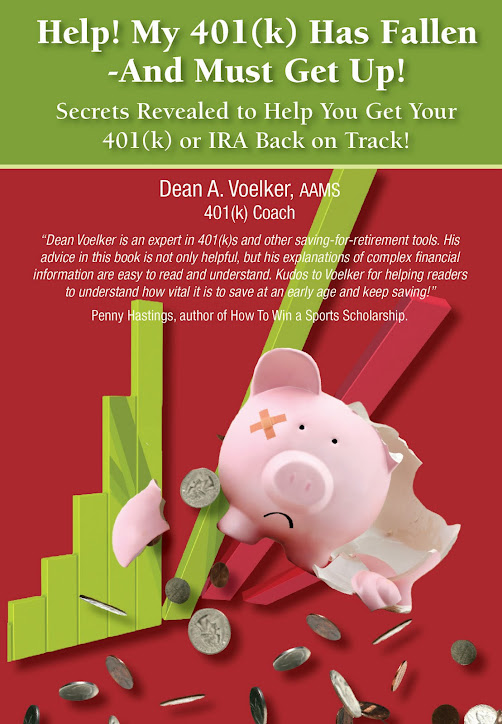
I'm not planning a "movie" for my book "Help! My 401(k) Has Fallen - And Must Get Up!" Although if Bruce Willis' agent will return my calls, I may change my mind. James Gandolfini might be interesting also......
a 'mafia' financial advisor......hmmmmm.
Seriously, don't look for a movie with either of these guys. Although I am still planning a short video clip with Pentavision. I'm supposed to meet with them again this week.When we put up the new website, the video will be there and we can direct orders to the page on Amazon.
I'm also getting more book cover ideas this week, which I hope to be able to post and get feedback.
My other project is to find blogs on 401(k)s and IRAs and post responses to questions. I have several which I know of.
If any readers want to send me links for 401(k) blogs, please contact me.
You can get a copy of a free report on my website – "The 5 Biggest Problems With 401(k) Plans – And How to Fix Them".
You may also contact me on Linked In or Twitter at http://www.twitter.com/deanvoelker. I also host a weekly financial advice program, Improving Your Financial Health on Blog Talk Radio and WHME-FM.
Showing posts with label debt. Show all posts
Showing posts with label debt. Show all posts
Monday, March 22, 2010


Thursday, March 11, 2010
Diary of a Wimpy 401(k) - Day One
I haven't blogged much lately for 2 reasons. First, I have spent most of my spare time on my book, which is basically finished, at least the writing part. It is titled, "Help! My 401(k) Has Fallen - And Must Get Up!"
That was the easy part. Now comes the hard part - getting it off of my computer and into book form. Then we need to get it into your hands, and the hands of those who need help with their 401(k).
Then I had an idea......why not write a diary? I could log the process of getting a book published.
My daughter has really enjoyed the "Diary of a Wimpy Kid" books by Jeff Kinney, which is now being made into a movie. The books really are funny, and bring back a lot of middle school memories. (OK, Jeff - since I just plugged your books, please don't sue me.)
My other inspiration here was from the movie "Julie & Julia". Don't worry, I can't talk like Julia Child, or cook like her. My main culinary feat is chili, and I don't think Ms. Child ever did that!
The movie talked about how the other main character, Julie Powell, wrote a daily blog about Julia Child's cookbook "How to Master the Art of French Cooking".
So, I have decided to chronicle my adventures of getting the book "Help! My 401(k) Has Fallen - And Must Get Up!" into print. Stay tuned, this could get 'wimpy'.
That was the easy part. Now comes the hard part - getting it off of my computer and into book form. Then we need to get it into your hands, and the hands of those who need help with their 401(k).
Then I had an idea......why not write a diary? I could log the process of getting a book published.
My daughter has really enjoyed the "Diary of a Wimpy Kid" books by Jeff Kinney, which is now being made into a movie. The books really are funny, and bring back a lot of middle school memories. (OK, Jeff - since I just plugged your books, please don't sue me.)
My other inspiration here was from the movie "Julie & Julia". Don't worry, I can't talk like Julia Child, or cook like her. My main culinary feat is chili, and I don't think Ms. Child ever did that!
The movie talked about how the other main character, Julie Powell, wrote a daily blog about Julia Child's cookbook "How to Master the Art of French Cooking".
So, I have decided to chronicle my adventures of getting the book "Help! My 401(k) Has Fallen - And Must Get Up!" into print. Stay tuned, this could get 'wimpy'.
Sunday, February 21, 2010
Blog Talk Radio - Be Our Guest
I've been a bit busy this week, working on my upcoming book, "Help! My 401(k) Has Fallen - And Must Get Up!" . This is an "everyman's" (and everywoman's) guide to getting more from your 401(k) plan. Most books I have seen on 401(k) plans really are geared more to advisors and financial people, which is what inspired me to write it.
For most of us, the 401(k) is a major source of our savings, and for some it may be the ONLY source of savings. We need to get more out of it if we want to retire someday and have our money last the rest of our lives. I'm very excited to contribute something unique - and hope others find it helpful.
Anyway, I plan on doing more with the blog and hope that my message finds the right people. Last week I wrote about Blog Talk Radio. My experience with Blog Talk Radio has been great. I began using it in July 2009 on the advice of a friend of mine, Brian Seim, a radio veteran.
Although I have made a TON of mistakes (and still do!), I must have done a few things right also. A few weeks ago I began an affiliation with WHME-FM in South Bend (103.1) . We agreed to replay my interviews from Blog Talk Radio as a 30 minute program on Saturday mornings - "Improving Your Financial Health" .
If I had to pick the one factor which has made the show appealing - its the GUESTS! My guests have mostly been financial experts and authors, although some have been very interesting people with great personalities with no financial background at all. Even so, they had something of value to share with listeners and wer a lot of fun to talk with. Some examples would be Ruben Gonzalez, a 4 time Olympian who has written 3 books on staying motivated, or Charlie Adams, who is also a professional speaker and helps High School athletes to get college scholarships. Kristen Harmel who has written 6 novels and has a passion for helping kids with reading, Kay Yasin who overcame personal tragedies to change her life and is now an expert trainer and bodybuilder, and Darin Pritchett who is well known in the South Bend area for his Weekday Sportsbeat show. These and many others are wonderful people and gave fun & interesting interviews. All would all be welcome guests in the future.
Once I committed myself to doing the program, I have always been on the lookout for people who would make great guests . When I find someone I like, I contact them and and tell them about the program and try to schedule a time for them to be on. Always let them know that you are doing this regularly (for me once a week) and tell them names of other guests I've interviewed.
Whatever you choose to do a program about - for business or for fun - I would certainly recommend having interesting guests that fit in with your message. Again, the guests make the show fun. (Who would want to listen to just me for 30 minutes?)
People have often asked me where I find my guests. You can find guests in several places. My main source would be searching the internet for financial blogs or articles I also subscribe to Money and Smart Money magazines and have found great articles there.
Referrals can be a great source also once you tell others what you are doing. My friend, Nikki Stauffer in Ada, MI deserves a special mention. She has referred 2 nationally recognized financial experts and authors to me who are guests. Eric Tyson (author of "Investing for Dummies" and "Personal Finance for Dummies") was one. There aren't many financial advisors out there who can say they have their own "jingle" written by Paul Shaffer of the David Letterman band. Another is Robert Krakower, who has graciously agreed to be interviewed on March 23. His new book is titled "Redefining Retirement for a New Generation".
By the way, Nikki Stauffer has a great weekly show of her own, "Gather Round the Table" . She has also done pretty well with guests, including Megyn Price (Rules of Engagement), Maria Canals-Barrera (Wizards of Waverly Place), and Mayim Bialik (Blossom), among others. This program promotes the importance of family values by eating meals together, and Nikki's guests normally share one of their favorite recipes. Check out her site and archived interviews at http://www.gatherroundthetable.com/.
I also need to thank Erica Sandberg one of my early guests, and author of "Expecting Money", for her referral of a colleague of hers, Sally Herigstad, CPA, and author of "Help! I Can't Pay My Bills!". Both ladies were wonderful guests and I look to have them on Blog Talk Radio again.
Pam Batcho of Express Pros, also has been a great referral source. She referred Ruben Gonzalez, whom I mentioned earlier and also her boss, Norm Robertson, owner of the local Express Pros branch.
Sometimes, it pays to be persistant. Anya Kamenetz was a young lady I had really admired from reading her first book, "Generation Debt" a few years ago. It highlights the challenges of being young today, especially with the high costs of college and student loans. Anya was nominated for a Pulitzer Prize for her efforts.
She is also a nationally recognized speaker, and has appeared on college campuses nationwide.
I knew Anya would make a great guest, and tried to e-mail her (4 times over 6 weeks) with no reply. Finally one day out of the blue, I got a very kind note from her. She apologized that she had been out of town and wasn't getting her e-mails. She also sent me her personal e-mail and agreed to an interview. The interview went great and it was quite an honor for me.
Whoever the guest is, I really try to be respectful of their time. I really want to make sure the experience goes well for them - I may want to have them back sometime, or want their help with a project.
Before doing a program, I send the guest specific instructions confirming the date and time and Call-In phone number. Since some of my guests live in different parts of the country, I also make sure I note EST - and whatever time it may be for them. 1:00 pm here is 10:00 am in California. That may seem like a small thing, but trust me - its important!
Another habit of mine is to send the guest a list of questions personally tailored to them. Some guests have even suggested questions that the like to be asked. By reviewing their website or reading their books, it has helped me quite a bit to learn about them. It helps the interview to go more smoothly.
My objective is to build them up as an expert which (I hope) makes me look like a good guy as well. Speaking of building up, its also very important to use a proper introduction. A good introduction should be at least 3 sentences, highlighting their achievements. You are telling your listeners why you chose this person to be on your show and why their advice will be valuable to them.
One last point on guests - You can't say "Thank You" enough. I always thank them at the end of the program and give them a chance to give contact information and promote their book or services . After the show, I also send an e-mail thanking them for their time once more.
Blog Talk Radio has been a great venue for me. I plan on writing one more article about Blog Talk Radio, which includes tips and techniques. You can contact me through my website, http://www.helpmy401k.us/ and
through Linked In or Twitter.
There is a Free Report now available through my website, "The 5 Biggest Problems With 401(k)s - And How To Fix Them". Please contact me to receive your free copy. This is a sample of my upcoming book, "Help! My 401(k) Has Fallen - And Must Get Up!"
For most of us, the 401(k) is a major source of our savings, and for some it may be the ONLY source of savings. We need to get more out of it if we want to retire someday and have our money last the rest of our lives. I'm very excited to contribute something unique - and hope others find it helpful.
Anyway, I plan on doing more with the blog and hope that my message finds the right people. Last week I wrote about Blog Talk Radio. My experience with Blog Talk Radio has been great. I began using it in July 2009 on the advice of a friend of mine, Brian Seim, a radio veteran.
Although I have made a TON of mistakes (and still do!), I must have done a few things right also. A few weeks ago I began an affiliation with WHME-FM in South Bend (103.1) . We agreed to replay my interviews from Blog Talk Radio as a 30 minute program on Saturday mornings - "Improving Your Financial Health" .
If I had to pick the one factor which has made the show appealing - its the GUESTS! My guests have mostly been financial experts and authors, although some have been very interesting people with great personalities with no financial background at all. Even so, they had something of value to share with listeners and wer a lot of fun to talk with. Some examples would be Ruben Gonzalez, a 4 time Olympian who has written 3 books on staying motivated, or Charlie Adams, who is also a professional speaker and helps High School athletes to get college scholarships. Kristen Harmel who has written 6 novels and has a passion for helping kids with reading, Kay Yasin who overcame personal tragedies to change her life and is now an expert trainer and bodybuilder, and Darin Pritchett who is well known in the South Bend area for his Weekday Sportsbeat show. These and many others are wonderful people and gave fun & interesting interviews. All would all be welcome guests in the future.
Once I committed myself to doing the program, I have always been on the lookout for people who would make great guests . When I find someone I like, I contact them and and tell them about the program and try to schedule a time for them to be on. Always let them know that you are doing this regularly (for me once a week) and tell them names of other guests I've interviewed.
Whatever you choose to do a program about - for business or for fun - I would certainly recommend having interesting guests that fit in with your message. Again, the guests make the show fun. (Who would want to listen to just me for 30 minutes?)
People have often asked me where I find my guests. You can find guests in several places. My main source would be searching the internet for financial blogs or articles I also subscribe to Money and Smart Money magazines and have found great articles there.
Referrals can be a great source also once you tell others what you are doing. My friend, Nikki Stauffer in Ada, MI deserves a special mention. She has referred 2 nationally recognized financial experts and authors to me who are guests. Eric Tyson (author of "Investing for Dummies" and "Personal Finance for Dummies") was one. There aren't many financial advisors out there who can say they have their own "jingle" written by Paul Shaffer of the David Letterman band. Another is Robert Krakower, who has graciously agreed to be interviewed on March 23. His new book is titled "Redefining Retirement for a New Generation".
By the way, Nikki Stauffer has a great weekly show of her own, "Gather Round the Table" . She has also done pretty well with guests, including Megyn Price (Rules of Engagement), Maria Canals-Barrera (Wizards of Waverly Place), and Mayim Bialik (Blossom), among others. This program promotes the importance of family values by eating meals together, and Nikki's guests normally share one of their favorite recipes. Check out her site and archived interviews at http://www.gatherroundthetable.com/.
I also need to thank Erica Sandberg one of my early guests, and author of "Expecting Money", for her referral of a colleague of hers, Sally Herigstad, CPA, and author of "Help! I Can't Pay My Bills!". Both ladies were wonderful guests and I look to have them on Blog Talk Radio again.
Pam Batcho of Express Pros, also has been a great referral source. She referred Ruben Gonzalez, whom I mentioned earlier and also her boss, Norm Robertson, owner of the local Express Pros branch.
Sometimes, it pays to be persistant. Anya Kamenetz was a young lady I had really admired from reading her first book, "Generation Debt" a few years ago. It highlights the challenges of being young today, especially with the high costs of college and student loans. Anya was nominated for a Pulitzer Prize for her efforts.
She is also a nationally recognized speaker, and has appeared on college campuses nationwide.
I knew Anya would make a great guest, and tried to e-mail her (4 times over 6 weeks) with no reply. Finally one day out of the blue, I got a very kind note from her. She apologized that she had been out of town and wasn't getting her e-mails. She also sent me her personal e-mail and agreed to an interview. The interview went great and it was quite an honor for me.
Whoever the guest is, I really try to be respectful of their time. I really want to make sure the experience goes well for them - I may want to have them back sometime, or want their help with a project.
Before doing a program, I send the guest specific instructions confirming the date and time and Call-In phone number. Since some of my guests live in different parts of the country, I also make sure I note EST - and whatever time it may be for them. 1:00 pm here is 10:00 am in California. That may seem like a small thing, but trust me - its important!
Another habit of mine is to send the guest a list of questions personally tailored to them. Some guests have even suggested questions that the like to be asked. By reviewing their website or reading their books, it has helped me quite a bit to learn about them. It helps the interview to go more smoothly.
My objective is to build them up as an expert which (I hope) makes me look like a good guy as well. Speaking of building up, its also very important to use a proper introduction. A good introduction should be at least 3 sentences, highlighting their achievements. You are telling your listeners why you chose this person to be on your show and why their advice will be valuable to them.
One last point on guests - You can't say "Thank You" enough. I always thank them at the end of the program and give them a chance to give contact information and promote their book or services . After the show, I also send an e-mail thanking them for their time once more.
Blog Talk Radio has been a great venue for me. I plan on writing one more article about Blog Talk Radio, which includes tips and techniques. You can contact me through my website, http://www.helpmy401k.us/ and
through Linked In or Twitter.
There is a Free Report now available through my website, "The 5 Biggest Problems With 401(k)s - And How To Fix Them". Please contact me to receive your free copy. This is a sample of my upcoming book, "Help! My 401(k) Has Fallen - And Must Get Up!"
Monday, January 4, 2010
New Years Resolutions
"Now is the accepted time to make your regular annual good resolutions. Next week you can begin paving hell with them as usual." Mark Twain
Here we are - a New Year. Some also say a New Decade.
What 'Financial' Resolutions have you made? Can't think of any? Here are a few tips.
1. Review and Rebalance your Investments and 401(k)
If you have been putting it off for a while to "wait & see", your account is probably seriously out of balance. Sit down with an advisor to review your goals and make your your fund mix matches what your needs are.
2. Increase Contributions to Your 401(k)
Are you putting between 10% and 15% into your 401(k) at work? If not, then at least raise the amount you are putting in. Gradually work yourself up to that level. You will need the nest egg for income later.
3. Pay Off Credit Cards and Other Debt
If you are having trouble with #2, get these paid off and free up some money for yourself.
4. Set Up a Budget and Stick To It
There are a number of places you can find good basic worksheets for setting up a budget. It should be simple. Just make sure all of your money has a place to go - either savings or expenses. Here is a site with some downloadable sheets. http://www.betterbudgeting.com/
5. Contribute to a Roth IRA and Convert Pre-Tax Retirement Savings
You can put up to $5000 into a Roth ($6000 if you are 50 and older). You can still make 2009 contributions up until April 15. The Roth IRA of course grows tax free and allows you to make withdrawals at retirement which are also tax free.
There are no income restrictions for the Roth this year and if you choose to convert any money from your Traditional Pre-Tax IRA to the Roth, you may spread the taxes out over the next 2 years.
You can contact me through my website, http://www.helpmy401k.us/. You may also follow me on Twitter at http://www.twitter.com/deanvoelker. I also host a weekly internet radio program at http://www.blogtalkradio.com/401kcoach.
Here we are - a New Year. Some also say a New Decade.
What 'Financial' Resolutions have you made? Can't think of any? Here are a few tips.
1. Review and Rebalance your Investments and 401(k)
If you have been putting it off for a while to "wait & see", your account is probably seriously out of balance. Sit down with an advisor to review your goals and make your your fund mix matches what your needs are.
2. Increase Contributions to Your 401(k)
Are you putting between 10% and 15% into your 401(k) at work? If not, then at least raise the amount you are putting in. Gradually work yourself up to that level. You will need the nest egg for income later.
3. Pay Off Credit Cards and Other Debt
If you are having trouble with #2, get these paid off and free up some money for yourself.
4. Set Up a Budget and Stick To It
There are a number of places you can find good basic worksheets for setting up a budget. It should be simple. Just make sure all of your money has a place to go - either savings or expenses. Here is a site with some downloadable sheets. http://www.betterbudgeting.com/
5. Contribute to a Roth IRA and Convert Pre-Tax Retirement Savings
You can put up to $5000 into a Roth ($6000 if you are 50 and older). You can still make 2009 contributions up until April 15. The Roth IRA of course grows tax free and allows you to make withdrawals at retirement which are also tax free.
There are no income restrictions for the Roth this year and if you choose to convert any money from your Traditional Pre-Tax IRA to the Roth, you may spread the taxes out over the next 2 years.
You can contact me through my website, http://www.helpmy401k.us/. You may also follow me on Twitter at http://www.twitter.com/deanvoelker. I also host a weekly internet radio program at http://www.blogtalkradio.com/401kcoach.
Friday, December 4, 2009
Retirement Calculators

There are some great tools and calculators you can use for free to help plan for retirement. Some of the best ones are those which you may not even know about.
First, not to toot my own horn, but my website, www.helpmy401k.us has a great tab called Investment Tools .
There are calculators there for almost everything. The most commonly used one is the 401(k) Calculator. You could also use the 457(b) calculator if you are a government employee, but the concept is the same.
Simply go to the 401(k) calculator and plug in your own numbers. For example, lets say you are 29 years old with $1000 in a retirement savings account. Lets also say that you earn $50,000 per year and that you follow Dave Ramsey's advice and put in 10% of your pay into your 401(k) or $5000. If you earn an average return on this 401(k) account of 8% and keep doing this until age 66, you will have saved $1,076,087 for retirement. And that does not include an employer match or a raise in pay - EVER. Personal Finance expert Eric Tyson has an idea which may help provide an incentive to save more in 401(k) or IRAs - instead of calling them those names, we should try calling these "tax-reduction accounts".
What if we did figure those in? Easy - just enter those numbers.
Well, lets say your employer matches your contribution by 50% of whatever you put in up to 4%. If you put in at least 4% or more (and we are doing 10%, remember?), that means you are getting another 2% ($1000) from the employer. Also, lets assume they will raise your pay by
2% per year as a cost of living increase. Keeping the other earlier numbers the same, you will now have saved $1,598,680 for retirement.
Here is another one which my be helpful if you are planning to pay off credit card debt. And you should absolutely do that! It will have you save more in your "tax-reduction accounts."
Let's say you have a balance of $2000 in a credit card account. Your current monthly payment is $125/month and your interest rate on the card is 17.5%. (Ugh!) If you do as Dave Ramsey says and do some "plastic surgery" on your card (cut it up and dont use it anymore!), did you know that you can pay the card off in 12 months by just raising your payment to $183/month? It's true and very easy to figure out using the "Credit Card Payoff" calculator on the site. This can be very helpful to see yourself making progress towards your goal, if you can't pay the entire amount, but know you should pay less than the minimum.
In upcoming blog articles, we will look at a few more of the calculators.
You can see these calculators and many other helpful ideas on my website, www.helpmy401k.us. You can also follow me on Twitter at www.twitter.com/deanvoelker . I also host a weekly internet radio program "Improving Your Financial Health" at http://www.blogtalkradio.com/401kcoach .
Wednesday, September 2, 2009
Raising Arizona (and Arizona State and Others) - SOLUTIONS
In my first part on this, we looked at the problem of rising college costs. I believe we are at a point where students must “do their homework” before taking out a college loan. You want to be sure that you will get a good return on your investment and be able to pay it back easily. Ideally, you’d like to NOT take a loan at all. College is now a “business” decision, not a right.
I wouldn’t be a good advisor to bring up a problem without mentioning some viable solutions. There are enough good ideas, that I will talk about a few now and a few more in my next piece. None of these are magic – but if you apply these common sense ideas you’ll be better off than doing nothing. So here are some ways to Make College More Affordable.
* Saving in a 529 or UTMA plan (regularly)
The key word here is “regularly”. You can set up either of these plans as soon as your baby is born. (And I highly recommend that!) Did you know that if you were to save $100/month for 18 years (216 months) at an average return of 8%, you’d have saved $46,865? And $200/month over the same period = $93,730.
The 2 plans are different, but the idea is the same. The 529 http://en.wikipedia.org/wiki/529_planallows for tax-free withdrawals for college related expenses. Here in Indiana, since 2007, you can also get a 20% tax credit on any contributions to a 529 plan. Put in $5000 and you get $1000 back in the spring. Also, money can be transferred between family members. If it isn’t used for college, you are simply taxed on the growth at withdrawal.
UTMA (U -T – M – A ….you ain’t got no alibi, its UTMA!) OK, so I should give up on ‘cheerleading’ – but I couldn’t resist. This is the Uniform Transfer to Minors Act. A parent or guardian acts as a “custodian” for an account in the child’s name. http://www.fairmark.com/custacct/regret1.htm until the child reaches age 21. At that time, the money is turned over to the child. This is also counted in the child’s assets when you go to apply for financial aid later.
One advantage that someone may see in the UTMA is that it doesn’t matter if the money is used for college or not – although there are no tax benefits. They have full control over the money.
Personally, I prefer the 529 plan (for the tax benefits) and have set one up for both of my daughters. Whichever plan you choose, (talk to your advisor) the most important thing is to save something regularly.
Another note here – a common question I get is whether families should contribute to retirement or college.If you must choose – retirement savings trump college. ‘Nuff said.
* Part Time Work
Wow, real genius stuff here, Dean! I told you this wouldn’t be ‘magic’. But think about this. I believe students should learn the value of a dollar – and appreciate the value of education. When I was in High School, I cleaned tables and washed dishes for a local family restaurant. Part of my pay went into my ‘college’ account.
Currently minimum wage for “flipping burgers” is $7.25/hour. What if Johnny flipped burgers for 3 years at Mc Donald’s and put $400/month into his college savings? In 3 years, Johnny would have saved $14,400. Between this idea and the last one, we’ve put a good dent into Johnny’s college costs, and haven’t even gotten to financial aid yet.
Not able to save as much as we’ve talked about? Getting started ‘late’ with savings? What about putting off college for a year or 2, to build up savings. There is no law that says YOU MUST enter college immediately after high school. (I checked). In fact, chances are very good that Johnny (or Jill) may be more mature at 20 and get more from their college experience, having spent some time in the ”real world”.
I’d much rather see Johnny (or Jill) wait a bit and not be burdened with debt after they graduate. If they do this, they must focus on the idea that college is still in the plan - flipping burgers is only temporary.
* Go to School, Live at Home
Being in the Chamber, I often attend networking events. Recently I had a chance to visit IUSB (Indiana University at South Bend). I was very impressed with the quality of the facilities and was very surprised to learn that their enrollment exceeds 7500 students. http://www.iusb.edu/about/ (You may have heard there is another school here in South Bend).
People are saving quite a bit by having Johnny and Jill live at home while going to college.Because IUSB is affiliated with Indiana University, many programs are similar. For those not living in this area, I would be willing to wager that you have a similar local university nearby.
In the next article I will continue to explore some other ideas which can help make college more affordable.
You can contact me at www.helpmy401k.us and follow me on Twitter at www.twitter.com/deanvoelker.My weekly Blog Talk Radio program, “Improving Your Financial Health” is at http://www.blogtalkradio.com/401kcoach.
I wouldn’t be a good advisor to bring up a problem without mentioning some viable solutions. There are enough good ideas, that I will talk about a few now and a few more in my next piece. None of these are magic – but if you apply these common sense ideas you’ll be better off than doing nothing. So here are some ways to Make College More Affordable.
* Saving in a 529 or UTMA plan (regularly)
The key word here is “regularly”. You can set up either of these plans as soon as your baby is born. (And I highly recommend that!) Did you know that if you were to save $100/month for 18 years (216 months) at an average return of 8%, you’d have saved $46,865? And $200/month over the same period = $93,730.
The 2 plans are different, but the idea is the same. The 529 http://en.wikipedia.org/wiki/529_planallows for tax-free withdrawals for college related expenses. Here in Indiana, since 2007, you can also get a 20% tax credit on any contributions to a 529 plan. Put in $5000 and you get $1000 back in the spring. Also, money can be transferred between family members. If it isn’t used for college, you are simply taxed on the growth at withdrawal.
UTMA (U -T – M – A ….you ain’t got no alibi, its UTMA!) OK, so I should give up on ‘cheerleading’ – but I couldn’t resist. This is the Uniform Transfer to Minors Act. A parent or guardian acts as a “custodian” for an account in the child’s name. http://www.fairmark.com/custacct/regret1.htm until the child reaches age 21. At that time, the money is turned over to the child. This is also counted in the child’s assets when you go to apply for financial aid later.
One advantage that someone may see in the UTMA is that it doesn’t matter if the money is used for college or not – although there are no tax benefits. They have full control over the money.
Personally, I prefer the 529 plan (for the tax benefits) and have set one up for both of my daughters. Whichever plan you choose, (talk to your advisor) the most important thing is to save something regularly.
Another note here – a common question I get is whether families should contribute to retirement or college.If you must choose – retirement savings trump college. ‘Nuff said.
* Part Time Work
Wow, real genius stuff here, Dean! I told you this wouldn’t be ‘magic’. But think about this. I believe students should learn the value of a dollar – and appreciate the value of education. When I was in High School, I cleaned tables and washed dishes for a local family restaurant. Part of my pay went into my ‘college’ account.
Currently minimum wage for “flipping burgers” is $7.25/hour. What if Johnny flipped burgers for 3 years at Mc Donald’s and put $400/month into his college savings? In 3 years, Johnny would have saved $14,400. Between this idea and the last one, we’ve put a good dent into Johnny’s college costs, and haven’t even gotten to financial aid yet.
Not able to save as much as we’ve talked about? Getting started ‘late’ with savings? What about putting off college for a year or 2, to build up savings. There is no law that says YOU MUST enter college immediately after high school. (I checked). In fact, chances are very good that Johnny (or Jill) may be more mature at 20 and get more from their college experience, having spent some time in the ”real world”.
I’d much rather see Johnny (or Jill) wait a bit and not be burdened with debt after they graduate. If they do this, they must focus on the idea that college is still in the plan - flipping burgers is only temporary.
* Go to School, Live at Home
Being in the Chamber, I often attend networking events. Recently I had a chance to visit IUSB (Indiana University at South Bend). I was very impressed with the quality of the facilities and was very surprised to learn that their enrollment exceeds 7500 students. http://www.iusb.edu/about/ (You may have heard there is another school here in South Bend).
People are saving quite a bit by having Johnny and Jill live at home while going to college.Because IUSB is affiliated with Indiana University, many programs are similar. For those not living in this area, I would be willing to wager that you have a similar local university nearby.
In the next article I will continue to explore some other ideas which can help make college more affordable.
You can contact me at www.helpmy401k.us and follow me on Twitter at www.twitter.com/deanvoelker.My weekly Blog Talk Radio program, “Improving Your Financial Health” is at http://www.blogtalkradio.com/401kcoach.
Wednesday, August 26, 2009
Raising Arizona (and Arizona State and Others)
OK, I know - cheap marketing gimmick to get you to read it. Sorry I don't have anything Nicholas Cage here. However this may be more valuable information than the movie.
Inflation affects everything - the price of bread, milk, gasoline etc. But one thing that seems to have gone up even more drastically is the cost of college. When I graduated from the University of Illinois in 1986, I left with about $3000 in student loans, which was easily repaid in a few years.
Today, student loans can reach $19,000 or more for a graduating senior from a public college.
http://encarta.msn.com/encnet/departments/financialaid/?article=averagestudentloans For
private schools that figure may be even higher.
Want to study law or medicine? For as long as I can remember (back to my finger painting days), those were the "good money" jobs. Both professions require years of post graduate education and loans can easily climb into the $100,000 range. Recently, I saw a young female med student on the news questioning President Obama about his healthcare proposal. Her concern was that at graduation, her total student debt would exceed $300,000 - yes that was not a typo. She wasn't sure if her future income would be sufficient to pay it back.
Really?? I think some thought should have gone into this before taking the loans. Its hard to blame either the President or his healthcare bill for that. Out of curiousity, I checked to see what a monthly payment on this would be. To pay off $300,000 in 12 years at 5% interest would require a monthly payment of $2775.00. Now you could take longer or the interest rate may be different, but this gives you an idea. Certainly its out of my ballpark.
Dave Ramsey always encourages his listeners to look at the opportunity cost of buying something - whether its a car, a flat screen TV, or even college. http://www.daveramsey.com/etc/cms/go_to_college_5788.htmlc
What that means is - even if you have the money, what other opportunities might you be missing? What else could the money be used for? When it comes to college, can you really afford it if it means loading yourself down with debt? What is your re-payment plan going to be?
How likely is it to get a career in your chosen field of study that will allow you to re-pay the loan?
I'm not anti-college. I just want us to think and ask questions first before jumping in.
In the early days of the United States, colleges such as Harvard and Yale were primarily for the wealthy. As the country grew and times changed, state schools offered a wider range of programs and more people were able to attend college.
"No qualified student who wants to go to college should be barred by lack of money. That has long been a great American goal. I propose that we achieve it now." Former President Richard M. Nixon said this in a special message to Congress in 1970. A lot has happened in the past 40 years. Are we back to a point where college is only for the wealthiest among us?
As a Financial Advisor, I will say that college does require financial planning and disciplined saving. Flipping burgers for the summer will only scratch the surface.
In my next part on this, we will look at some solutions which can help with college costs.
You can contact me at www.helpmy401k.us and follow me on Twitter at www.twitter.com/deanvoelker. You can also listen to me on Blog Talk Radio at www.blogtalkradio.com/401kcoach.
Inflation affects everything - the price of bread, milk, gasoline etc. But one thing that seems to have gone up even more drastically is the cost of college. When I graduated from the University of Illinois in 1986, I left with about $3000 in student loans, which was easily repaid in a few years.
Today, student loans can reach $19,000 or more for a graduating senior from a public college.
http://encarta.msn.com/encnet/departments/financialaid/?article=averagestudentloans For
private schools that figure may be even higher.
Want to study law or medicine? For as long as I can remember (back to my finger painting days), those were the "good money" jobs. Both professions require years of post graduate education and loans can easily climb into the $100,000 range. Recently, I saw a young female med student on the news questioning President Obama about his healthcare proposal. Her concern was that at graduation, her total student debt would exceed $300,000 - yes that was not a typo. She wasn't sure if her future income would be sufficient to pay it back.
Really?? I think some thought should have gone into this before taking the loans. Its hard to blame either the President or his healthcare bill for that. Out of curiousity, I checked to see what a monthly payment on this would be. To pay off $300,000 in 12 years at 5% interest would require a monthly payment of $2775.00. Now you could take longer or the interest rate may be different, but this gives you an idea. Certainly its out of my ballpark.
Dave Ramsey always encourages his listeners to look at the opportunity cost of buying something - whether its a car, a flat screen TV, or even college. http://www.daveramsey.com/etc/cms/go_to_college_5788.htmlc
What that means is - even if you have the money, what other opportunities might you be missing? What else could the money be used for? When it comes to college, can you really afford it if it means loading yourself down with debt? What is your re-payment plan going to be?
How likely is it to get a career in your chosen field of study that will allow you to re-pay the loan?
I'm not anti-college. I just want us to think and ask questions first before jumping in.
In the early days of the United States, colleges such as Harvard and Yale were primarily for the wealthy. As the country grew and times changed, state schools offered a wider range of programs and more people were able to attend college.
"No qualified student who wants to go to college should be barred by lack of money. That has long been a great American goal. I propose that we achieve it now." Former President Richard M. Nixon said this in a special message to Congress in 1970. A lot has happened in the past 40 years. Are we back to a point where college is only for the wealthiest among us?
As a Financial Advisor, I will say that college does require financial planning and disciplined saving. Flipping burgers for the summer will only scratch the surface.
In my next part on this, we will look at some solutions which can help with college costs.
You can contact me at www.helpmy401k.us and follow me on Twitter at www.twitter.com/deanvoelker. You can also listen to me on Blog Talk Radio at www.blogtalkradio.com/401kcoach.
Monday, July 20, 2009
Credit Myths
There is an old saying that if you tell a lie loud enough and long enough, then over time, the lie will become accepted as truth.
Like many of you, I had bought into the credit card myth. I believed that having a credit card was aprt of life and that you "needed" one to rent a hotel room or make other purchases.
Recently, I've discovered that one of the best ways to Improve Your Financial Health is to perform some "Plastic Surgery". There is an overwhelming feeling of freedom and relief when you take a pair of scissors to that piece of plastic in your purse or wallet.
Dave Ramsey discusses this in further detail in his Financial Peace University course.
www.daveramsey.com
Imagine how much simpler your life would be without credit card payments or other loan payments. Imagine being totally debt free, or at lest debt free except for your home.
How much money could you save if that were your situation?
If you had $10,000 or more in a savings account, to be used only for emergencies, would you be able to worry less about the possibility of something happening?
One of the best definitions I have heard of "Financial Security" is this:
Financial Security means being able to afford almost anything you want - AND wanting very little.
When you tell a lie or spread a myth long enough, it will eventually be accepted as truth.
Here are a few "myths" about credit which have been told to us over & over again through marketing and the media.
Myth: You need a credit card to build credit.
Truth: A credit card does not "build" credit. In mnay cases, it can even destroy credit.
There is NO positive side to credit card use. You will spend more if you use credit cards. Even by paying the bills on time, you are not beating the system! Most families don't pay on time. The average family today carries $8,000 in credit card debt according to the American Bankers' Association.
When you pay cash for a purchase, you can "feel pain" of the money leaving your hand. This is not true with credit cards. Flipping a credit card up on a counter registers nothing emotionally. If you use credit cards instead of cash you will spend 12-18% more. This is money you could have saved.
Myth: What about my credit score or FICO score? Don't I need a good score for getting a job,
getting loans.
Truth: The FICO score (Fair Issac Corporation) was created in 1958 as a way of determining the likelyhood that a person will pay their debts. http://en.wikipedia.org/wiki/Credit_score_(United_States)
In other words, it is a debt score. It measures what debts you have and how likely you are to pay them. People with no debt over a period of several years actually have a ZERO score. Wouldn't it be better to have ZERO debt as a measurement of managing your money, than a 'score'?
Myth: Wouldn't it help to get a debt consolidation loan? That is a good way to get out of debt.
Truth: When you do a debt consolidation, you just move the debt from one place to another. 88 percent of the time people do debt consolidation, they don’t change their behavior and go right back into debt. You can't borrow your way out.
The best way to eliminate debt is by putting together a budget, and putting your debts on a sheet and knocking them out one by one, starting with the smallest balance.
Myth: 90 Days Same as Cash or 0% Financing is a good deal.
Truth: This is an advertising gimmick. Businesses are in business to make a profit.
When companies use this method, they simply build the extra right into the price. Then when you don't pay it off in 90 days, they can charge you interest on top of it at rates from 24-35%. Worse, they will backcharge the rate all the way back to the date of purchase. And they know that most of the time, people won't pay it off on time. Again, the reason for doing this is to make a profit - once when they sell the item, and again when they can charge you interest.
Please contact me for more information. You may reach me through my web site. www.helpmy401k.us. You may also follow me on Twitter. www.twitter.com/deanvoelker
Like many of you, I had bought into the credit card myth. I believed that having a credit card was aprt of life and that you "needed" one to rent a hotel room or make other purchases.
Recently, I've discovered that one of the best ways to Improve Your Financial Health is to perform some "Plastic Surgery". There is an overwhelming feeling of freedom and relief when you take a pair of scissors to that piece of plastic in your purse or wallet.
Dave Ramsey discusses this in further detail in his Financial Peace University course.
www.daveramsey.com
Imagine how much simpler your life would be without credit card payments or other loan payments. Imagine being totally debt free, or at lest debt free except for your home.
How much money could you save if that were your situation?
If you had $10,000 or more in a savings account, to be used only for emergencies, would you be able to worry less about the possibility of something happening?
One of the best definitions I have heard of "Financial Security" is this:
Financial Security means being able to afford almost anything you want - AND wanting very little.
When you tell a lie or spread a myth long enough, it will eventually be accepted as truth.
Here are a few "myths" about credit which have been told to us over & over again through marketing and the media.
Myth: You need a credit card to build credit.
Truth: A credit card does not "build" credit. In mnay cases, it can even destroy credit.
There is NO positive side to credit card use. You will spend more if you use credit cards. Even by paying the bills on time, you are not beating the system! Most families don't pay on time. The average family today carries $8,000 in credit card debt according to the American Bankers' Association.
When you pay cash for a purchase, you can "feel pain" of the money leaving your hand. This is not true with credit cards. Flipping a credit card up on a counter registers nothing emotionally. If you use credit cards instead of cash you will spend 12-18% more. This is money you could have saved.
Myth: What about my credit score or FICO score? Don't I need a good score for getting a job,
getting loans.
Truth: The FICO score (Fair Issac Corporation) was created in 1958 as a way of determining the likelyhood that a person will pay their debts. http://en.wikipedia.org/wiki/Credit_score_(United_States)
In other words, it is a debt score. It measures what debts you have and how likely you are to pay them. People with no debt over a period of several years actually have a ZERO score. Wouldn't it be better to have ZERO debt as a measurement of managing your money, than a 'score'?
Myth: Wouldn't it help to get a debt consolidation loan? That is a good way to get out of debt.
Truth: When you do a debt consolidation, you just move the debt from one place to another. 88 percent of the time people do debt consolidation, they don’t change their behavior and go right back into debt. You can't borrow your way out.
The best way to eliminate debt is by putting together a budget, and putting your debts on a sheet and knocking them out one by one, starting with the smallest balance.
Myth: 90 Days Same as Cash or 0% Financing is a good deal.
Truth: This is an advertising gimmick. Businesses are in business to make a profit.
When companies use this method, they simply build the extra right into the price. Then when you don't pay it off in 90 days, they can charge you interest on top of it at rates from 24-35%. Worse, they will backcharge the rate all the way back to the date of purchase. And they know that most of the time, people won't pay it off on time. Again, the reason for doing this is to make a profit - once when they sell the item, and again when they can charge you interest.
Please contact me for more information. You may reach me through my web site. www.helpmy401k.us. You may also follow me on Twitter. www.twitter.com/deanvoelker
Thursday, July 9, 2009
How Do I Keep My IRA From Being Eroded By Taxes When I Die?
Recently, I have been reading “The Retirement Savings Time Bomb…and How To Diffuse It” by Ed Slott. Ed is a highly renowned CPA and tax advisor. He has written for the Wall Street Journal, the New York Times, and USA Today. His book focuses on strategies to keep money in your savings, and away from the IRS.
One strategy of his, which I also recommend to my high net worth clients is the use of Life Insurance for estate planning. Because Life Insurance proceeds are not taxable, it’s a great way to pass money to your beneficiaries without creating a tax burden for them.
Ed uses a great story to make his point on why insurance is important. With his permission, I have included an excerpt from his book. Ed Slott’s website is www.irahelp.com.
******************************************************************************
If you’re not a baseball fan, then the name Bill Buckner probably doesn’t ring a bell. But if you follow the game, you’ll recognize it as one of the most ignominious names in the history of baseball.
Bill Buckner was the first baseman for the Boston Red Sox in the 1986 World Series when the Sox were matched against the New York Mets. It was Game 6. The Red Sox were an out away from winning a World Series for the first time in 68 years. The ball was pitched, the Mets batter swung and connected with a thunderous c-r-a-c-c-k-k, sending the ball straight to first base and the outstretched arms of Bill Buckner, who flubbed the catch before the stunned but elated crowd in New York’s Shea Stadium, letting the ball roll between his legs!
Thanks to this colossal error, the Mets were able to pull their fanny from the fire, win the game that night, and go on to win Game 7 and the World Series title. The city of Boston has never forgiven Bill Buckner. Last I heard, he’d moved to Idaho, which apparently still wasn’t far enough for Boston fans. To Boston Red Sox fans in particular, and to baseball fans in general, Bill Buckner remains but one thing: The Man Who Dropped the Ball.
Now, what if I told you the Bill Buckner was also one of the best players ever to play the game of baseball? Would you be shocked? Disbelieving? I know I was when I heard that exact statement mad in a recent show about Buckner called “Beyond the Glory” on the Fox Sports Network. Being an accountant by trade, I decided to do my own audit of Buckner’s statistics to see if the show was right.
But how would I find those statistics? Easy. I went to a local baseball card store and asked the owner if he had any Bill Buckner cards for sale. He looked at me like I’d sprouted two heads.
“Why would you want a Bill Buckner card?” he asked. “Nobody wants them. That’s why I don’t carry any. We’d never sell them.” But I persisted, and he said he’d check around the baseball card grapevine to see if he could come up with one.
I went back in a few weeks and, lo and behold, he’d managed to dig up a few old Bill Buckner cards for me. “How much?” I asked.
He said, “They’re worthless. You can have ’em for free.”
I thanked him, took the cards home, and quickly checked Bill Buckner’s statistics. Fox was right. The numbers were astounding!
Bill Buckner played 22 seasons. Only 25 players in the history of baseball have pleyed more games then he did. He’d gotten more hits than 70% of the players currently in the Baseball Hall of Fame, including such superstar names as Mickey Mantle, Ernie Banks, Reggie Jackson, Johnny Bench, and even Ted Williams. He had 500 more hit’s the Joe Di Maggio!
When Buckner played for the Chicago Cubs, he won a National League batting title. He was also an exceptional fielder. He genuinely was one of the greatest players the game of baseball has ever had. And yet he will be forever locked in the Baseball Hall of Shame for that one slip-up at the end of his career that cost the Red Sox the World Series.
As I pondered the ill-fated career of Bill Buckner, I found myself thinking, “He’s a lot like an IRA. He had such a brilliant career, accumulated so much, but in the end lost it all due to one error, and now his name is mud.”
Is that how you want your family to remember you? As the guy (or gal) who dropped the ball?
Most people don’t think about it much, but the combination of estate and income taxes can easily consume an IRA of any size. Combined, estate taxes, along with federal and state income taxes could easily exceed 90%.…..
When it comes to retirement accounts, its not enough to earn great investment returns. Yes, that is important in building the account, but even if you earn 30% per year, every year for 30 years, what good is it if, at the end of the line, up to 90% of the account’s value is lost - which can happen if the funds aren’t there to pay the combined estate and income taxes on an inherited IRA, and so the IRA itself must be used to pay those taxes.
If an IRA must be tapped to pay tax when the IRA owner dies, the result is a cycle of taxation that doesn’t stop until the beneficiaries are so punch drunk that they don’t know what’s happened to them, let alone to their IRA…..
Do something now while you are still alive and options to protect that money for your heirs still exist. Life Insurance is your retirement account’s best defense to offset the tax burden which beneficiaries may face.
******************************************************************************
For more information, please contact me at http://helpmy401k.us. You may also follow me on Twitter at www.twitter.com/deanvoelker
One strategy of his, which I also recommend to my high net worth clients is the use of Life Insurance for estate planning. Because Life Insurance proceeds are not taxable, it’s a great way to pass money to your beneficiaries without creating a tax burden for them.
Ed uses a great story to make his point on why insurance is important. With his permission, I have included an excerpt from his book. Ed Slott’s website is www.irahelp.com.
******************************************************************************
If you’re not a baseball fan, then the name Bill Buckner probably doesn’t ring a bell. But if you follow the game, you’ll recognize it as one of the most ignominious names in the history of baseball.
Bill Buckner was the first baseman for the Boston Red Sox in the 1986 World Series when the Sox were matched against the New York Mets. It was Game 6. The Red Sox were an out away from winning a World Series for the first time in 68 years. The ball was pitched, the Mets batter swung and connected with a thunderous c-r-a-c-c-k-k, sending the ball straight to first base and the outstretched arms of Bill Buckner, who flubbed the catch before the stunned but elated crowd in New York’s Shea Stadium, letting the ball roll between his legs!
Thanks to this colossal error, the Mets were able to pull their fanny from the fire, win the game that night, and go on to win Game 7 and the World Series title. The city of Boston has never forgiven Bill Buckner. Last I heard, he’d moved to Idaho, which apparently still wasn’t far enough for Boston fans. To Boston Red Sox fans in particular, and to baseball fans in general, Bill Buckner remains but one thing: The Man Who Dropped the Ball.
Now, what if I told you the Bill Buckner was also one of the best players ever to play the game of baseball? Would you be shocked? Disbelieving? I know I was when I heard that exact statement mad in a recent show about Buckner called “Beyond the Glory” on the Fox Sports Network. Being an accountant by trade, I decided to do my own audit of Buckner’s statistics to see if the show was right.
But how would I find those statistics? Easy. I went to a local baseball card store and asked the owner if he had any Bill Buckner cards for sale. He looked at me like I’d sprouted two heads.
“Why would you want a Bill Buckner card?” he asked. “Nobody wants them. That’s why I don’t carry any. We’d never sell them.” But I persisted, and he said he’d check around the baseball card grapevine to see if he could come up with one.
I went back in a few weeks and, lo and behold, he’d managed to dig up a few old Bill Buckner cards for me. “How much?” I asked.
He said, “They’re worthless. You can have ’em for free.”
I thanked him, took the cards home, and quickly checked Bill Buckner’s statistics. Fox was right. The numbers were astounding!
Bill Buckner played 22 seasons. Only 25 players in the history of baseball have pleyed more games then he did. He’d gotten more hits than 70% of the players currently in the Baseball Hall of Fame, including such superstar names as Mickey Mantle, Ernie Banks, Reggie Jackson, Johnny Bench, and even Ted Williams. He had 500 more hit’s the Joe Di Maggio!
When Buckner played for the Chicago Cubs, he won a National League batting title. He was also an exceptional fielder. He genuinely was one of the greatest players the game of baseball has ever had. And yet he will be forever locked in the Baseball Hall of Shame for that one slip-up at the end of his career that cost the Red Sox the World Series.
As I pondered the ill-fated career of Bill Buckner, I found myself thinking, “He’s a lot like an IRA. He had such a brilliant career, accumulated so much, but in the end lost it all due to one error, and now his name is mud.”
Is that how you want your family to remember you? As the guy (or gal) who dropped the ball?
Most people don’t think about it much, but the combination of estate and income taxes can easily consume an IRA of any size. Combined, estate taxes, along with federal and state income taxes could easily exceed 90%.…..
When it comes to retirement accounts, its not enough to earn great investment returns. Yes, that is important in building the account, but even if you earn 30% per year, every year for 30 years, what good is it if, at the end of the line, up to 90% of the account’s value is lost - which can happen if the funds aren’t there to pay the combined estate and income taxes on an inherited IRA, and so the IRA itself must be used to pay those taxes.
If an IRA must be tapped to pay tax when the IRA owner dies, the result is a cycle of taxation that doesn’t stop until the beneficiaries are so punch drunk that they don’t know what’s happened to them, let alone to their IRA…..
Do something now while you are still alive and options to protect that money for your heirs still exist. Life Insurance is your retirement account’s best defense to offset the tax burden which beneficiaries may face.
******************************************************************************
For more information, please contact me at http://helpmy401k.us. You may also follow me on Twitter at www.twitter.com/deanvoelker
Friday, May 29, 2009
Fixing Your 401(k) - Part 4
Problem #3 - Loans
"Brother, Can You Spare A Dime?" (Bing Crosby 1932)
http://www.youtube.com/watch?v=eih67rlGNhU
There has been a popular myth lately that it is OK to borrow against your 401(k) plan. The most common thing I hear from those I talk with is "I'm paying myself interest!"
If you believe that, I've got some GM stock for you that you should buy!
All kidding aside, this could be the worst idea ever with regards to retirement savings plans. Dave Ramsey, nationally syndicated financial expert, has some thoughts on this as well.
"Never, ever borrow on your retirement." Dave says in response to this question. http://www.daveramsey.com/etc/askdave/index.cfm?event=dspAskDave&intContentItemId=7802
Yet, almost 1 in 5 401(k) plans (18%) have a loan against it. This is according to Transamaerica for Retirement Studies in their annual survey. www.transamerica.org
http://www.ebri.org/publications/ib/index.cfm?fa=ibDisp&content_id=3838
Reality is NOT "paying yourself interest", but rather paying credit card interest to borrow your own money. OUCH!
What are the Tax Consequences on a 401(k) Loan?
When you borrow, you have 2 options -
1. Pay it back.
2. Don't pay it back.
Of these, the best of course is to pay it back. However, did you know that when you do, you face DOUBLE TAXATION? You are paying interest with after-tax dollars that will be taxed AGAIN
at withdrawal.
What about not paying it back? Well, obviously your investment takes a hit & you could be taxed up to 35%, and face the early withdrawal penalty of 10% if you are younger than 59 1/2. If you leave the company, the loan is automatically listed as a withdrawal, so it is "repaid".
Again, you are paying interest, not to yourself, but to a lender on your own money.
What does this mean to your investment? It lowers the balance, certainly. How much depends on how many times the loan is taken, what amount, investments, payback and several other factors.
Please don't "Spare a Dime" from your 401(k). You will need this money later!!
For more information, please contact me, Dean Voelker, at www.helpmy401k.us
"Brother, Can You Spare A Dime?" (Bing Crosby 1932)
http://www.youtube.com/watch?v=eih67rlGNhU
There has been a popular myth lately that it is OK to borrow against your 401(k) plan. The most common thing I hear from those I talk with is "I'm paying myself interest!"
If you believe that, I've got some GM stock for you that you should buy!
All kidding aside, this could be the worst idea ever with regards to retirement savings plans. Dave Ramsey, nationally syndicated financial expert, has some thoughts on this as well.
"Never, ever borrow on your retirement." Dave says in response to this question. http://www.daveramsey.com/etc/askdave/index.cfm?event=dspAskDave&intContentItemId=7802
Yet, almost 1 in 5 401(k) plans (18%) have a loan against it. This is according to Transamaerica for Retirement Studies in their annual survey. www.transamerica.org
http://www.ebri.org/publications/ib/index.cfm?fa=ibDisp&content_id=3838
Reality is NOT "paying yourself interest", but rather paying credit card interest to borrow your own money. OUCH!
What are the Tax Consequences on a 401(k) Loan?
When you borrow, you have 2 options -
1. Pay it back.
2. Don't pay it back.
Of these, the best of course is to pay it back. However, did you know that when you do, you face DOUBLE TAXATION? You are paying interest with after-tax dollars that will be taxed AGAIN
at withdrawal.
What about not paying it back? Well, obviously your investment takes a hit & you could be taxed up to 35%, and face the early withdrawal penalty of 10% if you are younger than 59 1/2. If you leave the company, the loan is automatically listed as a withdrawal, so it is "repaid".
Again, you are paying interest, not to yourself, but to a lender on your own money.
What does this mean to your investment? It lowers the balance, certainly. How much depends on how many times the loan is taken, what amount, investments, payback and several other factors.
Please don't "Spare a Dime" from your 401(k). You will need this money later!!
For more information, please contact me, Dean Voelker, at www.helpmy401k.us
Wednesday, May 13, 2009
Where You Put Your Money Does Matter
According to Dave Ramsey (www.daveramsey.com), "A Simple one-time investment of $1000 could make a huge difference at retirement...if you know how and where to invest it.
Did you know that 84% of teens have some money saved, with the average being $1044. (I remember being in this position once as a high school student, working & saving. Boy, do I wish someone had shared this with me at that time! $1000 was worth more in 1982 than today!)
Dave Ramsey has a simple chart with some interesting facts.
http://www.daveramsey.com/school/media/pdf/sample_chapter.pdf (Page 9)
He points out on his chart that he learned from a Charles Schwab survey that 81% of teens say that it is important to have a lot of money in their lives. However only 22% say they know how to invest money to make it grow. And only 24% believe that since they are you, saving money now is not that important.
The chart shows what can happen to $1000 over a 40 year period (Age 25 -65) at different rates of return 6%, 12%, and 18% (with no new money added). Because of the compounding effect of interest, a snowball effect is created.
At 6%, $1000 will grow to $10,285 in 40 years.
At 12%, $1000 will grow to $93,050 in 40 years.
At 18%, $1000 will grow to $750,378 in 40 years.
There are some well-established mutual funds which have averaged 12%per year over a 40 year or longer time period. That does NOT mean that the fund will perform at 12% every year. 12% is merely an average.
As Dave often reminds us, saving & building wealth requires discipline and it is a marathon, not a sprint. Plant the seed and let it grow.
Are there any funds which average 18%? None that I can think of which have consistently perform at that level long term - However, think of your credit card lenders, and other forms of revolving credit. Can you see how they make money?
Remember the compound snowball is either working FOR you or AGAINST you. With all of the recent news about credit card lenders gouging, http://njmg.typepad.com/moneyblog/2009/05/credit-card-gouging.html
isn't this a great time to cut up the cards and begin to take control of your finances again?
Do you know a teen who has saved some money?
For more information, please contact me at www.deanvoelker.com.
Did you know that 84% of teens have some money saved, with the average being $1044. (I remember being in this position once as a high school student, working & saving. Boy, do I wish someone had shared this with me at that time! $1000 was worth more in 1982 than today!)
Dave Ramsey has a simple chart with some interesting facts.
http://www.daveramsey.com/school/media/pdf/sample_chapter.pdf (Page 9)
He points out on his chart that he learned from a Charles Schwab survey that 81% of teens say that it is important to have a lot of money in their lives. However only 22% say they know how to invest money to make it grow. And only 24% believe that since they are you, saving money now is not that important.
The chart shows what can happen to $1000 over a 40 year period (Age 25 -65) at different rates of return 6%, 12%, and 18% (with no new money added). Because of the compounding effect of interest, a snowball effect is created.
At 6%, $1000 will grow to $10,285 in 40 years.
At 12%, $1000 will grow to $93,050 in 40 years.
At 18%, $1000 will grow to $750,378 in 40 years.
There are some well-established mutual funds which have averaged 12%per year over a 40 year or longer time period. That does NOT mean that the fund will perform at 12% every year. 12% is merely an average.
As Dave often reminds us, saving & building wealth requires discipline and it is a marathon, not a sprint. Plant the seed and let it grow.
Are there any funds which average 18%? None that I can think of which have consistently perform at that level long term - However, think of your credit card lenders, and other forms of revolving credit. Can you see how they make money?
Remember the compound snowball is either working FOR you or AGAINST you. With all of the recent news about credit card lenders gouging, http://njmg.typepad.com/moneyblog/2009/05/credit-card-gouging.html
isn't this a great time to cut up the cards and begin to take control of your finances again?
Do you know a teen who has saved some money?
For more information, please contact me at www.deanvoelker.com.
Monday, April 27, 2009
Are You Saving Enough?
Boston College’s Center for Retirement Research recently found that about 64% of Americans aren’t saving enough to maintain their standard of living in retirement. Some ways to tell if you’re at risk:
Find A Percentage -
The general rule of thumb is that retirees need about 70% to 80% of pre-retirement income to maintain their standard of living. To get a better sense though, consider using software that helps take into account factors like paying college tuition or taking fewer vacations. ESPlanner, which costs $150 and is available at www.esplanner.com , is one place to start.
Map Out Withdrawals -
Many retirees will withdraw 4% of their portfolio in the first year of retirement and adjust that dollar amount each year to account for inflation. Find out if you can live comfortably on that amount plus Social Security payments; if you’ve had heavy portfolio losses, consider skipping the inflation bump initially.
Consider Health Care -
Because lower-income seniors have their long-term care covered by Medicaid, and wealthier seniors can self-fund their care or buy insurance, those in the middle often have the hardest time paying for such services, a big drain on a nest egg. Anthony Webb of Boston College says that non-Medicaid seniors with less than $1 million in assets should plan early for big health costs by cutting expenses elsewhere or delaying retirement.
Figure the Odds -
Financial planners can often do modeling that helps calculate the chances you will still have a nest egg to draw from at a given age. Many retirement experts urge workers to wait to retire until their percentage chance of outliving their nest egg drops to 15% or below. To be safe, it’s good to assume you’ll live to age 90 or 95, especially with longer life spans.
For more information, please contact me at www.deanvoelker.com
(Text reprinted from Smart Money Magazine, March 31, Angie C. Marek)
Find A Percentage -
The general rule of thumb is that retirees need about 70% to 80% of pre-retirement income to maintain their standard of living. To get a better sense though, consider using software that helps take into account factors like paying college tuition or taking fewer vacations. ESPlanner, which costs $150 and is available at www.esplanner.com , is one place to start.
Map Out Withdrawals -
Many retirees will withdraw 4% of their portfolio in the first year of retirement and adjust that dollar amount each year to account for inflation. Find out if you can live comfortably on that amount plus Social Security payments; if you’ve had heavy portfolio losses, consider skipping the inflation bump initially.
Consider Health Care -
Because lower-income seniors have their long-term care covered by Medicaid, and wealthier seniors can self-fund their care or buy insurance, those in the middle often have the hardest time paying for such services, a big drain on a nest egg. Anthony Webb of Boston College says that non-Medicaid seniors with less than $1 million in assets should plan early for big health costs by cutting expenses elsewhere or delaying retirement.
Figure the Odds -
Financial planners can often do modeling that helps calculate the chances you will still have a nest egg to draw from at a given age. Many retirement experts urge workers to wait to retire until their percentage chance of outliving their nest egg drops to 15% or below. To be safe, it’s good to assume you’ll live to age 90 or 95, especially with longer life spans.
For more information, please contact me at www.deanvoelker.com
(Text reprinted from Smart Money Magazine, March 31, Angie C. Marek)
Thursday, April 23, 2009
Time For Plastic Surgery
This morning, I watched a report on NBC's Today Show by Lisa Myers "Credit Card Backlash - Are Banks Gouging With Credit Cards?" According to Ms. Myers report, some credit card companies have raised interest rates significantly on balances owed. Apparantly, this is one way for banks to recoup some lost profits from last year. http://today.msnbc.msn.com/id/26184891/26411480#30363732
Its also stirred anger from the credit card holders. Whether or not you own a credit card, this should make you angry. Credit cards, like many things have a good and bad side, but often we use them to pay for things when we don't have the money. This kills our chances of growing our savings. When you think about it, the big reason we are in a recession now is because too many people lived beyond their means and bit off more than they could chew.
Want to do your part to get the economy going again?
Do what Dave Ramsey (www.daveramsey.com) says - perform "plastic surgery" on your cards.
Shred 'em & Get Rid of 'em!!
Like ripping off a band-aid, it may hurt at first, but you should also feel a huge sense of relief - like a giant boulder lifted off your shoulders. Without the card, you can't add debt. You can only lower it by making your payments. With the average credit card debt in America at $8400,
http://www.spendonlife.com/content/CreditCardDebtEliminationAndFactsAboutDebtInAmerica-1-223-3.ashx this is the time to dump the debt and start growing savings.
Check out Dave Ramsey's "Town Hall for Hope" www.townhallforhope.com 8:00pm EST
South Bend, IN area residents can attend at Clay Church www.claychurch.com
For more information on improving yhour financial health, please contact me at www.deanvoelker.com .
Its also stirred anger from the credit card holders. Whether or not you own a credit card, this should make you angry. Credit cards, like many things have a good and bad side, but often we use them to pay for things when we don't have the money. This kills our chances of growing our savings. When you think about it, the big reason we are in a recession now is because too many people lived beyond their means and bit off more than they could chew.
Want to do your part to get the economy going again?
Do what Dave Ramsey (www.daveramsey.com) says - perform "plastic surgery" on your cards.
Shred 'em & Get Rid of 'em!!
Like ripping off a band-aid, it may hurt at first, but you should also feel a huge sense of relief - like a giant boulder lifted off your shoulders. Without the card, you can't add debt. You can only lower it by making your payments. With the average credit card debt in America at $8400,
http://www.spendonlife.com/content/CreditCardDebtEliminationAndFactsAboutDebtInAmerica-1-223-3.ashx this is the time to dump the debt and start growing savings.
Check out Dave Ramsey's "Town Hall for Hope" www.townhallforhope.com 8:00pm EST
South Bend, IN area residents can attend at Clay Church www.claychurch.com
For more information on improving yhour financial health, please contact me at www.deanvoelker.com .
Subscribe to:
Posts (Atom)