Probably the most common response I get when people talk about their long term savings or retirement money is this. "It's not much, but it's all I have. I can't afford to lose it."
Well, I certainly understand how you feel. I am investing and saving for my retirement as well. Author Robert Gignac writes that people are "afraid of money" in his book, Rich Is A State Of Mind. Mr. Gignac will be an upcoming guest on Improving Your Financial Health to discuss his book. He goes on to make a very interesting observation. If money was meant to make us happy, we should have better looking people - or at least smiling faces.
With all due respect to George Washington, would something like this encourage you to save a little more?
"It's not much, but it's all I have. I can't afford to lose it."
If that is true, then wouldn't it make sense to PROTECT it? To truly PROTECT your money, you also need to protect your purchasing power. Your money must be able to keep up with rising costs. Just how much interest is that Folger's coffee can or cookie jar paying these days? Perhaps you keep it under a mattress so you can 'sleep on it'. (Last time I checked, the First National Bank of "Sealy" was paying CD rates 0.25 % higher than the national average.) However, we all know that your money won't grow under the Sealy, or in the Folger's can.
"It's not much, but it's all I have. I can't afford to lose it."
This type of thinking practically guarantees that you WILL LOSE IT! Author Rhonda Byrne says that we transmit thoughts as if our brain was a powerful radio signal. In her book The Secret, she writes that we always get what we visualize. If you say you don't want to be late for a meeting, guess what almost always happens?
"It's not much, but it's all I have. I can't afford to lose it."
Perhaps you have heard this story before.
The kingdom of heaven is like a man traveling to a far country, who called his own servants and delivered his goods to them. And to one he gave five gold coins, to another two, and to another one, to each according to his own ability; and immediately he went on a journey.
Then he who had received the five gold coins went and traded with them, and made another five coins. And likewise he who had received two gold coins gained two more also.
But he who had received one went and dug in the ground, and hid the money there.
After a long time the man came home and settled accounts with his servants. He who had received five coins came and brought five other coins, saying, 'Lord, you gave to me five gold coins. Look, I have gained five more.' The man said to him, 'Well done, good and faithful servant; you were faithful over a few things, I will make you ruler over many things.'
He also who had received two talents came and said, 'Lord, you gave to me two gold coins. Look, I have gained two more.' The man said to him, 'Well done, good and faithful servant; you have been faithful over a few things, I will make you ruler over many things.'
Then he who had received the one coin came and said, 'Lord, I was afraid, and went and hid your coin in the ground. Look, there you have what is yours.'
His lord answered and said to him, 'You wicked and lazy servant, you ought to have deposited my money with the bankers, and at my coming I would have received back my own with interest. Take the coin from him, and give it to him who has ten gold coins.
For to everyone who has, more will be given, and he will have abundance; but from him who does not have, even what he has will be taken away.
This is the story from Matthew 25: 14-29. The moral is of course to use what we are given. We strengthen and grow our financial muscles from using them. Not using them makes us weak.
"It's not much, but it's all I have. I can't afford to lose it."
One other thought I am having today on this theme, from 1 Kings.
Elijah the prophet told the woman. “Please bring me some bread to eat.”
The widow stopped, turned around, and looked at him in surprise. The widow answered Elijah, “As the Lord your God lives, I do not have bread, only a handful of flour in a bin, and a little oil in a jar; and see, I am gathering a couple of sticks that I may go in and prepare it for myself and my son, that we may eat it, and then we will die.”
Elijah then said to her, “Do not fear; go and do as you have said, but make me a small loaf from it first, and bring it to me; and afterward make some for yourself and your son. For thus says the Lord God of Israel: ‘The bin of flour shall not be used up, nor shall the jar of oil run dry, until the day the Lord sends rain on the earth.’”
She took the last of her flour and oil and made some bread for Elijah to eat.
Here is what happened; “She and her household ate for many days. The bin of flour was not used up, nor did the jar of oil run dry, according to the word of the Lord which He spoke by Elijah.”
USE it - or LOSE it!
Keep your money HAPPY!
Please Contact Me for more information on how to protect your long term savings and USE your money wisely. I can help you create lifetime income from an IRA or Roth IRA. If you live in the South Bend, IN area, I am also happy to help with 401(k) rollovers or IRA reviews. You can follow me on Twitter, Linked In, or Facebook.
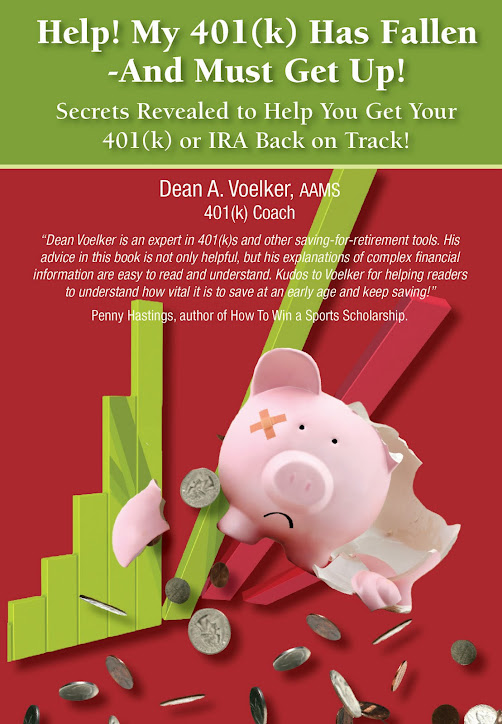
My weekly radio show is Improving Your Financial Health on WHME-FM in South Bend, and archives are available for listening on my website. My book, Help My 401(k) Has Fallen - And Must Get Up is helping everyday people to get their 401(k) plan back on its feet and working harder. Contact me about how to get a copy.
Showing posts with label goals. Show all posts
Friday, September 3, 2010
Wednesday, March 17, 2010
Diary of a Wimpy 401(k) - Wimpy Friends
The interesting thing about writing a book - I am learning who my friends are.
One of the things I had wanted was to get testimonials from people from all walks of life. The book was written in simple language with plenty of stories to make it easy for anyone to understand.
We all have a 401(k) or 403(b) - almost all of us anyway. Unless you are self-employed or one of the rare few who still have a pension.
So about a month ago, I sent requests for testimonials to about 65 people. Some I knew better than others. Some were financial experts who I had interviewed on "Improving Your Financial Health". Some were friends in the financial industry. Some were friends and clients I knew locally, or small business owners. Still others were people who were involved in the project in some way.
A few were celebs who I didn't know, but I wanted to get a testimonial from them.
In asking for testimonials, I believe that we are all very busy. I am willing to be patient and follow up a few times to get testimonials. These 'blurbs' from others can help to promote the book.
If you have a 401(k) and you aren't happy with it, and you are nervous about the future, you should read this book!
One guy (a writer whom I won't name) turned me down, but was very nice about it. He explained that he gets many similar requests and he simply does not have time to answer them all. He also didn't believe that his testimonial would carry much weight, with him not having a financial background.
Although I was slightly disappointed, I appreciated his sincerity and his prompt response.
I've also had a few of my financial heroes tell me that although they like the book and see its value, they aren't allowed to respond due to compliance constraints. Again, I respect this.
That's one way to do it. Here's the WRONG WAY!
Another previous guest on my program (I won't name her - but I promise she WON'T BE BACK!) had her assistant send this "snooty form letter" remark. "As a policy, our team focuses on content that is being published by a major imprint. We don’t read or consider unsolicited material. Should your book get picked up by a major imprint, please do feel free to reach out to me at that time, and I’ll do my best to get it to (her) for a possible endorsement."
Again, this type of chilly response really alienated me. I've lost a lot of respect for this person and needless to say, she won't be back as a guest on my program.
I am still looking for testimonials. I've gotten several very ones so far. Let me kinow if you'd like a copy of the book for review. If you want to learn more about 401(k)s and think you can write a couple of kind words - contact me and I will gladly send you a copy of the draft.
Here are some of my favorite testimonials so far.
"Unless you plan to work till you drop, the 401(k) is your eventual ticket to freedom. Your plan may have fallen in 2008 and Dean Voelker is just the person to help get it back up." -
Jonathan Chevreau, Financial Post columnist, and author of Findependence Day.
“Dean Voelker does a great job of laying out the case for aggressively pursuing your 401(k). This book presents compelling reasons for getting involved in your future TODAY, rather than tomorrow. Dean’s story telling approach takes the 401(k) from its birth through today in an easy to read and storytelling manner.” - Len Fox, author of Recipe Investing.
“Dean Voelker is a real pro. He reveals some things about the Social Security system and how
401(k)s work that I never knew. This book is short, sweet and to the point. Everyone needs to read it quickly to see if they are doing what they should to get their retirement plans back on track. Thanks, Dean for putting this together for us.” - John S. Cohoat, President of Cohoat Business Growth Advisors, and author of No Thank You, Mr. President.
Go ahead, don't be "wimpy". Contact me today. You can also get a copy of a free report on my website -
"The 5 Biggest Problems With 401(k) Plans - And How to Fix Them"
You may also contact me on Linked In at http://www.linkedin.com/in/dvoelker or Twitter at http://www.twitter.com/deanvoelker. I also host a weekly financial advice program, Improving Your Financial Health at http://www.blogtalkradio.com/401kcoach.
One of the things I had wanted was to get testimonials from people from all walks of life. The book was written in simple language with plenty of stories to make it easy for anyone to understand.
We all have a 401(k) or 403(b) - almost all of us anyway. Unless you are self-employed or one of the rare few who still have a pension.
So about a month ago, I sent requests for testimonials to about 65 people. Some I knew better than others. Some were financial experts who I had interviewed on "Improving Your Financial Health". Some were friends in the financial industry. Some were friends and clients I knew locally, or small business owners. Still others were people who were involved in the project in some way.
A few were celebs who I didn't know, but I wanted to get a testimonial from them.
In asking for testimonials, I believe that we are all very busy. I am willing to be patient and follow up a few times to get testimonials. These 'blurbs' from others can help to promote the book.
If you have a 401(k) and you aren't happy with it, and you are nervous about the future, you should read this book!
One guy (a writer whom I won't name) turned me down, but was very nice about it. He explained that he gets many similar requests and he simply does not have time to answer them all. He also didn't believe that his testimonial would carry much weight, with him not having a financial background.
Although I was slightly disappointed, I appreciated his sincerity and his prompt response.
I've also had a few of my financial heroes tell me that although they like the book and see its value, they aren't allowed to respond due to compliance constraints. Again, I respect this.
That's one way to do it. Here's the WRONG WAY!
Another previous guest on my program (I won't name her - but I promise she WON'T BE BACK!) had her assistant send this "snooty form letter" remark. "As a policy, our team focuses on content that is being published by a major imprint. We don’t read or consider unsolicited material. Should your book get picked up by a major imprint, please do feel free to reach out to me at that time, and I’ll do my best to get it to (her) for a possible endorsement."
Again, this type of chilly response really alienated me. I've lost a lot of respect for this person and needless to say, she won't be back as a guest on my program.
I am still looking for testimonials. I've gotten several very ones so far. Let me kinow if you'd like a copy of the book for review. If you want to learn more about 401(k)s and think you can write a couple of kind words - contact me and I will gladly send you a copy of the draft.
Here are some of my favorite testimonials so far.
"Unless you plan to work till you drop, the 401(k) is your eventual ticket to freedom. Your plan may have fallen in 2008 and Dean Voelker is just the person to help get it back up." -
Jonathan Chevreau, Financial Post columnist, and author of Findependence Day.
“Dean Voelker does a great job of laying out the case for aggressively pursuing your 401(k). This book presents compelling reasons for getting involved in your future TODAY, rather than tomorrow. Dean’s story telling approach takes the 401(k) from its birth through today in an easy to read and storytelling manner.” - Len Fox, author of Recipe Investing.
“Dean Voelker is a real pro. He reveals some things about the Social Security system and how
401(k)s work that I never knew. This book is short, sweet and to the point. Everyone needs to read it quickly to see if they are doing what they should to get their retirement plans back on track. Thanks, Dean for putting this together for us.” - John S. Cohoat, President of Cohoat Business Growth Advisors, and author of No Thank You, Mr. President.
Go ahead, don't be "wimpy". Contact me today. You can also get a copy of a free report on my website -
"The 5 Biggest Problems With 401(k) Plans - And How to Fix Them"
You may also contact me on Linked In at http://www.linkedin.com/in/dvoelker or Twitter at http://www.twitter.com/deanvoelker. I also host a weekly financial advice program, Improving Your Financial Health at http://www.blogtalkradio.com/401kcoach.
Labels:
401k,
advisor,
Blog Talk Radio,
book,
diversification,
economy,
financial,
goals,
Improving your Financial Health,
investment,
IRA,
money,
retirement,
risk,
savings,
wimpy
Thursday, March 11, 2010
Diary of a Wimpy 401(k)
OK, here we go. One of the things I have done so far in the publishing process was to read a book titled "The Well-Fed Self Publisher" by Peter Bowerman. Mr. Bowerman has some very good & practical ideas on why it is better to self publish instead of going through a publisher.
Kudos to my good friend, Nikki Stauffer who recommended the book. Nikki always seems to come through for me when I really need some advice. If her firm was willing to promote the book, I'd hire her in a heartbeat.
Bowerman told several "horror stories" about publishing houses. Most people have a fantasy that they can simply write a book and sell a gazillion copies and then live like John Grisham for the rest of their life. Needless to say, I am pretty grounded in reality. The truth is, many authors have a hard time getting it published. Jack Canfield, author of the "Chicken Soup" books has a favorite word when he was getting multiple rejections - "Next!"
Anyway, even if you finally do get a publisher to take on your book project, and a promotion agent to write a press release, you will still end of doing the promotion leg work yourself. also, the publisher gets to keep most of the money. He shows examples of authors who wrote books that sell for about $15 and their cut is about .50 per book. Now THAT is wimpy!
According to Bowerman, once they write the press release, the publisher is done. On to the next Stephen King wannabe. There is only one person in the whole world who really cares about making sure that your book is promoted regularly - the author. So if you have to promote it yourself, why not publish it yourself.
The whole reason for this book was that I was meeting many people in this area who really weren't getting the most from their 401(k). Northern Indiana is one of the hardest hit areas for unemployment, and many folks simply cashed it in, in spite of taxes and penalties. Others who didn't cash in stopped contributing to their 401(k) especially if their company stopped matching contributions. There is no doubt in my mind that people need to have a much better understanding of how the 401(k) works.
Someone needs to say - This is your retirement plan. It may also be the only savings you have, so you'd better stop being 'wimpy' about it and start saving.
"Help! My 401(k) Has Fallen - And Must Get Up!" reveals little known secrets about 401(k) plans and IRAs. If you read the book, you will understand them and get more from them.
That's all for today. I really apreciate those who have been reading this, and those who have been supporting me. Also thanks to those who have been listening to "Improving Your Financial Health" on either Blog Talk Radio or WHME-FM.
Kudos to my good friend, Nikki Stauffer who recommended the book. Nikki always seems to come through for me when I really need some advice. If her firm was willing to promote the book, I'd hire her in a heartbeat.
Bowerman told several "horror stories" about publishing houses. Most people have a fantasy that they can simply write a book and sell a gazillion copies and then live like John Grisham for the rest of their life. Needless to say, I am pretty grounded in reality. The truth is, many authors have a hard time getting it published. Jack Canfield, author of the "Chicken Soup" books has a favorite word when he was getting multiple rejections - "Next!"
Anyway, even if you finally do get a publisher to take on your book project, and a promotion agent to write a press release, you will still end of doing the promotion leg work yourself. also, the publisher gets to keep most of the money. He shows examples of authors who wrote books that sell for about $15 and their cut is about .50 per book. Now THAT is wimpy!
According to Bowerman, once they write the press release, the publisher is done. On to the next Stephen King wannabe. There is only one person in the whole world who really cares about making sure that your book is promoted regularly - the author. So if you have to promote it yourself, why not publish it yourself.
The whole reason for this book was that I was meeting many people in this area who really weren't getting the most from their 401(k). Northern Indiana is one of the hardest hit areas for unemployment, and many folks simply cashed it in, in spite of taxes and penalties. Others who didn't cash in stopped contributing to their 401(k) especially if their company stopped matching contributions. There is no doubt in my mind that people need to have a much better understanding of how the 401(k) works.
Someone needs to say - This is your retirement plan. It may also be the only savings you have, so you'd better stop being 'wimpy' about it and start saving.
"Help! My 401(k) Has Fallen - And Must Get Up!" reveals little known secrets about 401(k) plans and IRAs. If you read the book, you will understand them and get more from them.
That's all for today. I really apreciate those who have been reading this, and those who have been supporting me. Also thanks to those who have been listening to "Improving Your Financial Health" on either Blog Talk Radio or WHME-FM.
Labels:
401k,
advisor,
bank,
Blog Talk Radio,
cash,
economy,
financial,
goals,
investment,
Jeff Kinney,
life,
Peter Bowerman,
publisher,
savings,
Wimpy Kid
Sunday, February 21, 2010
Blog Talk Radio - Be Our Guest
I've been a bit busy this week, working on my upcoming book, "Help! My 401(k) Has Fallen - And Must Get Up!" . This is an "everyman's" (and everywoman's) guide to getting more from your 401(k) plan. Most books I have seen on 401(k) plans really are geared more to advisors and financial people, which is what inspired me to write it.
For most of us, the 401(k) is a major source of our savings, and for some it may be the ONLY source of savings. We need to get more out of it if we want to retire someday and have our money last the rest of our lives. I'm very excited to contribute something unique - and hope others find it helpful.
Anyway, I plan on doing more with the blog and hope that my message finds the right people. Last week I wrote about Blog Talk Radio. My experience with Blog Talk Radio has been great. I began using it in July 2009 on the advice of a friend of mine, Brian Seim, a radio veteran.
Although I have made a TON of mistakes (and still do!), I must have done a few things right also. A few weeks ago I began an affiliation with WHME-FM in South Bend (103.1) . We agreed to replay my interviews from Blog Talk Radio as a 30 minute program on Saturday mornings - "Improving Your Financial Health" .
If I had to pick the one factor which has made the show appealing - its the GUESTS! My guests have mostly been financial experts and authors, although some have been very interesting people with great personalities with no financial background at all. Even so, they had something of value to share with listeners and wer a lot of fun to talk with. Some examples would be Ruben Gonzalez, a 4 time Olympian who has written 3 books on staying motivated, or Charlie Adams, who is also a professional speaker and helps High School athletes to get college scholarships. Kristen Harmel who has written 6 novels and has a passion for helping kids with reading, Kay Yasin who overcame personal tragedies to change her life and is now an expert trainer and bodybuilder, and Darin Pritchett who is well known in the South Bend area for his Weekday Sportsbeat show. These and many others are wonderful people and gave fun & interesting interviews. All would all be welcome guests in the future.
Once I committed myself to doing the program, I have always been on the lookout for people who would make great guests . When I find someone I like, I contact them and and tell them about the program and try to schedule a time for them to be on. Always let them know that you are doing this regularly (for me once a week) and tell them names of other guests I've interviewed.
Whatever you choose to do a program about - for business or for fun - I would certainly recommend having interesting guests that fit in with your message. Again, the guests make the show fun. (Who would want to listen to just me for 30 minutes?)
People have often asked me where I find my guests. You can find guests in several places. My main source would be searching the internet for financial blogs or articles I also subscribe to Money and Smart Money magazines and have found great articles there.
Referrals can be a great source also once you tell others what you are doing. My friend, Nikki Stauffer in Ada, MI deserves a special mention. She has referred 2 nationally recognized financial experts and authors to me who are guests. Eric Tyson (author of "Investing for Dummies" and "Personal Finance for Dummies") was one. There aren't many financial advisors out there who can say they have their own "jingle" written by Paul Shaffer of the David Letterman band. Another is Robert Krakower, who has graciously agreed to be interviewed on March 23. His new book is titled "Redefining Retirement for a New Generation".
By the way, Nikki Stauffer has a great weekly show of her own, "Gather Round the Table" . She has also done pretty well with guests, including Megyn Price (Rules of Engagement), Maria Canals-Barrera (Wizards of Waverly Place), and Mayim Bialik (Blossom), among others. This program promotes the importance of family values by eating meals together, and Nikki's guests normally share one of their favorite recipes. Check out her site and archived interviews at http://www.gatherroundthetable.com/.
I also need to thank Erica Sandberg one of my early guests, and author of "Expecting Money", for her referral of a colleague of hers, Sally Herigstad, CPA, and author of "Help! I Can't Pay My Bills!". Both ladies were wonderful guests and I look to have them on Blog Talk Radio again.
Pam Batcho of Express Pros, also has been a great referral source. She referred Ruben Gonzalez, whom I mentioned earlier and also her boss, Norm Robertson, owner of the local Express Pros branch.
Sometimes, it pays to be persistant. Anya Kamenetz was a young lady I had really admired from reading her first book, "Generation Debt" a few years ago. It highlights the challenges of being young today, especially with the high costs of college and student loans. Anya was nominated for a Pulitzer Prize for her efforts.
She is also a nationally recognized speaker, and has appeared on college campuses nationwide.
I knew Anya would make a great guest, and tried to e-mail her (4 times over 6 weeks) with no reply. Finally one day out of the blue, I got a very kind note from her. She apologized that she had been out of town and wasn't getting her e-mails. She also sent me her personal e-mail and agreed to an interview. The interview went great and it was quite an honor for me.
Whoever the guest is, I really try to be respectful of their time. I really want to make sure the experience goes well for them - I may want to have them back sometime, or want their help with a project.
Before doing a program, I send the guest specific instructions confirming the date and time and Call-In phone number. Since some of my guests live in different parts of the country, I also make sure I note EST - and whatever time it may be for them. 1:00 pm here is 10:00 am in California. That may seem like a small thing, but trust me - its important!
Another habit of mine is to send the guest a list of questions personally tailored to them. Some guests have even suggested questions that the like to be asked. By reviewing their website or reading their books, it has helped me quite a bit to learn about them. It helps the interview to go more smoothly.
My objective is to build them up as an expert which (I hope) makes me look like a good guy as well. Speaking of building up, its also very important to use a proper introduction. A good introduction should be at least 3 sentences, highlighting their achievements. You are telling your listeners why you chose this person to be on your show and why their advice will be valuable to them.
One last point on guests - You can't say "Thank You" enough. I always thank them at the end of the program and give them a chance to give contact information and promote their book or services . After the show, I also send an e-mail thanking them for their time once more.
Blog Talk Radio has been a great venue for me. I plan on writing one more article about Blog Talk Radio, which includes tips and techniques. You can contact me through my website, http://www.helpmy401k.us/ and
through Linked In or Twitter.
There is a Free Report now available through my website, "The 5 Biggest Problems With 401(k)s - And How To Fix Them". Please contact me to receive your free copy. This is a sample of my upcoming book, "Help! My 401(k) Has Fallen - And Must Get Up!"
For most of us, the 401(k) is a major source of our savings, and for some it may be the ONLY source of savings. We need to get more out of it if we want to retire someday and have our money last the rest of our lives. I'm very excited to contribute something unique - and hope others find it helpful.
Anyway, I plan on doing more with the blog and hope that my message finds the right people. Last week I wrote about Blog Talk Radio. My experience with Blog Talk Radio has been great. I began using it in July 2009 on the advice of a friend of mine, Brian Seim, a radio veteran.
Although I have made a TON of mistakes (and still do!), I must have done a few things right also. A few weeks ago I began an affiliation with WHME-FM in South Bend (103.1) . We agreed to replay my interviews from Blog Talk Radio as a 30 minute program on Saturday mornings - "Improving Your Financial Health" .
If I had to pick the one factor which has made the show appealing - its the GUESTS! My guests have mostly been financial experts and authors, although some have been very interesting people with great personalities with no financial background at all. Even so, they had something of value to share with listeners and wer a lot of fun to talk with. Some examples would be Ruben Gonzalez, a 4 time Olympian who has written 3 books on staying motivated, or Charlie Adams, who is also a professional speaker and helps High School athletes to get college scholarships. Kristen Harmel who has written 6 novels and has a passion for helping kids with reading, Kay Yasin who overcame personal tragedies to change her life and is now an expert trainer and bodybuilder, and Darin Pritchett who is well known in the South Bend area for his Weekday Sportsbeat show. These and many others are wonderful people and gave fun & interesting interviews. All would all be welcome guests in the future.
Once I committed myself to doing the program, I have always been on the lookout for people who would make great guests . When I find someone I like, I contact them and and tell them about the program and try to schedule a time for them to be on. Always let them know that you are doing this regularly (for me once a week) and tell them names of other guests I've interviewed.
Whatever you choose to do a program about - for business or for fun - I would certainly recommend having interesting guests that fit in with your message. Again, the guests make the show fun. (Who would want to listen to just me for 30 minutes?)
People have often asked me where I find my guests. You can find guests in several places. My main source would be searching the internet for financial blogs or articles I also subscribe to Money and Smart Money magazines and have found great articles there.
Referrals can be a great source also once you tell others what you are doing. My friend, Nikki Stauffer in Ada, MI deserves a special mention. She has referred 2 nationally recognized financial experts and authors to me who are guests. Eric Tyson (author of "Investing for Dummies" and "Personal Finance for Dummies") was one. There aren't many financial advisors out there who can say they have their own "jingle" written by Paul Shaffer of the David Letterman band. Another is Robert Krakower, who has graciously agreed to be interviewed on March 23. His new book is titled "Redefining Retirement for a New Generation".
By the way, Nikki Stauffer has a great weekly show of her own, "Gather Round the Table" . She has also done pretty well with guests, including Megyn Price (Rules of Engagement), Maria Canals-Barrera (Wizards of Waverly Place), and Mayim Bialik (Blossom), among others. This program promotes the importance of family values by eating meals together, and Nikki's guests normally share one of their favorite recipes. Check out her site and archived interviews at http://www.gatherroundthetable.com/.
I also need to thank Erica Sandberg one of my early guests, and author of "Expecting Money", for her referral of a colleague of hers, Sally Herigstad, CPA, and author of "Help! I Can't Pay My Bills!". Both ladies were wonderful guests and I look to have them on Blog Talk Radio again.
Pam Batcho of Express Pros, also has been a great referral source. She referred Ruben Gonzalez, whom I mentioned earlier and also her boss, Norm Robertson, owner of the local Express Pros branch.
Sometimes, it pays to be persistant. Anya Kamenetz was a young lady I had really admired from reading her first book, "Generation Debt" a few years ago. It highlights the challenges of being young today, especially with the high costs of college and student loans. Anya was nominated for a Pulitzer Prize for her efforts.
She is also a nationally recognized speaker, and has appeared on college campuses nationwide.
I knew Anya would make a great guest, and tried to e-mail her (4 times over 6 weeks) with no reply. Finally one day out of the blue, I got a very kind note from her. She apologized that she had been out of town and wasn't getting her e-mails. She also sent me her personal e-mail and agreed to an interview. The interview went great and it was quite an honor for me.
Whoever the guest is, I really try to be respectful of their time. I really want to make sure the experience goes well for them - I may want to have them back sometime, or want their help with a project.
Before doing a program, I send the guest specific instructions confirming the date and time and Call-In phone number. Since some of my guests live in different parts of the country, I also make sure I note EST - and whatever time it may be for them. 1:00 pm here is 10:00 am in California. That may seem like a small thing, but trust me - its important!
Another habit of mine is to send the guest a list of questions personally tailored to them. Some guests have even suggested questions that the like to be asked. By reviewing their website or reading their books, it has helped me quite a bit to learn about them. It helps the interview to go more smoothly.
My objective is to build them up as an expert which (I hope) makes me look like a good guy as well. Speaking of building up, its also very important to use a proper introduction. A good introduction should be at least 3 sentences, highlighting their achievements. You are telling your listeners why you chose this person to be on your show and why their advice will be valuable to them.
One last point on guests - You can't say "Thank You" enough. I always thank them at the end of the program and give them a chance to give contact information and promote their book or services . After the show, I also send an e-mail thanking them for their time once more.
Blog Talk Radio has been a great venue for me. I plan on writing one more article about Blog Talk Radio, which includes tips and techniques. You can contact me through my website, http://www.helpmy401k.us/ and
through Linked In or Twitter.
There is a Free Report now available through my website, "The 5 Biggest Problems With 401(k)s - And How To Fix Them". Please contact me to receive your free copy. This is a sample of my upcoming book, "Help! My 401(k) Has Fallen - And Must Get Up!"
Labels:
advisor,
bank,
Blog Talk Radio,
debt,
economy,
goals,
investment,
IRA,
Linked In,
money,
savings,
Twitter,
Wall St Journal
Friday, January 29, 2010
Are You Linked In?
Are you "LinkedIn" to social media? LinkedIn http://www.linkedin.com/ is a professional business networking website, which launched in May 2003.
Wikipedia states that Linked In has over 50 Million users in more than 200 countries and territories. According to LinkedIn, a new member joins the site every minute. You can learn some of the basics of LinkedIn at http://press.linkedin.com/about. There is an orientation video here which may help you to utilize some of the site's features.
My first exposure to LinkedIn was in 2006. I was invited to connect by Debra Gould, an acquaintance of mine, whom I had met at networking events a few times. I figured it wouldn't hurt, so I set up my profile, and "Voila!" - I was now part of social media and the internet!
Of course, I could say that my financial advisory business and LinkedIn page grew like wildfire from there, but that wouldn't be true. Several months went by before I even added a second connection. It can can a while for the "lights to come on". Even as I look through my contacts today, I counted 21 who have only 1 connection (me), and 87 (including the onesies) who have 10 or less. This tells me that LinkedIn is still a largely untapped resource.
After I finally did add a few more people in 2007, I started looking at LinkedIn as a good resource for networking. I could see some value in the site and started looking for ways to utilize it better. I started to join groups and also looked for companies in the South Bend, IN area that I wanted to build relationships with, especially for 401(k) marketing and employee education. Using LinkedIn gave me a chance to show them my 'online resume'.
Of all the Social Media sites, LinkedIn has been viewed by many as the most professional and businesslike. I know of a few people who have effectively used LinkedIn in their career search. (Maybe THAT should have been referred to in the "State Of The Union" address with the topic of 'Job Creation'.)
Before I digress too far - Here are a few basic ways you can use LinkedIn as an effective marketing tool and networking resource for your business.
* Add People - That seems like a no-brainer, but sometimes we need to figure out how to get started. Don't be shy. When you get business cards from others at networking events or other places, invite them to
connect. Most cards include an e-mail, which makes it easy. LinkedIn has also done many things to make
the site more user friendly. One of them is "People You May Know", which is a bit similar to Facebook's friend suggestions. If you know them, it is easy to invite and add them as contacts.
In fact, invite your Facebook friends also. You may be surprised at how many of them may view you in a
different light when they see your professional profile on LinkedIn. You can also go through your e-mail contacts and import the list into LinkedIn. This will tell you which of your friends already has a profile here. Again, you will be surprised.
* Enhance Your Profile - LinkedIn should be your online resume. Keep it real, and be yourself, but be your BEST self. Don't just fill in the boxes. Tell others up front what makes you unique and what you can do to help them. Why should they work with you? Do you write a blog? Manage a scout troop? Sing in the church choir? Put those things in your profile, along with previous jobs. You never know what may catch someone's eye and attract them to your business.
* Recommendations - These are your testimonials. Ask people you trust to write one for you. (They may ask for one in return.) My only rule of thumb on giving or receiving is - Make it specific and sincere! The testimonial must mention special skills or services you have performed. "John is a great guy." doesn't cut it. Only sincere, well thought out recommendations will make your profile stand out.
* Join A Group - What topics are you interested in? You can probably find a group that discusses them.
Participate in the discussions by asking and answering questions. Some of my current groups include
Chamber of Commerce of St. Joseph County, Indiana Small Business Development Center, Linking Indiana,
and the Economic Club of Michiana. I have also created 2 of my own, Help My 401(k), and Always Illinois.
A great way to add contacts is to look through the members list. Just click on their profile and send them an invite.
* What Are You Reading? - If you have read something recently which you think others may find interesting, add this to your profile. You may see others also who have read the same book, and that can be common ground for a new connection. If you write a blog on Wordpress, you can also have the blog connected to LinkedIn.
* Search - You can search for people or companies. Are there any companies you'd like to call on, but don't know where to start? Look for them on LinkedIn. More and more companies are on LinkedIn everyday. A company search can tell you everyone who is with that company who has a profile. One word of caution - if the person is no longer with the company, and they aren't an active LinkedIn user, the profile may not be current. But profiles do offer great contact information, including e-mail addresses. The search feature is very easy to use.
I hope these tips help you get started with LinkedIn, or help you utilize the site more effectively.
You can contact me through my website, http://www.helpmy401k.us/. You can also contact me on LinkedIn at http://www.linkedin.com/in/dvoelker, or Twitter at http://www.twitter.com/deanvoelker. I am currently hosting a weekly financial advice program, "Improving Your Financial Health" on Blog Talk Radio at http://www.blogtalkradio.com/401kcoach. Let me know how I may help you!
Wikipedia states that Linked In has over 50 Million users in more than 200 countries and territories. According to LinkedIn, a new member joins the site every minute. You can learn some of the basics of LinkedIn at http://press.linkedin.com/about. There is an orientation video here which may help you to utilize some of the site's features.
My first exposure to LinkedIn was in 2006. I was invited to connect by Debra Gould, an acquaintance of mine, whom I had met at networking events a few times. I figured it wouldn't hurt, so I set up my profile, and "Voila!" - I was now part of social media and the internet!
Of course, I could say that my financial advisory business and LinkedIn page grew like wildfire from there, but that wouldn't be true. Several months went by before I even added a second connection. It can can a while for the "lights to come on". Even as I look through my contacts today, I counted 21 who have only 1 connection (me), and 87 (including the onesies) who have 10 or less. This tells me that LinkedIn is still a largely untapped resource.
After I finally did add a few more people in 2007, I started looking at LinkedIn as a good resource for networking. I could see some value in the site and started looking for ways to utilize it better. I started to join groups and also looked for companies in the South Bend, IN area that I wanted to build relationships with, especially for 401(k) marketing and employee education. Using LinkedIn gave me a chance to show them my 'online resume'.
Of all the Social Media sites, LinkedIn has been viewed by many as the most professional and businesslike. I know of a few people who have effectively used LinkedIn in their career search. (Maybe THAT should have been referred to in the "State Of The Union" address with the topic of 'Job Creation'.)
Before I digress too far - Here are a few basic ways you can use LinkedIn as an effective marketing tool and networking resource for your business.
* Add People - That seems like a no-brainer, but sometimes we need to figure out how to get started. Don't be shy. When you get business cards from others at networking events or other places, invite them to
connect. Most cards include an e-mail, which makes it easy. LinkedIn has also done many things to make
the site more user friendly. One of them is "People You May Know", which is a bit similar to Facebook's friend suggestions. If you know them, it is easy to invite and add them as contacts.
In fact, invite your Facebook friends also. You may be surprised at how many of them may view you in a
different light when they see your professional profile on LinkedIn. You can also go through your e-mail contacts and import the list into LinkedIn. This will tell you which of your friends already has a profile here. Again, you will be surprised.
* Enhance Your Profile - LinkedIn should be your online resume. Keep it real, and be yourself, but be your BEST self. Don't just fill in the boxes. Tell others up front what makes you unique and what you can do to help them. Why should they work with you? Do you write a blog? Manage a scout troop? Sing in the church choir? Put those things in your profile, along with previous jobs. You never know what may catch someone's eye and attract them to your business.
* Recommendations - These are your testimonials. Ask people you trust to write one for you. (They may ask for one in return.) My only rule of thumb on giving or receiving is - Make it specific and sincere! The testimonial must mention special skills or services you have performed. "John is a great guy." doesn't cut it. Only sincere, well thought out recommendations will make your profile stand out.
* Join A Group - What topics are you interested in? You can probably find a group that discusses them.
Participate in the discussions by asking and answering questions. Some of my current groups include
Chamber of Commerce of St. Joseph County, Indiana Small Business Development Center, Linking Indiana,
and the Economic Club of Michiana. I have also created 2 of my own, Help My 401(k), and Always Illinois.
A great way to add contacts is to look through the members list. Just click on their profile and send them an invite.
* What Are You Reading? - If you have read something recently which you think others may find interesting, add this to your profile. You may see others also who have read the same book, and that can be common ground for a new connection. If you write a blog on Wordpress, you can also have the blog connected to LinkedIn.
* Search - You can search for people or companies. Are there any companies you'd like to call on, but don't know where to start? Look for them on LinkedIn. More and more companies are on LinkedIn everyday. A company search can tell you everyone who is with that company who has a profile. One word of caution - if the person is no longer with the company, and they aren't an active LinkedIn user, the profile may not be current. But profiles do offer great contact information, including e-mail addresses. The search feature is very easy to use.
I hope these tips help you get started with LinkedIn, or help you utilize the site more effectively.
You can contact me through my website, http://www.helpmy401k.us/. You can also contact me on LinkedIn at http://www.linkedin.com/in/dvoelker, or Twitter at http://www.twitter.com/deanvoelker. I am currently hosting a weekly financial advice program, "Improving Your Financial Health" on Blog Talk Radio at http://www.blogtalkradio.com/401kcoach. Let me know how I may help you!
Labels:
advisor,
careers,
economy,
financial,
goals,
investment,
Linked In,
money,
networking,
retirement,
savings,
social media,
Twitter
Friday, January 8, 2010
Tired of Taxes?

Are you tired of taxes? Tired of hearing about them? Tired of giving your hard-earned dollars to Uncle Sam? Tired of politicians who say they will lower your taxes - then do the opposite?
How would you like a stream of income later in life that you WON'T pay taxes on at all?
That's what the Roth IRA is all about!
The Roth IRA was created as a future Tax Reduction Account in 1997. It's a great way to save for your future retirement. The name "Roth" is in honor of the bill's main creator - late Sen. William Roth of Delaware.
The beauty of the Roth is that there are NO TAXES on either the growth, or withdrawals you take after age 59 1/2. So your income will be TAX FREE!
You can contribute to a Roth IRA for either 2009 or 2010 right now - up to $5000/year. If you are 50 or older, you can put in an extra $1000.
Here are 2 new things in 2010 about the Roth IRA you should know.
* There are no income restrictions for making Roth IRA contributions this year. This allows
more people than ever before to use a Roth.
* You can convert your traditional pre-tax IRA to a Roth by simply paying taxes on the amount
you convert. That isn't new, but what IS new is that you can SPLIT the tax burden over
2 Years - 2011 & 2012.
If you really want less taxes later, set up your Roth IRA (Tax Reduction Account) today. You have until April 15 to contribute for 2009.
You can contact me in South Bend, IN through my website at www.helpmy401k.us. You can also follow my on Twitter at www.twitter.com/deanvoelker. I also host a weekly internet radio program, "Improving Your Financial Health" on Blog Talk Radio www.blogtalkradio.com/401kcoach.
Labels:
bank,
economy,
financial,
goals,
investment,
IRA,
money,
rates,
retirement,
Roth IRA,
savings,
South Bend,
tax free,
taxes
Monday, January 4, 2010
New Years Resolutions
"Now is the accepted time to make your regular annual good resolutions. Next week you can begin paving hell with them as usual." Mark Twain
Here we are - a New Year. Some also say a New Decade.
What 'Financial' Resolutions have you made? Can't think of any? Here are a few tips.
1. Review and Rebalance your Investments and 401(k)
If you have been putting it off for a while to "wait & see", your account is probably seriously out of balance. Sit down with an advisor to review your goals and make your your fund mix matches what your needs are.
2. Increase Contributions to Your 401(k)
Are you putting between 10% and 15% into your 401(k) at work? If not, then at least raise the amount you are putting in. Gradually work yourself up to that level. You will need the nest egg for income later.
3. Pay Off Credit Cards and Other Debt
If you are having trouble with #2, get these paid off and free up some money for yourself.
4. Set Up a Budget and Stick To It
There are a number of places you can find good basic worksheets for setting up a budget. It should be simple. Just make sure all of your money has a place to go - either savings or expenses. Here is a site with some downloadable sheets. http://www.betterbudgeting.com/
5. Contribute to a Roth IRA and Convert Pre-Tax Retirement Savings
You can put up to $5000 into a Roth ($6000 if you are 50 and older). You can still make 2009 contributions up until April 15. The Roth IRA of course grows tax free and allows you to make withdrawals at retirement which are also tax free.
There are no income restrictions for the Roth this year and if you choose to convert any money from your Traditional Pre-Tax IRA to the Roth, you may spread the taxes out over the next 2 years.
You can contact me through my website, http://www.helpmy401k.us/. You may also follow me on Twitter at http://www.twitter.com/deanvoelker. I also host a weekly internet radio program at http://www.blogtalkradio.com/401kcoach.
Here we are - a New Year. Some also say a New Decade.
What 'Financial' Resolutions have you made? Can't think of any? Here are a few tips.
1. Review and Rebalance your Investments and 401(k)
If you have been putting it off for a while to "wait & see", your account is probably seriously out of balance. Sit down with an advisor to review your goals and make your your fund mix matches what your needs are.
2. Increase Contributions to Your 401(k)
Are you putting between 10% and 15% into your 401(k) at work? If not, then at least raise the amount you are putting in. Gradually work yourself up to that level. You will need the nest egg for income later.
3. Pay Off Credit Cards and Other Debt
If you are having trouble with #2, get these paid off and free up some money for yourself.
4. Set Up a Budget and Stick To It
There are a number of places you can find good basic worksheets for setting up a budget. It should be simple. Just make sure all of your money has a place to go - either savings or expenses. Here is a site with some downloadable sheets. http://www.betterbudgeting.com/
5. Contribute to a Roth IRA and Convert Pre-Tax Retirement Savings
You can put up to $5000 into a Roth ($6000 if you are 50 and older). You can still make 2009 contributions up until April 15. The Roth IRA of course grows tax free and allows you to make withdrawals at retirement which are also tax free.
There are no income restrictions for the Roth this year and if you choose to convert any money from your Traditional Pre-Tax IRA to the Roth, you may spread the taxes out over the next 2 years.
You can contact me through my website, http://www.helpmy401k.us/. You may also follow me on Twitter at http://www.twitter.com/deanvoelker. I also host a weekly internet radio program at http://www.blogtalkradio.com/401kcoach.
Labels:
advisor,
balance,
bargain,
credit card,
debt,
diversification,
expenses,
financial,
goals,
investment,
IRA,
money,
mutual funds,
retirement,
Roth IRA,
savings,
South Bend,
tax free,
taxes
Friday, December 4, 2009
Retirement Calculators

There are some great tools and calculators you can use for free to help plan for retirement. Some of the best ones are those which you may not even know about.
First, not to toot my own horn, but my website, www.helpmy401k.us has a great tab called Investment Tools .
There are calculators there for almost everything. The most commonly used one is the 401(k) Calculator. You could also use the 457(b) calculator if you are a government employee, but the concept is the same.
Simply go to the 401(k) calculator and plug in your own numbers. For example, lets say you are 29 years old with $1000 in a retirement savings account. Lets also say that you earn $50,000 per year and that you follow Dave Ramsey's advice and put in 10% of your pay into your 401(k) or $5000. If you earn an average return on this 401(k) account of 8% and keep doing this until age 66, you will have saved $1,076,087 for retirement. And that does not include an employer match or a raise in pay - EVER. Personal Finance expert Eric Tyson has an idea which may help provide an incentive to save more in 401(k) or IRAs - instead of calling them those names, we should try calling these "tax-reduction accounts".
What if we did figure those in? Easy - just enter those numbers.
Well, lets say your employer matches your contribution by 50% of whatever you put in up to 4%. If you put in at least 4% or more (and we are doing 10%, remember?), that means you are getting another 2% ($1000) from the employer. Also, lets assume they will raise your pay by
2% per year as a cost of living increase. Keeping the other earlier numbers the same, you will now have saved $1,598,680 for retirement.
Here is another one which my be helpful if you are planning to pay off credit card debt. And you should absolutely do that! It will have you save more in your "tax-reduction accounts."
Let's say you have a balance of $2000 in a credit card account. Your current monthly payment is $125/month and your interest rate on the card is 17.5%. (Ugh!) If you do as Dave Ramsey says and do some "plastic surgery" on your card (cut it up and dont use it anymore!), did you know that you can pay the card off in 12 months by just raising your payment to $183/month? It's true and very easy to figure out using the "Credit Card Payoff" calculator on the site. This can be very helpful to see yourself making progress towards your goal, if you can't pay the entire amount, but know you should pay less than the minimum.
In upcoming blog articles, we will look at a few more of the calculators.
You can see these calculators and many other helpful ideas on my website, www.helpmy401k.us. You can also follow me on Twitter at www.twitter.com/deanvoelker . I also host a weekly internet radio program "Improving Your Financial Health" at http://www.blogtalkradio.com/401kcoach .
Labels:
advisor,
balance,
credit card,
Dave Ramsey,
debt,
financial,
goals,
income,
inflation,
interest,
investment,
IRA,
loans,
money,
nest egg,
rates,
retirement,
savings,
taxes
Friday, October 23, 2009
Wipe Out The Fear in South Bend

Feel like you are drowning in today's economy?
Inflation?
Shaky stock market?
Sinking dollar?
Unemployment?
Staggering debt?
Inflation?
Shaky stock market?
Sinking dollar?
Unemployment?
Staggering debt?
Watching the news may seem like an ongoing care wreck - especially if you watch Glenn Beck, who always looks like he will suffer a breakdown right on camera - but as horrifying and overwhelming as the news is, you can't seem to pull yourself away.
We don't suffer from a lack of information - rather TOO MUCH information. Its all so confusing and you can feel like the rag doll being pulled apart from all directions.
How does all of this affect your ability to save for retirement? Is it possible to still have goals and dreams? Can you still retire with dignity?
Dan Rather was once quoted as saying "If all of the difficulties were known at the outset of a long journey, most of us would not start out at all."
Nothing great was ever achieved without hardships along the way. As an advisor, my job is to help you resolve your fears. Let's wipe them out and provide some peace of mind.
This year, when I became an iindependent advisor and opened my own office, I've been learning that most people would rather "not lose anymore" than to win with their long term savings. To quote another great American, Will Rogers - "I'm more concerned with the return OF my money than the return ON my money."
With that in mind, my purpose has been to focus on helping people to find a vehicle that would "not lose" and still let you win. What if I could toss you a "Life Preserver" for your savings? Remember when you first learned to swim? Those kickboards or noodles came in handy, didn't they? You learned eventually that the water is your friend. Once you stopped fighting it, and let it help you, swimming became more fun, right?
Russell Pearlman recently wrote an article titled, "Problems? What Problems?" from the November 2009 issue of "Smart Money" magazine. His article focused on annuities, which have become much more popular with investors as a life preserver for long term savings.
"Don't tell that (regarding annuity cost) to baby boomers looking for retirement security at a time when their 401(k) plans are still hurting; they just keep buying annuities. Through the first six months of the year, total annuity sales were almost $127 billion, only a 3 percent drop from 2008." he writes.
Again, the message I get from my clients and others I meet is "We want SAFETY and Peace of Mind."
Can we get "Guaranteed" growth for our long term savings?
Will it be better than current CD rates?
Can we get "Guaranteed" income when I retire - also better than current CD rates?
Can we make sure the income never goes down?
And lasts for a lifetime - even if we live to 100 or beyond?
And when that lifetime does end, can we leave something for our family and loved ones?
In short - YES! Mr. Pearlman goes on to write "Are annuities for you? Experts say the peace of mind may be worth it."
Another of my favorite articles this year was written by Leslie Scism of the Wall Street Journal. "Long Derided, This Investment Now Looks Wise". "Because of such guarantees, many holders of variable annuities actually saw their accounts increase 6% or more in value last year, when the Standard & Poors 500 stock index dropped nearly 39%." Ms. Scism writes.
Contact me today to learn more about how to get a life preserver (or noodle if you prefer) for your savings. Treat yourself to some Peace of Mind!
You can contact me through my website, http://www.helpmy401k.us and follow me on Twitter at http://www.twitter.com/deanvoelker. I also host a weekly internet radio braodcast, "Improving Your Financial Health" at http://www.blogtalkradio.com/401kcoach.
How does all of this affect your ability to save for retirement? Is it possible to still have goals and dreams? Can you still retire with dignity?
Dan Rather was once quoted as saying "If all of the difficulties were known at the outset of a long journey, most of us would not start out at all."
Nothing great was ever achieved without hardships along the way. As an advisor, my job is to help you resolve your fears. Let's wipe them out and provide some peace of mind.
This year, when I became an iindependent advisor and opened my own office, I've been learning that most people would rather "not lose anymore" than to win with their long term savings. To quote another great American, Will Rogers - "I'm more concerned with the return OF my money than the return ON my money."
With that in mind, my purpose has been to focus on helping people to find a vehicle that would "not lose" and still let you win. What if I could toss you a "Life Preserver" for your savings? Remember when you first learned to swim? Those kickboards or noodles came in handy, didn't they? You learned eventually that the water is your friend. Once you stopped fighting it, and let it help you, swimming became more fun, right?
Russell Pearlman recently wrote an article titled, "Problems? What Problems?" from the November 2009 issue of "Smart Money" magazine. His article focused on annuities, which have become much more popular with investors as a life preserver for long term savings.
"Don't tell that (regarding annuity cost) to baby boomers looking for retirement security at a time when their 401(k) plans are still hurting; they just keep buying annuities. Through the first six months of the year, total annuity sales were almost $127 billion, only a 3 percent drop from 2008." he writes.
Again, the message I get from my clients and others I meet is "We want SAFETY and Peace of Mind."
Can we get "Guaranteed" growth for our long term savings?
Will it be better than current CD rates?
Can we get "Guaranteed" income when I retire - also better than current CD rates?
Can we make sure the income never goes down?
And lasts for a lifetime - even if we live to 100 or beyond?
And when that lifetime does end, can we leave something for our family and loved ones?
In short - YES! Mr. Pearlman goes on to write "Are annuities for you? Experts say the peace of mind may be worth it."
Another of my favorite articles this year was written by Leslie Scism of the Wall Street Journal. "Long Derided, This Investment Now Looks Wise". "Because of such guarantees, many holders of variable annuities actually saw their accounts increase 6% or more in value last year, when the Standard & Poors 500 stock index dropped nearly 39%." Ms. Scism writes.
Contact me today to learn more about how to get a life preserver (or noodle if you prefer) for your savings. Treat yourself to some Peace of Mind!
You can contact me through my website, http://www.helpmy401k.us and follow me on Twitter at http://www.twitter.com/deanvoelker. I also host a weekly internet radio braodcast, "Improving Your Financial Health" at http://www.blogtalkradio.com/401kcoach.
Labels:
advisor,
annuity,
bargain,
CD,
economy,
financial,
goals,
income,
inflation,
insurance,
investment,
money,
nest egg,
retirement,
returns,
safe,
savings,
South Bend,
Wall St Journal
Wednesday, October 14, 2009
Cut The Fat in your 401(k)
Last week, we asked “Where’s the Beef?” Today, we ask “Where’s the Fat?”
Its very important to trim the ‘fat’ in your 401(k) plan – or fund expenses. Today on my Blog Talk Radio program, I had a listener ask about fund expenses. These can really affect your long term return on your retirement savings.
Expenses come from managing the mutual fund. The fund family charges a percentage of the assets invested to manage the fund – deciding what to buy, what to sell, and how much to buy or sell and when to do it. Less trading = lower expenses. Also the advisor on the plan may be paid from these expenses.
Knowing this, it would make sense to look for funds in your plan which have a lower expense rate. If its about 1%, that isn’t too bad, much more than that can negatively affect your returns over time.
To give you an example, I did some figuring on my financial calculator . Let’s look at a 22 year old college graduate, starting their 401(k) plan. Of course you would expect them to bump up their contributions over time, but lets say they put in $300/month with an 8% average return until age 66. They would have saved $1,340,048 in 44 years.
What if they were using a fund with expenses that were 1% more? In other words, the fund may have averaged 8%, but the real return was 7% due to higher expenses. With all the other factors being the same, we now have a total savings of $993,985, which is a difference of $346,063. OUCH! If you figure on taking 4%/year of the nest egg at retirement for income, that means we would need to live on less income -$13842 per year less. See where 1% can make a big difference?
So look carefully at your statement. Don’t just look at ‘performance’ but also fund expenses, which do affect long term performance. Have an advisor help you with this and also help you determine how much to save, so you can have the type of retirement you want.
You may contact me through my website at http://www.helpmy401k.us. You can also follow me on Twitter at http://www.twitter.com/deanvoelker. I also host a Weekly Internet Radio Broadcast “Improving Your Financial Health on Blog Talk Radio http://www.blogtalkradio.com/401kcoach
Its very important to trim the ‘fat’ in your 401(k) plan – or fund expenses. Today on my Blog Talk Radio program, I had a listener ask about fund expenses. These can really affect your long term return on your retirement savings.
Expenses come from managing the mutual fund. The fund family charges a percentage of the assets invested to manage the fund – deciding what to buy, what to sell, and how much to buy or sell and when to do it. Less trading = lower expenses. Also the advisor on the plan may be paid from these expenses.
Knowing this, it would make sense to look for funds in your plan which have a lower expense rate. If its about 1%, that isn’t too bad, much more than that can negatively affect your returns over time.
To give you an example, I did some figuring on my financial calculator . Let’s look at a 22 year old college graduate, starting their 401(k) plan. Of course you would expect them to bump up their contributions over time, but lets say they put in $300/month with an 8% average return until age 66. They would have saved $1,340,048 in 44 years.
What if they were using a fund with expenses that were 1% more? In other words, the fund may have averaged 8%, but the real return was 7% due to higher expenses. With all the other factors being the same, we now have a total savings of $993,985, which is a difference of $346,063. OUCH! If you figure on taking 4%/year of the nest egg at retirement for income, that means we would need to live on less income -$13842 per year less. See where 1% can make a big difference?
So look carefully at your statement. Don’t just look at ‘performance’ but also fund expenses, which do affect long term performance. Have an advisor help you with this and also help you determine how much to save, so you can have the type of retirement you want.
You may contact me through my website at http://www.helpmy401k.us. You can also follow me on Twitter at http://www.twitter.com/deanvoelker. I also host a Weekly Internet Radio Broadcast “Improving Your Financial Health on Blog Talk Radio http://www.blogtalkradio.com/401kcoach
Labels:
advisor,
balance,
bargain,
diversification,
economy,
expenses,
financial,
goals,
income,
inflation,
investment,
money,
mutual funds,
retirement,
returns,
risk,
savings,
South Bend,
tax free
Saturday, September 26, 2009
How To Find A Financial Advisor in South Bend


So the stock market has rebounded from its low point in March, 2009. As we are wrapping up the 3rd Quarter of this year, I have been reflecting on a few thoughts.
Although we have seen some market recovery, for many of us, 2009 has been more challenging than 2008.
* As I talk with people, I am sensing more uncertainty over the future of the economy and
their plans for retirement.
* Unemployment continues to stay at a high level. Some regions are higher than others
nationally. The Michiana area, with its long ties to the RV and automotive industry, has
experienced higher unemployment than other areas.
* Most recently, according to today’s South Bend Tribune we learned that the Braking
Division of Robert Bosch Corp. will be sold to Akebono Braking Industry of Tokyo, Japan. This
puts more strain on our area’s economy and could result in additional job losses.
* Many of those I have talked with are continuing to look for ways to pinch pennies, cut
corners and make their money last.
The one thing which hasn’t changed is that people still need to live their lives in dignity when they finally retire. And with people living longer than they used to, that takes Savings & Planning. Costs of living will continue to rise as well.
If you are living in the South Bend, IN area, how do you find someone who can help you develop the right strategy for you to reach your goals in these trying times? There are several qualities you should look for when shopping for an advisor, no matter where you live.
* Is he/she a Good Listener? Can you share your dreams & goals with them?
Do they make you feel important? Do they ask you questions such as “What is
important about your savings to you?” and “What would you like your retirement to be
like?” If all they do is tell you about the latest stock tip, or if they do all the talking, it
may be time to look elsewhere.
* Do they have a reasonable amount of experience?
Advisors can sometimes fall into 2 groups. You may not want an advisor that the ink on
their license has not yet dried. Most of us if asked would prefer an experienced advisor,
although you may want to find out if they are accepting new clients, or is there a
minimum amount to invest. There is a great website, http://www.financialadvisormatch.com/.
You can plug in the area you live in and it can give unbiased information on advisors in
that area. Also you can look up an advisor by name.
Another great website to learn information is http://www.linkedin.com/ which is a
professional networking site. This can give you great information about your
Advisor, much like an on-line resume.
* Does he/she have the “heart of a teacher”?
This is a comment often made by financial talk radio show host, Dave Ramsey.
Dave has grown in popularity because people are getting back to basics and
want common sense advice. Most people want investing concepts made simple.
Can your advisor help make this ‘fun’ to learn? Or do they talk in technical jargon?
want common sense advice. Most people want investing concepts made simple.
Can your advisor help make this ‘fun’ to learn? Or do they talk in technical jargon?
* Does he/she talk about WHY Investing is so important for all of us?
Can they look at your budget with you and help you determine what type of income
you’ll need at retirement? By helping you know how much income you need (after
Social Security and any other sources of income), you should have a much better idea
for how much you need to be saving - AND put together a plan to do it!
* Will they offer to review your 401(k) and other statements for FREE?
Some advisors are “fee” based and charge by the session or by the hour for advice.
Others work on commission and are only paid when investments are made. For most of
us, this is the fairest method. There will always be times you have a question, and
advice should be free. Depending on how much you invest, you may also qualify for
volume discounts, also known as “breakpoints”.
* Is your advisor independent, or do they work with a larger firm?
This is really a matter of personal preference and there are pros & cons to each. Also
there are great advisors with either side. Many people prefer an established name brand
firm, while others enjoy the personal attention they may get from an independent.
In some ways, you could compare working with an advisor to eating at a restaurant.
There are large national chains, and also individually owned local restaurants which
have found their own niche.
There was a great article earlier this month (Sept 14, 2009)
“Schwab Says Independent Advisers Attract Brokerage Firm Assets”
http://www.bloomberg.com/apps/news?pid=20603037&sid=aYTCv4DGu76Y
by Alexis Leondis of Bloomberg.com. The article shows the results of a survey done by
Charles Schwab about where clients are holding their assets. Ms. Leondis states,
“Almost 90% of the independent Registered Investment Advisors said that they gained
assets in the last 6 months and 45% of the assets came from so-called full-service
brokerage firms.”
Whether he/she works independently, or with a larger firm, your advisor can’t prevent
market declines. However, working with someone you are comfortable with should at
least help you to feel better about the future of your retirement.
Best wishes in your search!
Dean Voelker is an Independent Registered Investment Advisor in South Bend. He has
been licensed in Indiana and Michigan since 2003. You can follow Dean on Twitter, and also find his profile at Linked In and Financial Advisor Match. Dean also hosts a weekly Podcast program
Labels:
advisor,
bank,
Bloomberg,
Bosch,
breakpoints,
Dave Ramsey,
financial,
goals,
inflation,
investment,
money,
nest egg,
portfolio,
retirement,
risk,
savings,
South Bend,
taxes
Tuesday, September 8, 2009
Raising Arizona - More SOLUTIONS for College Costs
Last time we looked at some solutions for college savings such as a regular savings plan and also working part time during High School.
What if you do those things, but it still isn´t enough to cover college costs? Or perhaps you are getting started late in the game?
Here are some ways to help pay for college even if you haven't saved much. (Besides winning the lottery or robbing a bank.) The first way is actually pretty obvious - although families don´t utilize it as much as they should. Contact the Financial Aid department from your college and make sure you have applied for any and all scholarship money that you have a chance to qualify for. Don´t leave any "free" money on the table.
Going along with this scholarship idea, does Johnny (or Jill) play any sports? Recently, on my Blog Talk Radio program, http://www.blogtalkradio.com/401kCoach/2009/09/02/Improving-Your-Financial-Health
I visited with Charlie Adams, the Senior National Speaker for the National Collegiate Scouting Assocaiation of Chicago. Charlie helps many high school athletes get scholarships to play various sports in college. Normally when I think of athletic scholarships, I would think of football and basketball at large universities.
However, Charlie points out that there are plenty of scholarships given to students who are decent athletes and good students. Colleges offer a wide range of athletic opportunities such as golf, lacrosse, cross country, and rowing. In fact, Charlie´s son Jack earned a scholarship to Millsaps College in Mississippi for cross country.
Charlie also talks about a book, "Athletes Wanted" by Chris Krause. http://www.ncsasports.org/about-ncsa/about-chris-krause The book points out that employers have a growing need to ¨hire quality people for their companies. Recruiters love interviewing candidates who have played collegiate sports. They have learned the value of goal setting, teamwork, time management, and motivation. So if Johnny or Jill have some athletic skills, look into this as an option.
One thing to keep in mind - Johnny and Jill need to keep their grades up. To qualify for scholarships at smaller schools in sports, there is more of an emphasis on the "Student" part of student-athlete. You may contact Charlie Adams at www.stokethefirewithin.com.
What if your child doesn't play sports? Could they be entreprenuers? There are several examples of students who saw a need and figured out a way to fill the need and profit from it. They learn (on their own) valuable skills in sales, marketing, and business management. This would also set them apart from other candidates when its time to leave college and interview for work. Here is an article on "Teen Money Making Ideas". http://teenmoneymakingideas.com/how-college-students-can-make-money-in-the-summer-in-12-of-the-top-home-based-businesses/
If Johnny starts a business and it really takes off, he may find his career in the process. There was once a college student named Bill Gates who actually dropped out of Harvard to focus on his Microsoft business full time. (Of course the reason was that he felt he wasn´t learning anything new about computers.)
If you like this option, you may want to look at books about young men and women who have started successful businesses. A great website for information is http://www.quintcareers.com/college_entrepreneur_resources.html
"OK" you think. "But I´m not Bill Gates or Shaquille O´ Neal.What else can I do?"
There are other ways to learn entrprenuerial skills in organizations which are already established. Looking back on my college years, I had an opportunity to work with the Southwestern Company. www.southwestern.com. Southwestern has been around since 1855. They have a long history of helping college students to earn money for college. Students also learn some valuable lessons in the process - motivation, goal setting, business management, how to sell, and how to deal with all types of people.
Southwestern works with over 3000 students per year in the US and the UK, and the average First Year student earns $2733/mo during the summer months. Like many other opportunities, as a student gains experience, they may become more proficient.
http://www.southwesterninfo.com/FAQ.aspx Please contact Southwestern for more information.
If none of these really work for you, there is one more idea on paying for college, and its also a great one. Talk to a local recruiter about military service. For the student who hasn't yet figured out what they want from college or what they want to do in life (and at 18, who really has it figured out?), the military gives you time to figure things out. Military service also teaches skills such as teamwork, goal setting, perseverance, and time management. And they can help you to pay for school. http://www.military.com/money-for-school/tuition-assistance/army-tuition-assistance
I've met a number of people who have served for 4 years, then went to college with money from the government. As I mentioned in my last article, a 20 year old freshman has a good chance of being more mature than an 18 year old. Wouldn't you agree then that a 22 year old freshman with skills learned in the military would be even more mature and ready to learn? It certainly adds to a resume, and can lead to all types of career choices later.
I hope these have been helpful ideas. None of them involve taking out a loan, and if we can avoid that, we'd all be better off. You can contact me at my website, www.helpmy401k.us or follow me on Twitter at www.twitter.com/deanvoelker. My Blog Talk Radio program airs weekly and the archives may be heard at www.blogtalkradio.com/401kcoach.
What if you do those things, but it still isn´t enough to cover college costs? Or perhaps you are getting started late in the game?
Here are some ways to help pay for college even if you haven't saved much. (Besides winning the lottery or robbing a bank.) The first way is actually pretty obvious - although families don´t utilize it as much as they should. Contact the Financial Aid department from your college and make sure you have applied for any and all scholarship money that you have a chance to qualify for. Don´t leave any "free" money on the table.
Going along with this scholarship idea, does Johnny (or Jill) play any sports? Recently, on my Blog Talk Radio program, http://www.blogtalkradio.com/401kCoach/2009/09/02/Improving-Your-Financial-Health
I visited with Charlie Adams, the Senior National Speaker for the National Collegiate Scouting Assocaiation of Chicago. Charlie helps many high school athletes get scholarships to play various sports in college. Normally when I think of athletic scholarships, I would think of football and basketball at large universities.
However, Charlie points out that there are plenty of scholarships given to students who are decent athletes and good students. Colleges offer a wide range of athletic opportunities such as golf, lacrosse, cross country, and rowing. In fact, Charlie´s son Jack earned a scholarship to Millsaps College in Mississippi for cross country.
Charlie also talks about a book, "Athletes Wanted" by Chris Krause. http://www.ncsasports.org/about-ncsa/about-chris-krause The book points out that employers have a growing need to ¨hire quality people for their companies. Recruiters love interviewing candidates who have played collegiate sports. They have learned the value of goal setting, teamwork, time management, and motivation. So if Johnny or Jill have some athletic skills, look into this as an option.
One thing to keep in mind - Johnny and Jill need to keep their grades up. To qualify for scholarships at smaller schools in sports, there is more of an emphasis on the "Student" part of student-athlete. You may contact Charlie Adams at www.stokethefirewithin.com.
What if your child doesn't play sports? Could they be entreprenuers? There are several examples of students who saw a need and figured out a way to fill the need and profit from it. They learn (on their own) valuable skills in sales, marketing, and business management. This would also set them apart from other candidates when its time to leave college and interview for work. Here is an article on "Teen Money Making Ideas". http://teenmoneymakingideas.com/how-college-students-can-make-money-in-the-summer-in-12-of-the-top-home-based-businesses/
If Johnny starts a business and it really takes off, he may find his career in the process. There was once a college student named Bill Gates who actually dropped out of Harvard to focus on his Microsoft business full time. (Of course the reason was that he felt he wasn´t learning anything new about computers.)
If you like this option, you may want to look at books about young men and women who have started successful businesses. A great website for information is http://www.quintcareers.com/college_entrepreneur_resources.html
"OK" you think. "But I´m not Bill Gates or Shaquille O´ Neal.What else can I do?"
There are other ways to learn entrprenuerial skills in organizations which are already established. Looking back on my college years, I had an opportunity to work with the Southwestern Company. www.southwestern.com. Southwestern has been around since 1855. They have a long history of helping college students to earn money for college. Students also learn some valuable lessons in the process - motivation, goal setting, business management, how to sell, and how to deal with all types of people.
Southwestern works with over 3000 students per year in the US and the UK, and the average First Year student earns $2733/mo during the summer months. Like many other opportunities, as a student gains experience, they may become more proficient.
http://www.southwesterninfo.com/FAQ.aspx Please contact Southwestern for more information.
If none of these really work for you, there is one more idea on paying for college, and its also a great one. Talk to a local recruiter about military service. For the student who hasn't yet figured out what they want from college or what they want to do in life (and at 18, who really has it figured out?), the military gives you time to figure things out. Military service also teaches skills such as teamwork, goal setting, perseverance, and time management. And they can help you to pay for school. http://www.military.com/money-for-school/tuition-assistance/army-tuition-assistance
I've met a number of people who have served for 4 years, then went to college with money from the government. As I mentioned in my last article, a 20 year old freshman has a good chance of being more mature than an 18 year old. Wouldn't you agree then that a 22 year old freshman with skills learned in the military would be even more mature and ready to learn? It certainly adds to a resume, and can lead to all types of career choices later.
I hope these have been helpful ideas. None of them involve taking out a loan, and if we can avoid that, we'd all be better off. You can contact me at my website, www.helpmy401k.us or follow me on Twitter at www.twitter.com/deanvoelker. My Blog Talk Radio program airs weekly and the archives may be heard at www.blogtalkradio.com/401kcoach.
Wednesday, September 2, 2009
Raising Arizona (and Arizona State and Others) - SOLUTIONS
In my first part on this, we looked at the problem of rising college costs. I believe we are at a point where students must “do their homework” before taking out a college loan. You want to be sure that you will get a good return on your investment and be able to pay it back easily. Ideally, you’d like to NOT take a loan at all. College is now a “business” decision, not a right.
I wouldn’t be a good advisor to bring up a problem without mentioning some viable solutions. There are enough good ideas, that I will talk about a few now and a few more in my next piece. None of these are magic – but if you apply these common sense ideas you’ll be better off than doing nothing. So here are some ways to Make College More Affordable.
* Saving in a 529 or UTMA plan (regularly)
The key word here is “regularly”. You can set up either of these plans as soon as your baby is born. (And I highly recommend that!) Did you know that if you were to save $100/month for 18 years (216 months) at an average return of 8%, you’d have saved $46,865? And $200/month over the same period = $93,730.
The 2 plans are different, but the idea is the same. The 529 http://en.wikipedia.org/wiki/529_planallows for tax-free withdrawals for college related expenses. Here in Indiana, since 2007, you can also get a 20% tax credit on any contributions to a 529 plan. Put in $5000 and you get $1000 back in the spring. Also, money can be transferred between family members. If it isn’t used for college, you are simply taxed on the growth at withdrawal.
UTMA (U -T – M – A ….you ain’t got no alibi, its UTMA!) OK, so I should give up on ‘cheerleading’ – but I couldn’t resist. This is the Uniform Transfer to Minors Act. A parent or guardian acts as a “custodian” for an account in the child’s name. http://www.fairmark.com/custacct/regret1.htm until the child reaches age 21. At that time, the money is turned over to the child. This is also counted in the child’s assets when you go to apply for financial aid later.
One advantage that someone may see in the UTMA is that it doesn’t matter if the money is used for college or not – although there are no tax benefits. They have full control over the money.
Personally, I prefer the 529 plan (for the tax benefits) and have set one up for both of my daughters. Whichever plan you choose, (talk to your advisor) the most important thing is to save something regularly.
Another note here – a common question I get is whether families should contribute to retirement or college.If you must choose – retirement savings trump college. ‘Nuff said.
* Part Time Work
Wow, real genius stuff here, Dean! I told you this wouldn’t be ‘magic’. But think about this. I believe students should learn the value of a dollar – and appreciate the value of education. When I was in High School, I cleaned tables and washed dishes for a local family restaurant. Part of my pay went into my ‘college’ account.
Currently minimum wage for “flipping burgers” is $7.25/hour. What if Johnny flipped burgers for 3 years at Mc Donald’s and put $400/month into his college savings? In 3 years, Johnny would have saved $14,400. Between this idea and the last one, we’ve put a good dent into Johnny’s college costs, and haven’t even gotten to financial aid yet.
Not able to save as much as we’ve talked about? Getting started ‘late’ with savings? What about putting off college for a year or 2, to build up savings. There is no law that says YOU MUST enter college immediately after high school. (I checked). In fact, chances are very good that Johnny (or Jill) may be more mature at 20 and get more from their college experience, having spent some time in the ”real world”.
I’d much rather see Johnny (or Jill) wait a bit and not be burdened with debt after they graduate. If they do this, they must focus on the idea that college is still in the plan - flipping burgers is only temporary.
* Go to School, Live at Home
Being in the Chamber, I often attend networking events. Recently I had a chance to visit IUSB (Indiana University at South Bend). I was very impressed with the quality of the facilities and was very surprised to learn that their enrollment exceeds 7500 students. http://www.iusb.edu/about/ (You may have heard there is another school here in South Bend).
People are saving quite a bit by having Johnny and Jill live at home while going to college.Because IUSB is affiliated with Indiana University, many programs are similar. For those not living in this area, I would be willing to wager that you have a similar local university nearby.
In the next article I will continue to explore some other ideas which can help make college more affordable.
You can contact me at www.helpmy401k.us and follow me on Twitter at www.twitter.com/deanvoelker.My weekly Blog Talk Radio program, “Improving Your Financial Health” is at http://www.blogtalkradio.com/401kcoach.
I wouldn’t be a good advisor to bring up a problem without mentioning some viable solutions. There are enough good ideas, that I will talk about a few now and a few more in my next piece. None of these are magic – but if you apply these common sense ideas you’ll be better off than doing nothing. So here are some ways to Make College More Affordable.
* Saving in a 529 or UTMA plan (regularly)
The key word here is “regularly”. You can set up either of these plans as soon as your baby is born. (And I highly recommend that!) Did you know that if you were to save $100/month for 18 years (216 months) at an average return of 8%, you’d have saved $46,865? And $200/month over the same period = $93,730.
The 2 plans are different, but the idea is the same. The 529 http://en.wikipedia.org/wiki/529_planallows for tax-free withdrawals for college related expenses. Here in Indiana, since 2007, you can also get a 20% tax credit on any contributions to a 529 plan. Put in $5000 and you get $1000 back in the spring. Also, money can be transferred between family members. If it isn’t used for college, you are simply taxed on the growth at withdrawal.
UTMA (U -T – M – A ….you ain’t got no alibi, its UTMA!) OK, so I should give up on ‘cheerleading’ – but I couldn’t resist. This is the Uniform Transfer to Minors Act. A parent or guardian acts as a “custodian” for an account in the child’s name. http://www.fairmark.com/custacct/regret1.htm until the child reaches age 21. At that time, the money is turned over to the child. This is also counted in the child’s assets when you go to apply for financial aid later.
One advantage that someone may see in the UTMA is that it doesn’t matter if the money is used for college or not – although there are no tax benefits. They have full control over the money.
Personally, I prefer the 529 plan (for the tax benefits) and have set one up for both of my daughters. Whichever plan you choose, (talk to your advisor) the most important thing is to save something regularly.
Another note here – a common question I get is whether families should contribute to retirement or college.If you must choose – retirement savings trump college. ‘Nuff said.
* Part Time Work
Wow, real genius stuff here, Dean! I told you this wouldn’t be ‘magic’. But think about this. I believe students should learn the value of a dollar – and appreciate the value of education. When I was in High School, I cleaned tables and washed dishes for a local family restaurant. Part of my pay went into my ‘college’ account.
Currently minimum wage for “flipping burgers” is $7.25/hour. What if Johnny flipped burgers for 3 years at Mc Donald’s and put $400/month into his college savings? In 3 years, Johnny would have saved $14,400. Between this idea and the last one, we’ve put a good dent into Johnny’s college costs, and haven’t even gotten to financial aid yet.
Not able to save as much as we’ve talked about? Getting started ‘late’ with savings? What about putting off college for a year or 2, to build up savings. There is no law that says YOU MUST enter college immediately after high school. (I checked). In fact, chances are very good that Johnny (or Jill) may be more mature at 20 and get more from their college experience, having spent some time in the ”real world”.
I’d much rather see Johnny (or Jill) wait a bit and not be burdened with debt after they graduate. If they do this, they must focus on the idea that college is still in the plan - flipping burgers is only temporary.
* Go to School, Live at Home
Being in the Chamber, I often attend networking events. Recently I had a chance to visit IUSB (Indiana University at South Bend). I was very impressed with the quality of the facilities and was very surprised to learn that their enrollment exceeds 7500 students. http://www.iusb.edu/about/ (You may have heard there is another school here in South Bend).
People are saving quite a bit by having Johnny and Jill live at home while going to college.Because IUSB is affiliated with Indiana University, many programs are similar. For those not living in this area, I would be willing to wager that you have a similar local university nearby.
In the next article I will continue to explore some other ideas which can help make college more affordable.
You can contact me at www.helpmy401k.us and follow me on Twitter at www.twitter.com/deanvoelker.My weekly Blog Talk Radio program, “Improving Your Financial Health” is at http://www.blogtalkradio.com/401kcoach.
Wednesday, August 26, 2009
Raising Arizona (and Arizona State and Others)
OK, I know - cheap marketing gimmick to get you to read it. Sorry I don't have anything Nicholas Cage here. However this may be more valuable information than the movie.
Inflation affects everything - the price of bread, milk, gasoline etc. But one thing that seems to have gone up even more drastically is the cost of college. When I graduated from the University of Illinois in 1986, I left with about $3000 in student loans, which was easily repaid in a few years.
Today, student loans can reach $19,000 or more for a graduating senior from a public college.
http://encarta.msn.com/encnet/departments/financialaid/?article=averagestudentloans For
private schools that figure may be even higher.
Want to study law or medicine? For as long as I can remember (back to my finger painting days), those were the "good money" jobs. Both professions require years of post graduate education and loans can easily climb into the $100,000 range. Recently, I saw a young female med student on the news questioning President Obama about his healthcare proposal. Her concern was that at graduation, her total student debt would exceed $300,000 - yes that was not a typo. She wasn't sure if her future income would be sufficient to pay it back.
Really?? I think some thought should have gone into this before taking the loans. Its hard to blame either the President or his healthcare bill for that. Out of curiousity, I checked to see what a monthly payment on this would be. To pay off $300,000 in 12 years at 5% interest would require a monthly payment of $2775.00. Now you could take longer or the interest rate may be different, but this gives you an idea. Certainly its out of my ballpark.
Dave Ramsey always encourages his listeners to look at the opportunity cost of buying something - whether its a car, a flat screen TV, or even college. http://www.daveramsey.com/etc/cms/go_to_college_5788.htmlc
What that means is - even if you have the money, what other opportunities might you be missing? What else could the money be used for? When it comes to college, can you really afford it if it means loading yourself down with debt? What is your re-payment plan going to be?
How likely is it to get a career in your chosen field of study that will allow you to re-pay the loan?
I'm not anti-college. I just want us to think and ask questions first before jumping in.
In the early days of the United States, colleges such as Harvard and Yale were primarily for the wealthy. As the country grew and times changed, state schools offered a wider range of programs and more people were able to attend college.
"No qualified student who wants to go to college should be barred by lack of money. That has long been a great American goal. I propose that we achieve it now." Former President Richard M. Nixon said this in a special message to Congress in 1970. A lot has happened in the past 40 years. Are we back to a point where college is only for the wealthiest among us?
As a Financial Advisor, I will say that college does require financial planning and disciplined saving. Flipping burgers for the summer will only scratch the surface.
In my next part on this, we will look at some solutions which can help with college costs.
You can contact me at www.helpmy401k.us and follow me on Twitter at www.twitter.com/deanvoelker. You can also listen to me on Blog Talk Radio at www.blogtalkradio.com/401kcoach.
Inflation affects everything - the price of bread, milk, gasoline etc. But one thing that seems to have gone up even more drastically is the cost of college. When I graduated from the University of Illinois in 1986, I left with about $3000 in student loans, which was easily repaid in a few years.
Today, student loans can reach $19,000 or more for a graduating senior from a public college.
http://encarta.msn.com/encnet/departments/financialaid/?article=averagestudentloans For
private schools that figure may be even higher.
Want to study law or medicine? For as long as I can remember (back to my finger painting days), those were the "good money" jobs. Both professions require years of post graduate education and loans can easily climb into the $100,000 range. Recently, I saw a young female med student on the news questioning President Obama about his healthcare proposal. Her concern was that at graduation, her total student debt would exceed $300,000 - yes that was not a typo. She wasn't sure if her future income would be sufficient to pay it back.
Really?? I think some thought should have gone into this before taking the loans. Its hard to blame either the President or his healthcare bill for that. Out of curiousity, I checked to see what a monthly payment on this would be. To pay off $300,000 in 12 years at 5% interest would require a monthly payment of $2775.00. Now you could take longer or the interest rate may be different, but this gives you an idea. Certainly its out of my ballpark.
Dave Ramsey always encourages his listeners to look at the opportunity cost of buying something - whether its a car, a flat screen TV, or even college. http://www.daveramsey.com/etc/cms/go_to_college_5788.htmlc
What that means is - even if you have the money, what other opportunities might you be missing? What else could the money be used for? When it comes to college, can you really afford it if it means loading yourself down with debt? What is your re-payment plan going to be?
How likely is it to get a career in your chosen field of study that will allow you to re-pay the loan?
I'm not anti-college. I just want us to think and ask questions first before jumping in.
In the early days of the United States, colleges such as Harvard and Yale were primarily for the wealthy. As the country grew and times changed, state schools offered a wider range of programs and more people were able to attend college.
"No qualified student who wants to go to college should be barred by lack of money. That has long been a great American goal. I propose that we achieve it now." Former President Richard M. Nixon said this in a special message to Congress in 1970. A lot has happened in the past 40 years. Are we back to a point where college is only for the wealthiest among us?
As a Financial Advisor, I will say that college does require financial planning and disciplined saving. Flipping burgers for the summer will only scratch the surface.
In my next part on this, we will look at some solutions which can help with college costs.
You can contact me at www.helpmy401k.us and follow me on Twitter at www.twitter.com/deanvoelker. You can also listen to me on Blog Talk Radio at www.blogtalkradio.com/401kcoach.
Monday, August 3, 2009
Caught In The Web

One of the truly wonderful things about being an Independent Financial Advisor is that it has really allowed me to open myself up and explore new and different ways of connecting with prospective clients.
I'm sure you'd agree that the past couple of years have been difficult for investors, haven't they? Difficult because of disappointing returns on your savings. Even if you don't consider yourself a stock market investor, you are discouraged with interest rates on your CDs and savings accounts.
However a dangerous side effect to all of this has been that many people have scrapped solid investing principles. They have become like ships without a rudder, not knowing where to turn, and fearful of trusting anyone or anything. Times like these are when we really NEED professional advice more than ever, wouldn't you agree? So where do you find good sound professional advice? Whom do you trust?
For someone like myself, I'm learning that traditional marketing methods - cold calling, mailers, and print ads have been less effective than usual in reaching out to others and making connections. Have you noticed that over the years, TV and Radio Programs include MORE ads and LESS programs? http://www.nydailynews.com/archives/entertainment/2005/07/28/2005-07-28_kelley__too_many_ads_on_netw.html
Its like that old Wendy's ad (oops there is another one!) "Where's the Beef?"
We've become jaded and resistant to traditional marketing. Again, my belief is that people need professional advice NOW more than ever. For me, its also very important to connect with clients whom I can truly serve. A great client is one that we have established a bond of trust. They have shared their goals and dreams with me, and they are open-minded to my advice. When they hear my advice, they can easily see that I want to help them reach their goals, and my advice is truly in their best interests.
So how does one find "great clients" without traditional marketing methods that aren't effective?Using social media websites has been one solution. Writing this blog has been fun, and its allowed me to provide professional advice which anyone can use and benefit from.
Linked In (www.linkedin.com/in/dvoelker) is a great site to reinforce my professional side. It is my online resume and helps me to establish my credentials. I'm also very active in my local Chamber of Commerce (www.sjchamber.org). This provides some great networking opportunities.
Twitter (www.twitter.com/DeanVoelker) allows us to say anything to the whole world (in 140 characters or less). This is a good way to post notices for my blog or other articles of interest.
Facebook (www.facebook.com/dean.voelker) is an absolute blast, which has allowed me to show a more personal side, as well as professsional. And of course, all of these sites allow you to access my own website (www.helpmy401k.us), which serves as another excellent resource for retirement savings.
Most recently, at the suggestion of my friend, Brian, whom I've know since high school, I've also begun a weekly internet radio broadcast (www.blogtalkradio.com/401kcoach). Brian has extensive radio experience and has been very helpful in helping me get started. This show has been a lot of work, but also fun to do, and certainly helps to set me apart from other advisors.
I've always been a believer in giving. What goes around comes around. My faith in God tells me that we will get throught this challenging time, and be stronger for it. Someone recently told me that God is never in a recession. Have Faith!
Please contact me at www.helpmy401k.us if I may be of service to you in any way.
Thursday, July 2, 2009
This Time Its Different
Last year (2008), the Dow Jones Industrial Average fell about 34% (www.djindexes.com), then dropped ANOTHER 20% in the first 2 months of 2009.
It is estimated that investors accounts have declined in value by about $10 TRILLION DOLLARS TOTAL. http://www.businessweek.com/mediacenter/podcasts/cover_stories/covercast_03_05_09.htm
Severe recessions such as this one can test the resolve of even the most experienced investors.
It is easy to say "This time its different." Many people are still feeling that way.
However, it is important to keep in mind a few points.
* Financial decisions (any financial decisions) should not be based on emotion.
* Historically, after every past recession, the market has gone on to hit new highs.
* Declines in the market & economy, even our most severe ones, have been temporary.
* Since 1926, the Dow Jones has had TWICE AS MANY positive returns as negative ones.
Despite more than 12 recessions dating back to 1926, $1.00 invested in the Dow in 1926
would have been worth $2045.00 at the end of 2008.
The late Sir John Templeton, founder of Franklin Templeton Investments liked to say, "The Four most expensive words in the English Language are 'This time it's Different.' "
The National Bureau of Economic Research www.nber.com http://www.nber.org/cycles/
states that the United States has weathered a recession EVERY decade since the 1920's. https://financialprofessional.hartfordinvestor.com/planco/om/P7135.pdf - Page 4.
As painful as the recessions are, when we are experiencing one, they have always been short lived, about 11 months on average. It can be difficult to predict when one will end, and announcing the "end" may take a while. According to NBER, they have waited an average of 15 months before declaring an "end". This way they avoid confusion. If there is further economic turmoil, it can be linked to a new recession, rather than the old one.
While we are "waiting to see what will happen" rebounds are often quick and robust. Stocks tend to recover about 6 months before the economy does. According to Morningstar www.morningstar.com, stocks are referred to as a leading indicator. On average, stocks have returned about 25% from market lows to the "end of the recession".
Did you know that the Dow Jones has increased by nearly 30% since its low point on
March 9, 2009? Have you been "in" the whole time, or did you go to something "safe"?
3/9/2009 - 6547
7/1/2009 - 8504
"The most expensive words in the English Language are 'This time it's different'."
Sir John Templeton
If you went to cash, thinking you were being "smart", think again. Cash can actually slow your recovery, and make it much harder to get your savings back.
In a recent study, Hartford shows data from the recession of 1973-1974, which had been our most severe until the present one. The study (please contact me at www.helpmy401k.us for more information) shows 4 seperate scenarios, each starting with $100,000 invested in equities on Dec. 31, 1972.
(Equities are represented by the S & P 500 Index. Cash is represented by the 30 Day Treasury Bill Index.)
In the study, they wanted to see how long it would take to recover the original $100,000 for the Low Point in the Market (Sept. 30, 1974)
Investor A (stayed in Equities) - back to $100,000 in July 1976 (1.75 years)
Investor B (moved to cash for 6 months, starting 9/30/1974) (5.3 years, or Jan. 1980)
Investor C (moved to cash for 12 months, starting 9/30/1974) (also 5.3 years)
Investor D (moved to cash for 18 months, starting 9/30/1974) (6.2 years, or Nov. 1980)
Yogi Berra sometimes said, "Its deja vu all over again."
In a challenging economy such as this one, isn't this precisely when you need a financial professional working side by side with you?
For more information, please contact me at http://www.helpmy401k.us. You may also follow me on Twitter at www.twitter.com/deanvoelker.
It is estimated that investors accounts have declined in value by about $10 TRILLION DOLLARS TOTAL. http://www.businessweek.com/mediacenter/podcasts/cover_stories/covercast_03_05_09.htm
Severe recessions such as this one can test the resolve of even the most experienced investors.
It is easy to say "This time its different." Many people are still feeling that way.
However, it is important to keep in mind a few points.
* Financial decisions (any financial decisions) should not be based on emotion.
* Historically, after every past recession, the market has gone on to hit new highs.
* Declines in the market & economy, even our most severe ones, have been temporary.
* Since 1926, the Dow Jones has had TWICE AS MANY positive returns as negative ones.
Despite more than 12 recessions dating back to 1926, $1.00 invested in the Dow in 1926
would have been worth $2045.00 at the end of 2008.
The late Sir John Templeton, founder of Franklin Templeton Investments liked to say, "The Four most expensive words in the English Language are 'This time it's Different.' "
The National Bureau of Economic Research www.nber.com http://www.nber.org/cycles/
states that the United States has weathered a recession EVERY decade since the 1920's. https://financialprofessional.hartfordinvestor.com/planco/om/P7135.pdf - Page 4.
As painful as the recessions are, when we are experiencing one, they have always been short lived, about 11 months on average. It can be difficult to predict when one will end, and announcing the "end" may take a while. According to NBER, they have waited an average of 15 months before declaring an "end". This way they avoid confusion. If there is further economic turmoil, it can be linked to a new recession, rather than the old one.
While we are "waiting to see what will happen" rebounds are often quick and robust. Stocks tend to recover about 6 months before the economy does. According to Morningstar www.morningstar.com, stocks are referred to as a leading indicator. On average, stocks have returned about 25% from market lows to the "end of the recession".
Did you know that the Dow Jones has increased by nearly 30% since its low point on
March 9, 2009? Have you been "in" the whole time, or did you go to something "safe"?
3/9/2009 - 6547
7/1/2009 - 8504
"The most expensive words in the English Language are 'This time it's different'."
Sir John Templeton
If you went to cash, thinking you were being "smart", think again. Cash can actually slow your recovery, and make it much harder to get your savings back.
In a recent study, Hartford shows data from the recession of 1973-1974, which had been our most severe until the present one. The study (please contact me at www.helpmy401k.us for more information) shows 4 seperate scenarios, each starting with $100,000 invested in equities on Dec. 31, 1972.
(Equities are represented by the S & P 500 Index. Cash is represented by the 30 Day Treasury Bill Index.)
In the study, they wanted to see how long it would take to recover the original $100,000 for the Low Point in the Market (Sept. 30, 1974)
Investor A (stayed in Equities) - back to $100,000 in July 1976 (1.75 years)
Investor B (moved to cash for 6 months, starting 9/30/1974) (5.3 years, or Jan. 1980)
Investor C (moved to cash for 12 months, starting 9/30/1974) (also 5.3 years)
Investor D (moved to cash for 18 months, starting 9/30/1974) (6.2 years, or Nov. 1980)
Yogi Berra sometimes said, "Its deja vu all over again."
In a challenging economy such as this one, isn't this precisely when you need a financial professional working side by side with you?
For more information, please contact me at http://www.helpmy401k.us. You may also follow me on Twitter at www.twitter.com/deanvoelker.
Tuesday, June 30, 2009
Lets Say I Live To 100
People are living much longer these days. With modern medicine, technology, and taking better care of ourselves, reaching 100 is much more common than it used to be. According to a Wall Street Journal article from April 14, 2008, Hallmark sold over 85,000 “Happy 100th Birthday”
cards in 2007. And that is just Hallmark. Currently the average life expectancy for a Female is 87 years, and 85 years for a Male.
Living that long is great, but it can also raise concerns about your savings. What are you doing to make sure your money lasts that long also? Can your savings generate income for the rest of your life, even if you live to 100 or beyond?
Also, how prepared are you to keep up with rising costs? Did you know that 20 years ago (1989), the cost of a postage stamp was 0.25 and a gallon of gas was about 0.97? Compare those prices with today. A stamp is 0.44 and a gallon of gas…..well it fluctuates more than the stock market. As of today, it is about 2.45, and last summer had peaked well over 4.00.
If you are retired for 20 years or more, costs will go up. How can your savings handle that? Can you give yourself “Pay Raises” and still make it last?
One last question for consideration - this past year was one of the most challenging ever for investors. How can you grow your income, make your money last, and do it “Safely”?
Here are some tips that may help answer these burning questions.
* Talk with your advisor. And if you don’t have a strong relationship with your advisor, or
you don’t feel they have your best interests in mind, find a new one. Your advisor needs to be a
great listener, and your partner - NOT just a stockbroker. Tell them what your needs are.
What is most important to you about your money?
* Be Open Minded. If your money is going to last for your lifetime, CDs aren’t going to get it
done. Especially at the current bank rates today. There are other ways you can invest, and
let your money grow over time safely. A good advisor should learn as much about you as
they are able - just like a doctor who will learn your history before prescribing anything.
“Whatever you fear most has no power - it is your fear that has the power.”
Oprah Winfrey
* Be Diversified. I’ve always thought of “diversification” like clothes in your closet.
You need to have clothing for summer, winter, fall, casual wear, dressing up,
working in the yard…..ALL occasions and ALL types of weather. Investing needs to be
the same. Would you like less risk? The best way to do that is by diversifying.
“Money, you should pardon the expression, is a little bit like manure. It doesn’t
do any good unless it’s spread around, encouraging young things to grow.”
Barbra Streisand
For more information on how to make your money last to 100 or beyond, please contact me at
www.helpmy401k.us. You may also follow me on Twitter at www.twitter.com/deanvoelker.
cards in 2007. And that is just Hallmark. Currently the average life expectancy for a Female is 87 years, and 85 years for a Male.
Living that long is great, but it can also raise concerns about your savings. What are you doing to make sure your money lasts that long also? Can your savings generate income for the rest of your life, even if you live to 100 or beyond?
Also, how prepared are you to keep up with rising costs? Did you know that 20 years ago (1989), the cost of a postage stamp was 0.25 and a gallon of gas was about 0.97? Compare those prices with today. A stamp is 0.44 and a gallon of gas…..well it fluctuates more than the stock market. As of today, it is about 2.45, and last summer had peaked well over 4.00.
If you are retired for 20 years or more, costs will go up. How can your savings handle that? Can you give yourself “Pay Raises” and still make it last?
One last question for consideration - this past year was one of the most challenging ever for investors. How can you grow your income, make your money last, and do it “Safely”?
Here are some tips that may help answer these burning questions.
* Talk with your advisor. And if you don’t have a strong relationship with your advisor, or
you don’t feel they have your best interests in mind, find a new one. Your advisor needs to be a
great listener, and your partner - NOT just a stockbroker. Tell them what your needs are.
What is most important to you about your money?
* Be Open Minded. If your money is going to last for your lifetime, CDs aren’t going to get it
done. Especially at the current bank rates today. There are other ways you can invest, and
let your money grow over time safely. A good advisor should learn as much about you as
they are able - just like a doctor who will learn your history before prescribing anything.
“Whatever you fear most has no power - it is your fear that has the power.”
Oprah Winfrey
* Be Diversified. I’ve always thought of “diversification” like clothes in your closet.
You need to have clothing for summer, winter, fall, casual wear, dressing up,
working in the yard…..ALL occasions and ALL types of weather. Investing needs to be
the same. Would you like less risk? The best way to do that is by diversifying.
“Money, you should pardon the expression, is a little bit like manure. It doesn’t
do any good unless it’s spread around, encouraging young things to grow.”
Barbra Streisand
For more information on how to make your money last to 100 or beyond, please contact me at
www.helpmy401k.us. You may also follow me on Twitter at www.twitter.com/deanvoelker.
Thursday, June 25, 2009
Income For Life
One of my clients once told me that the biggest lesson he learned in retirement was this. You don't retire on a Lump Sum of Money. Rather, you retire on the INCOME which the Lump Sum of Money can create. Think about that statement for a bit. Let it sink in. In fact, let me repeat it, because this is what retirement means. You don't retire on a Lump Sum of Money. Rather, you retire on the INCOME which the Lump Sum of Money can create. You spend your working career saving, accumulating, investing, and building a "lump sum". At some point, you will want to use it for income.
Soooo.....what exactly is a "Lump Sum of Money"? Is it $100,000? $300,000? How about $1,000,000? More than that?
The best way to answer that is that the amouth may be different for everyone. However, we can help you to narrow down what you amount should be at retirement. Here are 4 steps.
1. Determine your monthly budget. You don't want any debt at retirement. Leave plenty of
room for "Miscellaneous" expenses - travel, kids, hobbies. If you aren't working, you are
spending.
2. Determine your Social Security Income amount. There are 3 categories for Social
Security income - Reduced Benefit (usually age 62), Full Benefit (usually age 66), and
Enhanced Benefit (age 70). As the terms suggest, if you take Social Security at an earlier age,
you are "stuck" with a smaller amount of income - and "Grounded For Life." There has also
been a growing movement for proposed changes in Social Security in order to make the
money last longer. At least one of those changes includes pushing back the age for Full
Retirement Benefits, which would force most of us to work longer. Whatever benefit amount
you select, you need to know the amount so it can be applied to your budget.
3. Do you have other sources of income? These may include rental property, part time
work, or anything else which generates income.
4. Look at your budget again, and deduct your budgeted expenses from your total
income.
This sounds simple - and it is- however you would be surprised at how many people don't do
it. Do you have enough income to cover your expenses? Is there money to do "special" things
you want to do in retirement? Travel? Golf when you want?
If there is a "gap", how much is the gap? Let's assume there is a gap of $800/month. $800 x
12 months = $9600/year. Now let's take $9600 and divide it by .04. (4% is a reasonably
"safe" amount to withdraw from a lump sum.) $9600/.04 = $240,000. Now we have a "lump
sum" goal of saving for retirement. This can be saved in your 401(k), IRA, Roth IRA, or
ordinary savings. Do not retire until you have this amount saved to cover your additional
budgeted expenses.
In a future article we will look further at annuities and how they can provide income for life. We also need to consider the impact of inflation on your savings.
For more income on annuities or on budgeting, please contact me at http://www.helpmy401k.us. You may also follow me on Twitter at www.twitter.com/deanvoelker
Soooo.....what exactly is a "Lump Sum of Money"? Is it $100,000? $300,000? How about $1,000,000? More than that?
The best way to answer that is that the amouth may be different for everyone. However, we can help you to narrow down what you amount should be at retirement. Here are 4 steps.
1. Determine your monthly budget. You don't want any debt at retirement. Leave plenty of
room for "Miscellaneous" expenses - travel, kids, hobbies. If you aren't working, you are
spending.
2. Determine your Social Security Income amount. There are 3 categories for Social
Security income - Reduced Benefit (usually age 62), Full Benefit (usually age 66), and
Enhanced Benefit (age 70). As the terms suggest, if you take Social Security at an earlier age,
you are "stuck" with a smaller amount of income - and "Grounded For Life." There has also
been a growing movement for proposed changes in Social Security in order to make the
money last longer. At least one of those changes includes pushing back the age for Full
Retirement Benefits, which would force most of us to work longer. Whatever benefit amount
you select, you need to know the amount so it can be applied to your budget.
3. Do you have other sources of income? These may include rental property, part time
work, or anything else which generates income.
4. Look at your budget again, and deduct your budgeted expenses from your total
income.
This sounds simple - and it is- however you would be surprised at how many people don't do
it. Do you have enough income to cover your expenses? Is there money to do "special" things
you want to do in retirement? Travel? Golf when you want?
If there is a "gap", how much is the gap? Let's assume there is a gap of $800/month. $800 x
12 months = $9600/year. Now let's take $9600 and divide it by .04. (4% is a reasonably
"safe" amount to withdraw from a lump sum.) $9600/.04 = $240,000. Now we have a "lump
sum" goal of saving for retirement. This can be saved in your 401(k), IRA, Roth IRA, or
ordinary savings. Do not retire until you have this amount saved to cover your additional
budgeted expenses.
In a future article we will look further at annuities and how they can provide income for life. We also need to consider the impact of inflation on your savings.
For more income on annuities or on budgeting, please contact me at http://www.helpmy401k.us. You may also follow me on Twitter at www.twitter.com/deanvoelker
Labels:
advisor,
bank,
Dave Ramsey,
diversification,
economy,
financial,
goals,
golf,
inflation,
investment,
IRA,
money,
mutual funds,
portfolio,
rates,
retirement,
returns,
Roth IRA,
savings,
taxes
Tuesday, June 16, 2009
Using Protection?
That should have gotten your attention!
In my last post, I discussed some basics of annuities. Annuities can offer some protection for your savings which other investments, such as stocks or mutual funds do not. Keep in mind that the value of your account may still go down.
Lets talk about a few protections which you may get from an annuity.
GUARANTEED DEATH BENEFIT - The first one, common to most annuities, is the Guranteed Death Benefit. What is means is that if you invested a sum of money into an annuity, your beneficiaries will receive at least that amount (minus any income or withdrawals taken).
For example, lets say that John puts $100,000 into a variable annuity. The market goes south, and the value of the annuity dips to $80,000, when John dies. If he has not taken income, his heirs will get the full $100,000. Now lets say that the market goes up, and the account grows to $120,000. When John dies, his heirs get $120,000. In this case, it would not matter if he has taken income - if the account value has grown from his original investment, his heirs get the account value.
GUARANTEED GROWTH - There are a lot of different insurance brokers who provide annuities, and not all of them offer this. Whichever provider you use, I would certainly recommend using a large, stable, reputable (Name Brand) company. The protection is only as good as the insurance company backing it.
I have become familiar with Jackson National Life, one of the largest annuity providers in the US. They have an AA rating in Financial Strength from Fitch & Standard & Poors, which is Very Strong. What that means to a client is that they should feel secure with the protections they are getting on their money. (Source: Jackson Life http://www.jackson.com/)
Jackson offers a Fixed Account Option on its annuities. The Fixed Option offers a 1 Year Interest Rate, which is reset each year, but is never less than 3% (Special Benefit Value). 3% actually looks pretty good right now, doesn't it?
Lets say that John starts out at age 55 by investing his $100,000 in a Fixed Index Annuity. Assuming that the annuity value has grown by 3% per year, by age 65 (10 years) it will be worth $134,392 minimum. (Source: Jackson Ascender Plus Select Brochure, http://www.jackson.com/).
A Variable Annuity should provide more growth over time, however its performance is related to the stock market. The Standard & Poors Index, also referred to as the S & P 500 represents the largest 500 companies in the USA. It has been the measuring stick for comparing investment performance.
If John had been investing his $100,000 in a Variable Annuity using the S & P Index, Jackson lets you have a "win-win". If the market goes up, the account will also go up. If the market goes down, the account value stays the same. This would have been particularly valuable in 2008 when the S & P declined by 42.9%. The value in John's account would have been the same. Had John kept his money invested over the last 10 years, he would have $145,825 today. (Source: Jackson Ascender Plus Select Brochure, http://www.jackson.com/)
I will look at Guaranteed Income Options in another segment. I will also look at additional charges for these features (where they apply). Please keep in mind that an annuity is not for everyone. You should consult with your advisor to determine if an annuity is right for you.
For more information, you may contact me at http://www.helpmy401k.us/. You may also follow me on Twitter at http://twitter.com/DeanVoelker .
In my last post, I discussed some basics of annuities. Annuities can offer some protection for your savings which other investments, such as stocks or mutual funds do not. Keep in mind that the value of your account may still go down.
Lets talk about a few protections which you may get from an annuity.
GUARANTEED DEATH BENEFIT - The first one, common to most annuities, is the Guranteed Death Benefit. What is means is that if you invested a sum of money into an annuity, your beneficiaries will receive at least that amount (minus any income or withdrawals taken).
For example, lets say that John puts $100,000 into a variable annuity. The market goes south, and the value of the annuity dips to $80,000, when John dies. If he has not taken income, his heirs will get the full $100,000. Now lets say that the market goes up, and the account grows to $120,000. When John dies, his heirs get $120,000. In this case, it would not matter if he has taken income - if the account value has grown from his original investment, his heirs get the account value.
GUARANTEED GROWTH - There are a lot of different insurance brokers who provide annuities, and not all of them offer this. Whichever provider you use, I would certainly recommend using a large, stable, reputable (Name Brand) company. The protection is only as good as the insurance company backing it.
I have become familiar with Jackson National Life, one of the largest annuity providers in the US. They have an AA rating in Financial Strength from Fitch & Standard & Poors, which is Very Strong. What that means to a client is that they should feel secure with the protections they are getting on their money. (Source: Jackson Life http://www.jackson.com/)
Jackson offers a Fixed Account Option on its annuities. The Fixed Option offers a 1 Year Interest Rate, which is reset each year, but is never less than 3% (Special Benefit Value). 3% actually looks pretty good right now, doesn't it?
Lets say that John starts out at age 55 by investing his $100,000 in a Fixed Index Annuity. Assuming that the annuity value has grown by 3% per year, by age 65 (10 years) it will be worth $134,392 minimum. (Source: Jackson Ascender Plus Select Brochure, http://www.jackson.com/).
A Variable Annuity should provide more growth over time, however its performance is related to the stock market. The Standard & Poors Index, also referred to as the S & P 500 represents the largest 500 companies in the USA. It has been the measuring stick for comparing investment performance.
If John had been investing his $100,000 in a Variable Annuity using the S & P Index, Jackson lets you have a "win-win". If the market goes up, the account will also go up. If the market goes down, the account value stays the same. This would have been particularly valuable in 2008 when the S & P declined by 42.9%. The value in John's account would have been the same. Had John kept his money invested over the last 10 years, he would have $145,825 today. (Source: Jackson Ascender Plus Select Brochure, http://www.jackson.com/)
I will look at Guaranteed Income Options in another segment. I will also look at additional charges for these features (where they apply). Please keep in mind that an annuity is not for everyone. You should consult with your advisor to determine if an annuity is right for you.
For more information, you may contact me at http://www.helpmy401k.us/. You may also follow me on Twitter at http://twitter.com/DeanVoelker .
Saturday, June 6, 2009
Fixing Your 401(k) - Part 7
Problem #6 - Education
Of all the issues we have been discussing that are plaguing 401(k) plans right now, the biggest is EDUCATION on how it works. Why? Very simple. If proper education was taking place, it would help to solve the other issues, and reduce the liability each employer and plan sponsor currently faces.
Jackson Life did a survey of several passers-by and asked them questions about 401(k)s. (Source Rollover Rx, Jackson National Life Insurance) If you have ever watched Jay Leno do his "Jaywalking" bit on the Tonight Show, you have a pretty good idea of how it went.
Here are a few actual responses when people were asked about education offered by their employers for their 401(k) plans.
"I wasn't aware of any education."
"Don't participate in this. Its on a webinar."
"Information meetings are inconvenient to attend. I'm too busy."
"I think there is on line stuff, but I don't think anyone uses it."
"What can you tell me about it?"
I have personally talked to several clients who tell me that when there are "meetings", the advisor simply hands out his card and runs thru a quick power point presentation, then asks if there are any questions. This is usually met with blank "deer in the headlights" looks.
Education must be done on an INDIVIDUAL BASIS. Everyone's situation is different.
John, the 49 year old manager is in a different spot from Brandon, the 24 year old sales rep, who is new to 401(k) investing - although Brandon needs to know he is in a great place to get started now. Kim, the 35 year old customer service rep, may be thinking about borrowing against her plan, and Sue, the 42 year old customer service manager, is new to the company and wants to know how much she should invest, and what funds to pick.
How can you address individual situations in a "webinar" or "power point"?
A survey done by The Spectrum Group (www.spectrem.com - Source Jackson Life, Rollover Rx) tells us that 85% of employees want professional advice, however only 37% of employers offer any real contact with an advisor. That is not good for the employees, or the employer/sponsors, who are exposing their companies to liability and potential lawsuits. http://accounting.smartpros.com/x40690.xml
So what should you be doing?
Let's review the Problems I've covered so far.
Problem Current Situation Solution
Participation We don't participate & Start participating in your plan don't contribute enough. and max it out.
Portability Too many cash out when Roll the old 401(k) to the plan with
changing jobs. your new job, or to an IRA.
Loans Heavy tax consequences Set up an savings fund of 3-6 mos
and penalties. expenses. Don't borrow on 401(k)
Investments We try to 'advise' ourselves. Diversify. Get professional advice.
Its your money, your future.
Education Not enough advice by Find an advisor you can work with.
employers.
Here are 3 key questions you & your advisor should be asking.
1. Do I have enough money to live through at least 25 years or more in retirement?
How can I make my money last for the rest of my life?
2. Will my savings & income keep up with rapidly rising costs?
3. How can my savings be protected against declines in the stock market?
Let me end with this quote from one of my favorite songs.
"Working so hard to make it easy......got to turn....turn this thing around - Right Now!
Its your tomorrow. Right Now! Its everything." (Van Halen - Right Now)
Bet you never thought you'd see a Van Halen reference in an article on retirement!
Get started on your plan - Right Now! Meet with your advisor today and get started on Improving Your Financial Health. For more information, please contact me at http://www.helpmy401k.us. You can also follow me on Twitter - http://www.twitter.com/DeanVoelker
Of all the issues we have been discussing that are plaguing 401(k) plans right now, the biggest is EDUCATION on how it works. Why? Very simple. If proper education was taking place, it would help to solve the other issues, and reduce the liability each employer and plan sponsor currently faces.
Jackson Life did a survey of several passers-by and asked them questions about 401(k)s. (Source Rollover Rx, Jackson National Life Insurance) If you have ever watched Jay Leno do his "Jaywalking" bit on the Tonight Show, you have a pretty good idea of how it went.
Here are a few actual responses when people were asked about education offered by their employers for their 401(k) plans.
"I wasn't aware of any education."
"Don't participate in this. Its on a webinar."
"Information meetings are inconvenient to attend. I'm too busy."
"I think there is on line stuff, but I don't think anyone uses it."
"What can you tell me about it?"
I have personally talked to several clients who tell me that when there are "meetings", the advisor simply hands out his card and runs thru a quick power point presentation, then asks if there are any questions. This is usually met with blank "deer in the headlights" looks.
Education must be done on an INDIVIDUAL BASIS. Everyone's situation is different.
John, the 49 year old manager is in a different spot from Brandon, the 24 year old sales rep, who is new to 401(k) investing - although Brandon needs to know he is in a great place to get started now. Kim, the 35 year old customer service rep, may be thinking about borrowing against her plan, and Sue, the 42 year old customer service manager, is new to the company and wants to know how much she should invest, and what funds to pick.
How can you address individual situations in a "webinar" or "power point"?
A survey done by The Spectrum Group (www.spectrem.com - Source Jackson Life, Rollover Rx) tells us that 85% of employees want professional advice, however only 37% of employers offer any real contact with an advisor. That is not good for the employees, or the employer/sponsors, who are exposing their companies to liability and potential lawsuits. http://accounting.smartpros.com/x40690.xml
So what should you be doing?
Let's review the Problems I've covered so far.
Problem Current Situation Solution
Participation We don't participate & Start participating in your plan don't contribute enough. and max it out.
Portability Too many cash out when Roll the old 401(k) to the plan with
changing jobs. your new job, or to an IRA.
Loans Heavy tax consequences Set up an savings fund of 3-6 mos
and penalties. expenses. Don't borrow on 401(k)
Investments We try to 'advise' ourselves. Diversify. Get professional advice.
Its your money, your future.
Education Not enough advice by Find an advisor you can work with.
employers.
Here are 3 key questions you & your advisor should be asking.
1. Do I have enough money to live through at least 25 years or more in retirement?
How can I make my money last for the rest of my life?
2. Will my savings & income keep up with rapidly rising costs?
3. How can my savings be protected against declines in the stock market?
Let me end with this quote from one of my favorite songs.
"Working so hard to make it easy......got to turn....turn this thing around - Right Now!
Its your tomorrow. Right Now! Its everything." (Van Halen - Right Now)
Bet you never thought you'd see a Van Halen reference in an article on retirement!
Get started on your plan - Right Now! Meet with your advisor today and get started on Improving Your Financial Health. For more information, please contact me at http://www.helpmy401k.us. You can also follow me on Twitter - http://www.twitter.com/DeanVoelker
Labels:
advisor,
bargain,
diversification,
economy,
financial,
goals,
inflation,
interest,
investment,
IRA,
loans,
money,
participation,
portability,
rates,
retirement,
risk,
savings,
smart,
taxes
Subscribe to:
Posts (Atom)